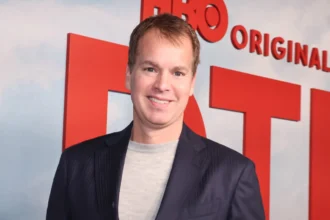
Celebrated American filmmaker James Gray received the prestigious Career Leopard honor at the 79th Locarno Film Festival on Sunday, an acknowledgment of his significant contributions to cinema, moments before the premiere of his highly anticipated, loosely autobiographical film, Paper Tiger. The director, known for his distinctive vision in films like Ad Astra and The Immigrant, accepted the accolade with a mix of genuine emotion and characteristic deadpan humor, sharing a relatable anecdote about his wife’s grounding reaction to his professional triumph. His remarks underscored the enduring tension between artistic grandeur and the mundane realities of everyday life, resonating deeply with the thousands gathered in Switzerland’s Piazza Grande.
A Career Defined by Depth and Grit
James Gray has carved out a unique niche in contemporary American cinema, frequently exploring themes of family, crime, class, and the immigrant experience, often set against the backdrop of his native New York. Born in New York City, Gray’s filmmaking journey began gaining critical attention with his 1994 debut, Little Odessa, a stark crime drama that premiered at the Venice Film Festival, establishing his voice early on. This initial success was followed by a series of critically acclaimed features, including The Yards (2000), We Own the Night (2007), and Two Lovers (2008), each distinguished by their psychological complexity, strong performances, and meticulously crafted narratives. He has often been lauded for his classical storytelling approach, drawing comparisons to cinematic masters while maintaining a distinctly modern sensibility. His works are typically characterized by a profound sense of melancholy and a deep empathy for his characters, even those entangled in desperate circumstances.
The Career Leopard, or Pardo d’onore Manor, awarded by the Locarno Film Festival, is not merely a lifetime achievement prize but a recognition of a director’s sustained artistic integrity and their ongoing influence on the cinematic landscape. Previous recipients include titans of global cinema, placing Gray in esteemed company and solidifying his status as a major auteur. This recognition at such a pivotal stage in his career, coinciding with the debut of a new film, highlights the festival’s commitment to celebrating directors who continually push boundaries and explore complex human experiences. The award serves as both a retrospective nod to his powerful filmography and a forward-looking affirmation of his continued relevance and potential.
Locarno’s Grand Stage for a Personal Story
The Locarno Film Festival, one of the oldest and most respected film festivals in the world, is renowned for its adventurous programming, showcasing independent and art-house cinema alongside more mainstream productions. Its iconic open-air screening venue, the Piazza Grande, can accommodate up to 8,000 spectators, creating an unparalleled atmosphere for film premieres. On Sunday evening, this historic square became the backdrop for the European premiere of Paper Tiger, Gray’s latest cinematic endeavor. The film, which features a star-studded cast including Adam Driver, Scarlett Johansson, and Miles Teller, is described as a "loosely autobiographical" narrative delving into the intricacies of a suburban family that finds itself entangled with the Russian mob. This blend of personal reflection with a genre framework is a hallmark of Gray’s style, often infusing gritty realism with deeply emotional character studies.
The decision to schedule Paper Tiger for a Sunday evening premiere underscored the film’s central theme of family, an apt choice given the traditional association of the day. The film’s exploration of domestic life intertwined with external threats promises to be a poignant and intense experience, reflecting Gray’s recurring fascination with how external pressures shape and strain familial bonds. The anticipation for Paper Tiger had been building within the industry, particularly given its A-list cast and Gray’s reputation for eliciting powerful performances, making its Locarno debut a significant event on the international film calendar. The festival’s programming choices often highlight films that resonate with contemporary societal anxieties while offering profound artistic merit, and Paper Tiger appears to fit this mold perfectly, offering a personal lens on universal struggles.
From Beatles-esque Adulation to Domestic Chores
During his acceptance speech in the packed Piazza Grande, James Gray openly admitted to feeling overwhelmed by the sheer size and enthusiasm of the crowd. "I didn’t expect this crowd. I sort of feel like I’m in the Beatles or something," he quipped, expressing a disarming blend of excitement and nervousness. He acknowledged his discomfort with being in the spotlight, a stark contrast to his usual role behind the camera, directing others. "This is very strange. I’m very nervous because usually I’m behind the camera and I’m yelling at other people to do things and telling them what to do. And now I’ve got to do some talking. It’s vaguely terrifying," he confessed, eliciting laughter and applause from the appreciative audience. Despite his apprehension, Gray described the experience as "very moving," a sentiment that permeated his speech even amidst his self-deprecating humor.
It was in this context that Gray delivered the anecdote that immediately went viral among attendees and subsequently in film circles. He recounted informing his wife about the impending Career Leopard honor from the esteemed Swiss festival. Her response, delivered with a practicality that sharply contrasted with the grandeur of the award, was both humorous and profoundly humanizing. "My wife said, ‘That’s very nice. Now, can you take out the garbage?’" Gray shared, prompting widespread amusement. This moment of domesticity, juxtaposed against a career-defining award, offered a powerful illustration of the balancing act many professionals face, regardless of their celebrity status. "So this gives you a kind of perspective in life," he reflected, before reaffirming, "But my wife’s feelings aside, it’s very moving to me." The anecdote quickly became a highlight of the evening, capturing the essence of Gray’s down-to-earth persona and his ability to find humor in life’s grandest moments.
The Autobiographical Thread in Paper Tiger
Continuing the theme of personal reflection, Gray elaborated on the autobiographical elements woven into Paper Tiger. He told the outdoor audience, "You’re going to see pretty much where I grew up. A lot of it is autobiographical. You’ll see my neighborhood, and you’ll say, ‘Oh my God.’ Because I got here with this [award], and I came from that." This statement provided valuable insight into the film’s genesis and Gray’s artistic motivations. Directors often draw from their own experiences to imbue their work with authenticity and emotional resonance, and Gray’s willingness to expose his roots through Paper Tiger suggests a deeply personal and vulnerable cinematic offering. The "Oh my God" reaction he anticipates from the audience hints at the raw, perhaps challenging, realities of his upbringing, contrasting sharply with his current status as an internationally recognized auteur.
This personal connection is a recurring motif in Gray’s filmography. Many of his earlier works, while fictional, often felt imbued with a deep understanding of specific social strata and geographical locales, particularly working-class neighborhoods in New York. Paper Tiger promises to be his most explicit foray into self-referential storytelling, offering audiences a direct window into the environments that shaped his artistic sensibilities. The exploration of a suburban family’s entanglement with the Russian mob also echoes some of the crime elements present in his earlier films, suggesting a thematic continuity while filtering it through a more intimate, personal lens. This autobiographical approach is often seen as a mature phase for a filmmaker, allowing for a deeper synthesis of craft and personal truth.
Broader Implications: Humanity in High Art
James Gray’s acceptance speech and the subsequent premiere of Paper Tiger at the Locarno Film Festival carried several broader implications for the film industry and cultural discourse. Firstly, the Career Leopard award reinforces Gray’s standing as a significant American auteur, recognized not just for individual films but for a consistent, evolving body of work. This kind of festival recognition often precedes broader industry accolades and can significantly boost a director’s profile, attracting new audiences to his filmography. It also signals Locarno’s role as a discerning arbiter of cinematic talent, championing artists who prioritize substance and artistic vision over purely commercial appeal.
Secondly, the anecdote about his wife and the garbage transcended the typical formality of an awards ceremony, offering a powerful moment of relatable humanity. In an era where celebrity can often feel detached and manufactured, Gray’s candor served as a reminder that even highly celebrated artists grapple with the same everyday responsibilities as anyone else. This moment likely resonated with many in the audience and the wider public, humanizing the esteemed director and making his achievement feel more grounded. It underscored the universal truth that while professional accomplishments can be monumental, personal connections and domestic duties often provide the essential ballast in life.
Finally, Gray’s declaration that he is "not old" and has "many good films, hopefully, left, and maybe better" directly addressed the common perception that career awards can sometimes signify a winding down. Instead, he positioned the Career Leopard as a mid-career affirmation, a springboard for future projects rather than a capstone. This defiant statement highlights his ongoing creative vitality and his commitment to continuing to challenge himself and his audiences. It suggests that while Paper Tiger may delve into his past, James Gray’s cinematic journey is far from over, promising more profound and impactful storytelling in the years to come.
Looking Ahead: A Resurgent Auteur’s Path
The Locarno Film Festival’s honoring of James Gray, combined with the premiere of Paper Tiger, marks a significant moment in the director’s career. The award not only celebrates his past achievements but also shines a spotlight on his continued artistic journey. The buzz generated by his emotionally resonant yet humorously delivered acceptance speech, particularly the widely quoted domestic anecdote, has undoubtedly amplified interest in Paper Tiger and Gray’s future endeavors. As the film begins its festival run and eventual wider release, critics and audiences will be eager to see how Gray’s autobiographical lens shapes this new narrative, and how it continues to build upon his already distinguished filmography.
The recognition at Locarno positions Gray as a filmmaker whose work, while deeply personal, resonates universally, bridging the gap between high art and everyday experience. His commitment to authenticity, whether in depicting the grittiness of urban life or the quiet humor of domesticity, continues to define his unique voice in cinema. With the Career Leopard now proudly in hand, and a deeply personal film set to captivate audiences, James Gray stands as a vibrant, enduring force in contemporary filmmaking, promising that his best stories may still be yet to unfold. His candid remarks assure that while he may reach for the stars in his craft, he remains firmly grounded in the realities that inspire his most compelling narratives.