Oscar-winning filmmaker Laura Poitras and Minneapolis-based journalist Rachel Lauren Mueller contend that life under Immigration and Customs Enforcement (ICE) surveillance and operations is akin to living in a horror film, a message powerfully conveyed in their new short documentary, They’re Here. The film chronicles the intense period when ICE agents conducted widespread operations in Minneapolis last year, and the subsequent organized resistance by anonymous residents. Currently screening in Venice Open – Out of Competition, the documentary uses a distinct cinematic approach to highlight the dystopian reality faced by communities.
The Unsettling Reality of ‘They’re Here’
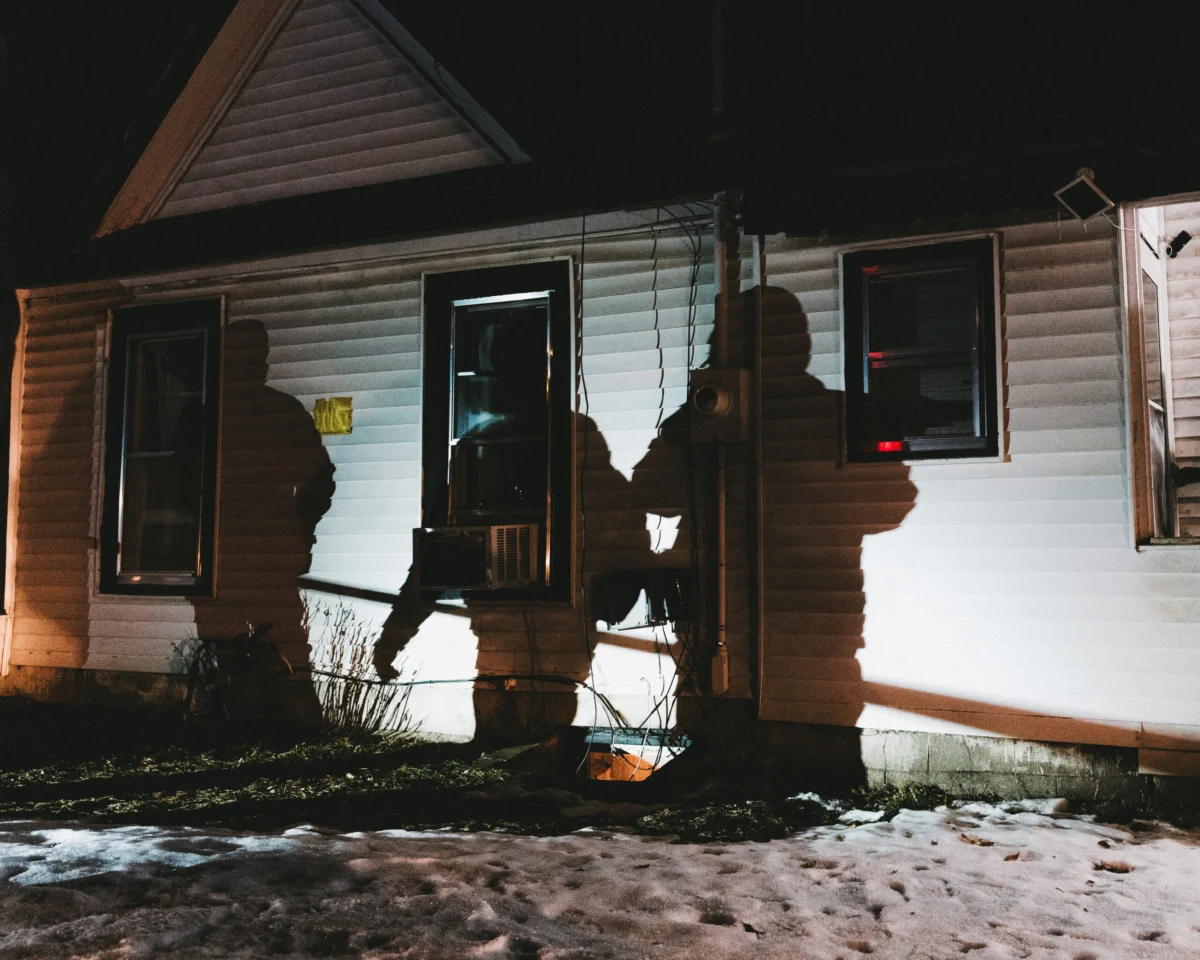
They’re Here delves into the chilling atmosphere created by ICE’s presence, employing stylistic elements often found in horror and science fiction cinema. The film transforms the perception of a tranquil American Midwestern city into a landscape of fear and uncertainty. Viewers witness men in balaclavas driving unmarked vehicles through quiet, snow-covered streets, evoking a sense of clandestine menace. One particularly stark scene depicts American vacationers at the Minneapolis airport inadvertently observing shackled prisoners being led onto planes for deportation. Another sequence captures a husband and wife hiding in the trunk of a car, attempting to evade ICE officers with their son’s help. These vignettes underscore the filmmakers’ intent to depict a reality that is both terrifying and deeply unsettling, challenging the conventional news portrayal of such events.
A Collaborative Vision for Urgent Documentation
The collaboration between Poitras and Mueller originated from a shared sense of urgency to document the escalating ICE activities in Minneapolis. Adam Mellion, a mutual colleague and researcher who had worked with Poitras on her previous films, played a pivotal role in connecting the two filmmakers. Poitras, based in New York City, felt compelled to engage with the situation unfolding in Minneapolis, where both Mueller and Mellion reside. The day Renée Good was deported, which profoundly impacted the local community, solidified their commitment to the project.
From the outset, Poitras and Mueller found immediate synergy, recognizing their common ground as director-shooters and journalists. Their initial discussions centered on distinguishing their approach from traditional news coverage, with paramount importance placed on source protection. Ensuring the safety and anonymity of those involved became a guiding principle, leading to meticulous planning around encryption and secure information handling.
- Ground-Level Journalism and Trust-Building
Mueller’s deep roots in Minneapolis proved instrumental in gaining access to the grassroots resistance networks. Living just blocks from where significant ICE activity occurred, she was intimately familiar with the neighborhood groups that organically formed in response. These groups, some remnants of the community infrastructure that emerged during the aftermath of George Floyd’s murder, rapidly evolved into mutual aid and surveillance networks dedicated to tracking ICE agents. Mueller’s position as a trusted neighbor, combined with Poitras’s extensive experience in documenting surveillance and state power, fostered the necessary trust for individuals to permit filming. This local connection was crucial, especially given the understandable apprehension among residents about being on camera. The filmmakers captured footage daily from January through March, with some material dating back to December, encompassing a substantial period of the occupation.

To safeguard their subjects, the filmmakers implemented a comprehensive protection protocol. This included the use of encryption for communications and data, anonymization techniques for individuals appearing on screen, and redaction of sensitive information. A rigorous review process was established, allowing participants to opt out before the film was finalized. This deliberate concealment of identities not only protected the protagonists but also served as a powerful narrative device, communicating the inherent risks involved and immersing the audience in the perspective of those living under constant threat.
Minneapolis Under Siege: A Case Study
The documentary presents Minneapolis as a stark example of a city under federal occupation. While the Minneapolis police department had been instructed not to collaborate with ICE, federal agents maintained a pervasive and visible presence. Mueller recounted waking to the whistle alerts—the community’s signal for ICE activity—and frequently encountering agents on her residential street. The film captures these moments, unfolding in real-time, to convey the sheer dystopian reality. A particularly alarming incident involved a leaked memo suggesting ICE agents had permission to breach doors without judicial warrants, which sent shockwaves through the community and intensified the climate of fear.
- The Anatomy of Resistance
In response to this sustained federal presence, Minneapolis residents rapidly organized sophisticated resistance networks. These groups leveraged crowdsourced data and ground-level intelligence to track, document, and actively counter the masked ICE agents. The film reconstructs these tactics, showcasing how ordinary citizens transformed into a vigilant community defense force. Their efforts included monitoring movements, disseminating warnings, and providing mutual aid to those at risk of detention or deportation. This organized resistance highlights the resilience and collective power of a community pushing back against what it perceived as an invading force.
Beyond the Headlines: Cinema as Witness
Poitras and Mueller consciously chose a cinematic approach to convey the gravity of the situation, believing that traditional news media often falls short. Poitras articulated a critique of how news cycles tend to normalize violence through repetitive clips, lacking the depth and context necessary for true understanding. Drawing on her past experience, including her 2006 film My Country, My Country about the Iraq War, Poitras expressed concern that news media can sometimes "cheerlead" or superficially cover complex issues. The filmmakers felt a strong conviction that cinema could offer a different, more impactful way of communicating the reality, moving beyond the superficiality of reactionary news cycles.
- Dystopian Echoes and Cinematic Language
The decision to embrace horror and sci-fi genre elements was not an attempt to sensationalize but to draw viewers closer to the lived experience of terror and menace. Poitras referenced films like Children of Men, which depict the rounding up of immigrants, noting that dystopian cinema often serves as a mirror to contemporary realities. The film’s imagery—balaclava-clad figures, unmarked cars, the suddenness of operations—deliberately evokes a sense of an "alien force" abducting people and creating a war zone atmosphere in a civilian environment. This visual language aims to articulate the profound psychological and emotional impact of living under constant threat, offering a visceral understanding that factual reporting alone might not achieve.
Unveiling the Scale: Data Visualization and Personal Stories

One of the documentary’s most striking features is its use of data visualization to illustrate the national scale of ICE operations. The film incorporates crowdsourced data, meticulously gathered by individuals like Nick Benson, who documented the number of shackled prisoners boarding deportation flights at Minneapolis-Saint Paul International Airport—the same airport used by vacationers. This grassroots data, combined with information from Human Rights First, was then visually rendered by data visualization artist Josh Begley. The resulting graphs, though representing only a small slice of time, powerfully communicate the sheer volume and ubiquity of ICE activity across the country. This juxtaposition of intimate personal experiences with the vast, systemic scope of federal operations is central to the film’s message, creating a profound sense of shock and urgency.
Confronting the Occupation: Filmmakers’ Encounters
The filmmakers were not detached observers; they were directly immersed in the fraught environment. Mueller recounted numerous encounters with federal agents, sometimes while filming, sometimes simply as a resident going about her daily life. The film includes a powerful scene where Poitras describes Mueller confronting ICE agents after an alert, illustrating the immediate and often dangerous reality of their work. The constant presence of these agents meant that ordinary drives could suddenly transform into encounters within what felt like a war zone, highlighting the courage required to document such pervasive federal activity.
Hopes for Impact and Denormalization
Poitras and Mueller harbor ambitious hopes for They’re Here. They aim for the film to serve a dual purpose: to activate a deeper sense of awareness among the public and to inspire other communities. Mueller expressed optimism that the film can be a tool, offering a "blueprint" for effective resistance, demonstrating that collective action and mutual aid can empower people to care for one another. They believe the film can denormalize the violence inherent in ICE operations, prompting viewers to question why such actions are tolerated in a democratic society.
- A Blueprint for Action?
Poitras drew parallels to the impact of Nan Goldin’s activism with her organization PAIN, which successfully shamed the Sackler family over their role in the opioid crisis. While the opioid crisis persists, Goldin’s efforts achieved a significant victory in holding powerful figures accountable and removing their names from cultural institutions. Similarly, Poitras believes that They’re Here can inspire communities to resist, even when the broader systemic issues remain. The alternative, she asserts, is simply to allow such injustices to continue unchallenged, a choice she and Mueller unequivocally reject. Their belief in the power of cinema to translate a harsh reality into an emotionally compelling experience underpins their conviction that the film can genuinely move people to action.
The documentary stands as a potent testament to the power of citizen resistance and a profound critique of federal overreach. By presenting the reality of ICE operations through the unsettling lens of a "horror movie," Laura Poitras and Rachel Lauren Mueller seek not only to inform but to ignite a visceral understanding of the ongoing challenges faced by vulnerable communities, urging a re-evaluation of national policies and a renewed commitment to human rights.