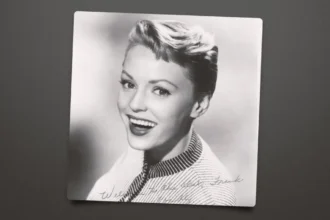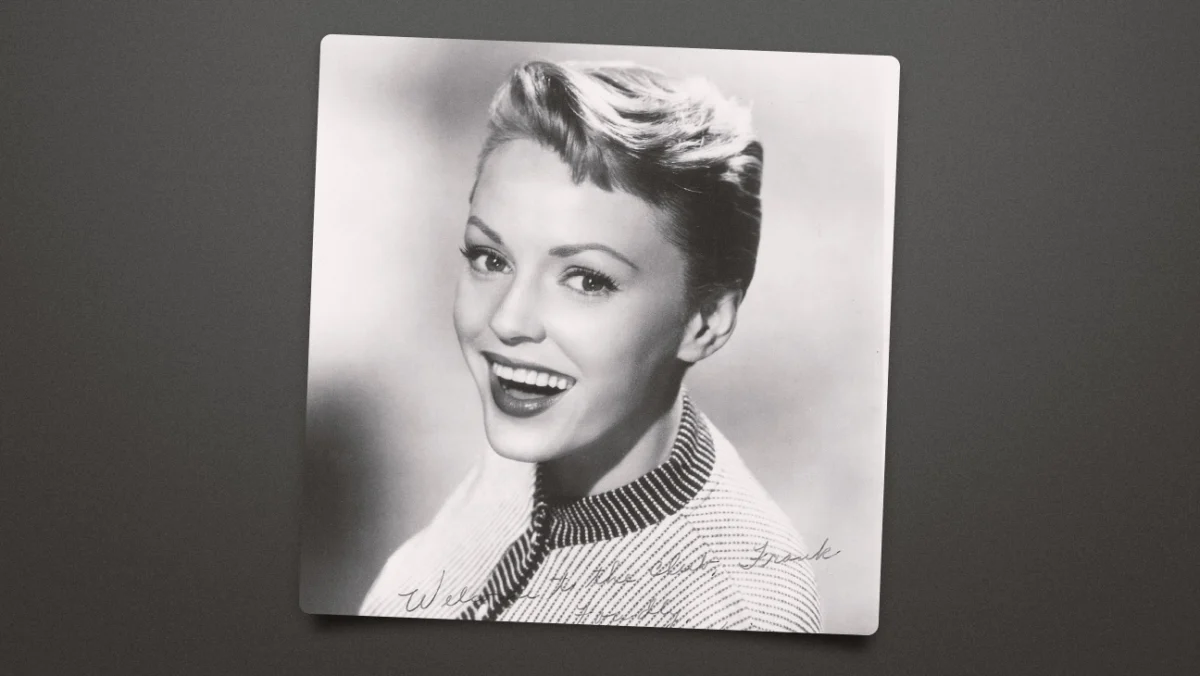
Leslie Parrish, the striking actress best known for her roles as the lovestruck Daisy Mae in the 1959 musical film Li’l Abner and the pivotal Jocelyn Jordan in the chilling 1962 thriller The Manchurian Candidate, has passed away at the age of 90. Parrish, who also left her mark on iconic television series like Star Trek and Batman, died late last year in Washington state. Her death was confirmed by Erica Berdan, a daughter of Richard Bach, the acclaimed author of Jonathan Livingston Seagull and Parrish’s second husband, to The Hollywood Reporter, which only recently learned of her passing.
Parrish’s career spanned several decades, showcasing her versatility across film and television. Her roles often capitalized on her captivating presence, yet she was equally committed to activism, advocating for peace and environmental preservation throughout her life. Her contributions extended beyond the silver screen, revealing a woman deeply engaged with the world around her.
Early Life and Hollywood Entry
Born Marjorie Hellen on March 18, 1935, in Melrose, Massachusetts, Leslie Parrish spent her formative years in Upper Black Eddy, Pennsylvania. Her early interests included piano studies, a pursuit that hinted at a creative spirit. In 1953, she moved to New York City, where her striking looks quickly caught the attention of the fashion industry. She began her career as a model for the prestigious Conover Agency. It was during this period that she experienced a unique brush with technological history, sitting for hours as NBC technicians experimented with the then-novel invention of color television.
Her modeling success soon led to opportunities in Hollywood. In 1954, she signed with 20th Century Fox, making her initial screen appearances in 1955 films such as A Man Called Peter, the Fred Astaire vehicle Daddy Long Legs, and The Girl in the Red Velvet Swing. These early roles, often uncredited or minor, served as an introduction to the film industry. She subsequently moved to Metro-Goldwyn-Mayer, securing roles in The Opposite Sex (1956) and Man on Fire (1957), gradually building her filmography. It was upon taking on the role of Daisy Mae in Li’l Abner that director Melvin Frank suggested a name change, reportedly telling her that “no one will remember a girl with two first names.” Thus, Marjorie Hellen became Leslie Parrish, a name that would become synonymous with her most memorable performances.
A Star Rises: Key Cinematic Performances
Leslie Parrish’s breakthrough role as Daisy Mae in the 1959 film adaptation of Li’l Abner brought her widespread recognition. The character, a lovestruck denizen of Dogpatch, USA, relentlessly pursues the titular hillbilly. The film was based on the hugely popular Al Capp comic strip and a Tony Award-winning Broadway musical, where Edie Adams had famously originated the role. Parrish stepped into the iconic polka-dot blouse, starring opposite Peter Palmer, who reprised his Broadway role as Li’l Abner. The film also featured other Broadway veterans, including Julie Newmar as Stupefyin’ Jones and Stubby Kaye as Marryin’ Sam, with Melvin Frank directing. While Bosley Crowther of The New York Times noted that Parrish “fills [the part] out generously,” her performance solidified her place in Hollywood.
Just a few years later, Leslie Parrish delivered another unforgettable performance in John Frankenheimer’s critically acclaimed 1962 political thriller, The Manchurian Candidate. In this taut and suspenseful film, Parrish portrayed Jocelyn Jordan, the daughter of a liberal senator, whose ill-fated romance with sleeper agent Raymond Shaw (played by Laurence Harvey) forms a crucial plot point. Her character’s Queen of Diamonds costume at a party inadvertently triggers Shaw’s programmed assassin instincts, driving the film’s chilling narrative. Parrish reportedly considered this her favorite role, a testament to the film’s artistic merit and the depth of her character. The Manchurian Candidate remains a seminal work, lauded for its sharp commentary on Cold War paranoia and its innovative storytelling.

Parrish continued to build a diverse film career throughout the 1960s. She appeared opposite Vic Morrow as Dutch Schultz in Portrait of a Mobster (1961) and shared the screen with Kirk Douglas in For Love or Money (1963), where she played one of Thelma Ritter’s daughters alongside Mitzi Gaynor and Julie Newmar. She also featured with Jerry Lewis in Three on a Couch (1966), playing a patient of Janet Leigh’s character who dates Lewis. Other film credits from this period include Sex and the Single Girl (1964), The Money Jungle (1967), The Candy Man (1969), and The Devil’s 8 (1969), demonstrating her consistent presence in Hollywood productions.
Iconic Television Appearances
Beyond her film work, Leslie Parrish became a familiar face on television, making memorable guest appearances in some of the era’s most beloved series. In 1967, she garnered particular attention for two distinct roles that cemented her place in pop culture history.
On the groundbreaking science fiction series Star Trek, Parrish portrayed USS Enterprise archaeology and anthropology officer Carolyn Palamas in the episode “Who Mourns for Adonais?” Her character was central to the plot involving an alien being claiming to be the Greek god Apollo, showcasing her ability to navigate both dramatic and fantastical narratives within a burgeoning cultural phenomenon. Her appearance in Star Trek resonated with legions of fans, further diversifying her acting portfolio.
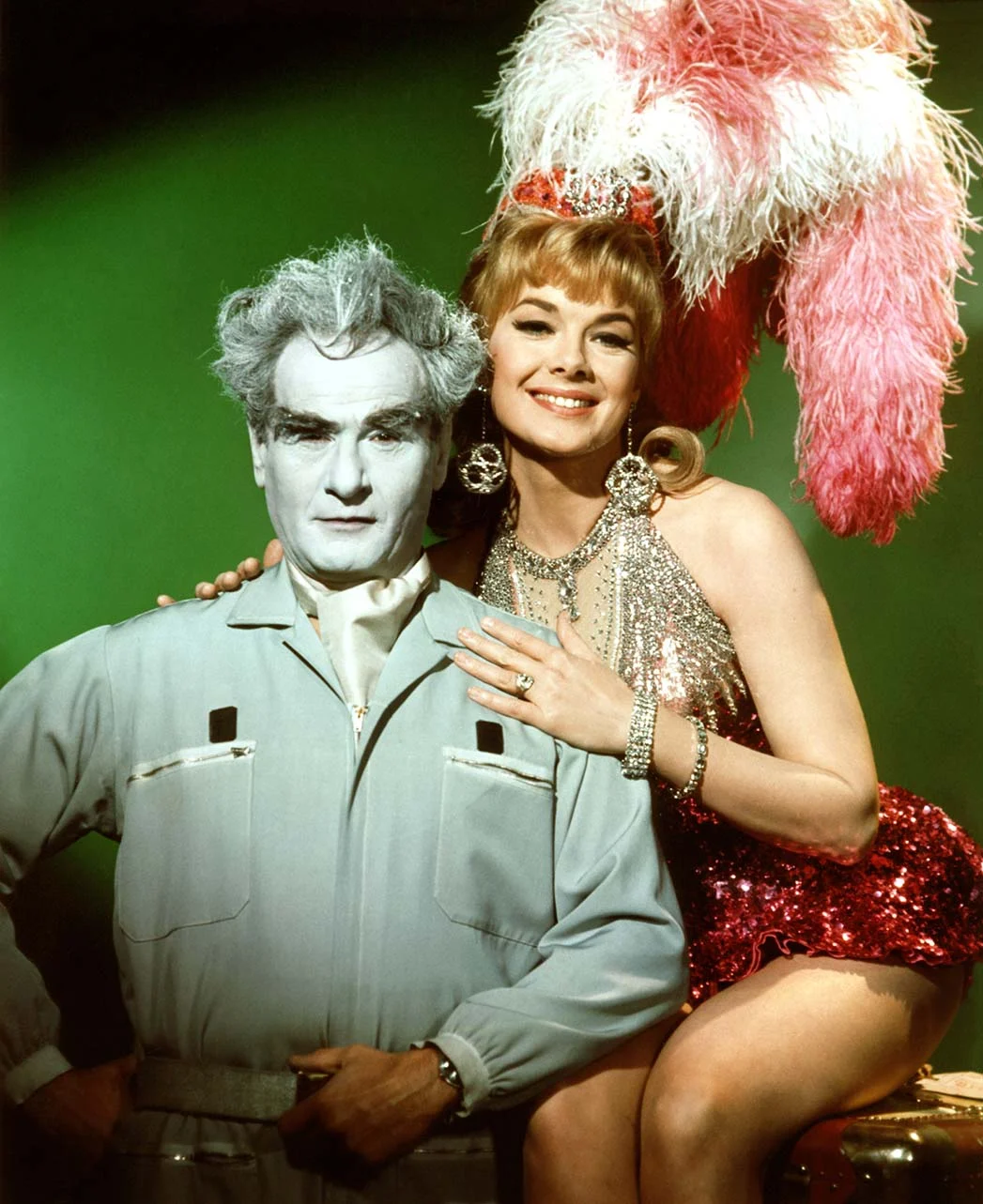
The same year, she made a lively impression on the campy superhero series Batman. Parrish embraced the show’s distinctive style as Glacia Glaze, a charming ice skater and a formidable henchwoman in cahoots with the villainous Mr. Freeze, played by the legendary Eli Wallach. Her turn on Batman highlighted her capacity for comedic timing and her ability to embody characters that were both glamorous and mischievous.
Throughout the 1960s, Leslie Parrish remained a prolific presence on the small screen, gracing numerous popular programs. Her extensive list of television credits includes appearances on Bat Masterson, Acapulco, 77 Sunset Strip, Perry Mason, The Red Skelton Hour, The Wild Wild West, The Big Valley, and Mannix. These roles allowed her to demonstrate her versatility across various genres, from Westerns to detective dramas and variety shows, solidifying her status as a recognizable and sought-after performer during television’s golden age.
A Life of Activism and Artistic Inspiration
While Leslie Parrish achieved success as an actress, her life was also defined by a deep commitment to social and political causes. She became a fervent anti-war activist, particularly during the Vietnam War era. On June 23, 1967, immediately after leaving the set of Star Trek, Parrish joined thousands of other demonstrators in a significant peace march in Century City, Los Angeles. The protest coincided with President Lyndon B. Johnson’s presence in town for a Democratic Party fundraiser. The demonstration escalated into a clash with police, resulting in over 50 arrests and numerous injuries, underscoring the intense social unrest of the period.
Parrish articulated her conviction in a 1968 statement, asserting, “An actress deals in emotions and therefore should be aware of the anguish and suffering going on around her.” This belief propelled her into organized activism. She was instrumental in establishing STOP! (Speakers and Talent Organized for Peace), an organization dedicated to channeling the influence of public figures toward peace efforts. She also produced rock concerts and other events to raise funds and awareness for the peace movement. Her activism extended to direct political action, as she protested at the tumultuous 1968 Democratic National Convention in Chicago and campaigned for Tom Bradley in his first two bids for Los Angeles mayor in 1969 and 1973. Furthermore, Parrish played a crucial role in the launch of KVST-TV, an experimental Los Angeles television station in the 1970s that served as a precursor to C-SPAN, aiming to provide unfiltered public access to political and social discourse.

Her personal life also intersected significantly with her artistic and activist endeavors. From 1955 to 1961, Leslie Parrish was married to singer and lyricist Ric Marlow, known for co-writing the jazz standard “A Taste of Honey.” Later, in 1981, she married Richard Bach, the celebrated spiritual author of the best-selling novella Jonathan Livingston Seagull. Their relationship was a profound source of inspiration for Bach, who credited Parrish as his muse for two subsequent books, The Bridge Across Forever and One.
Parrish was deeply involved in the cinematic adaptation of Jonathan Livingston Seagull (1973), serving as an associate producer. Her contributions included hiring crew members, such as cinematographer Jack Couffer, who would later receive an Oscar nomination for his work on the film. She also famously cared for the live birds used in the production, housing them in a room at a Holiday Inn. Despite her extensive involvement, she ultimately received only a “researcher” credit due to a reported disagreement with writer-director Hall Bartlett, a dispute that highlighted the challenges women often faced in securing full recognition in behind-the-scenes roles in Hollywood.
A testament to her dedication and loyalty, Leslie Parrish stepped in to assist Richard Bach during a difficult financial period. In 1981, Bach declared bankruptcy and relinquished the rights to his book royalties to the government. However, Parrish, as she recounted to People magazine in 1992, gathered “every penny she had” to buy back his copyrights, demonstrating immense support for his literary legacy. Although their marriage ended in divorce in 1999, their bond left a lasting mark on both their lives and their respective works.
A Lasting Environmental Legacy
Beyond her artistic career and activism, Leslie Parrish dedicated a significant portion of her later life to environmental conservation, creating a profound and enduring legacy. Together with Richard Bach, she engaged in a series of transactions over several years to donate conservation easements on Orcas Island in Washington state. These efforts led to the protection of 168 acres of forest land and vital wildlife habitat on Mount Woolard, within what is now known as the Spring Hill Wildlife Sanctuary. The sanctuary has publicly acknowledged her passing, recognizing her invaluable contributions.
Parrish often spoke with immense pride about her conservation work. “It’s a dream come true and one of the best things I’ve done in my life,” she stated. Her vision extended beyond personal fulfillment, embracing a broader commitment to future generations. “You don’t have to have children to enjoy the idea of preserving land for future generations. It’s what I’m most proud of, and it will surely, more than any other work I’ve ever done, be the accomplishment that outlasts me.” Her words reflect a deep understanding of the long-term impact of her actions, highlighting her belief that environmental stewardship is a timeless endeavor.
Leslie Parrish’s life was a vibrant tapestry woven with threads of Hollywood glamour, intellectual curiosity, passionate activism, and profound environmental commitment. From her early days as a model pioneering color television to her iconic roles in classic films and television, and her unwavering dedication to peace and conservation, Parrish consistently sought to make a difference. She leaves behind a legacy not only as a memorable actress but also as a humanitarian whose contributions to social justice and environmental preservation will continue to resonate for generations. Her diverse accomplishments stand as a testament to a life lived with purpose, conviction, and a profound desire to contribute meaningfully to both art and the world.