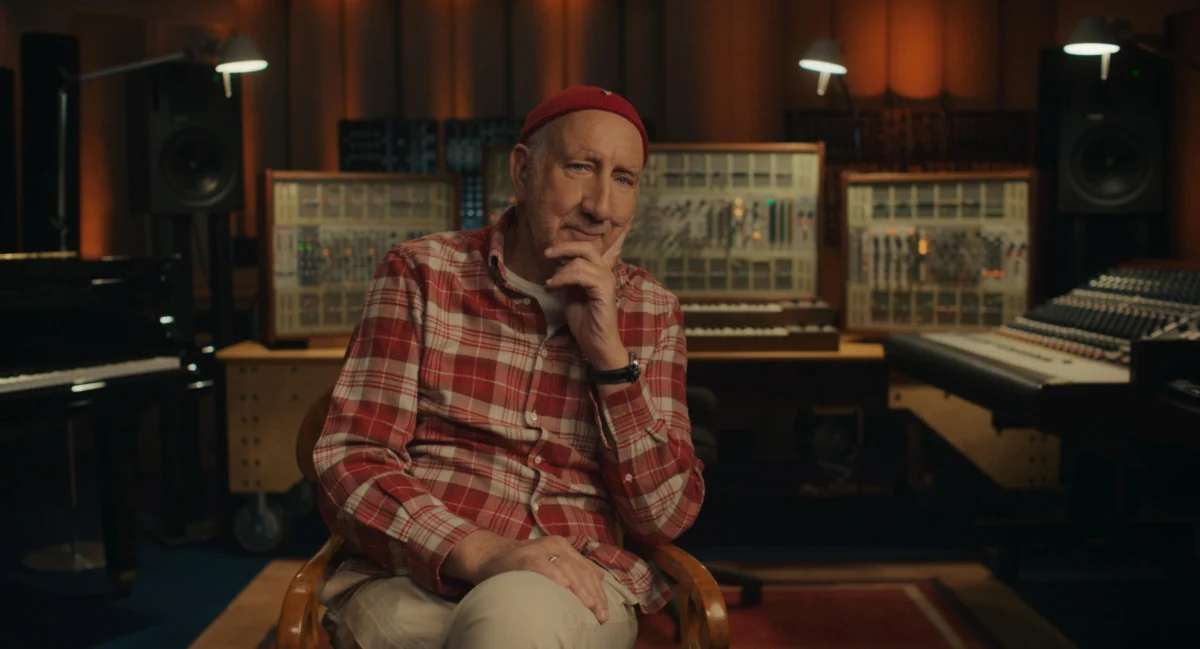
A new documentary, Pete Townshend: Behind Blue Eyes, co-directed by acclaimed filmmakers Frank Marshall and Nigel Sinclair, offers an unprecedented examination of the legendary Who singer/songwriter’s life and career, focusing intensely on the ambitious 1971 science fiction rock opera, Lifehouse, a project that nearly dismantled both Townshend and The Who. The film, which features Townshend’s direct cooperation, is slated for multiple fall film festival appearances as a sales title, with its backers aiming for a distribution deal and a strong position in the upcoming awards season.
A Deep Dive into Townshend’s Ambitious Vision
The period immediately following the monumental success of The Who’s 1969 rock opera, Tommy, found Pete Townshend grappling with immense creative pressure and a burgeoning, technologically-driven vision for the band’s next artistic endeavor. Instead of resting on Tommy‘s laurels, Townshend embarked on Lifehouse, an expansive multimedia concept designed to connect audiences through music and technology in a way that was revolutionary for its time. This project, far ahead of its era, envisioned a future where individuals would merge their identities into a universal consciousness through a global concert.
Lifehouse was not merely an album; it was conceived as a film, a live performance series, and a record, all intertwined with a complex narrative exploring themes of identity, dystopian futures, and the transformative power of human connection. The sheer scope and philosophical depth of Townshend’s concept proved overwhelming for the band and their collaborators, pushing The Who to the brink of collapse and plunging Townshend into a profound personal crisis.
Filmmakers Unpack a Prescient Narrative
Frank Marshall, known for his extensive work in film production and direction, and Nigel Sinclair, a seasoned documentarian with a focus on music legends, exclusively discussed Pete Townshend: Behind Blue Eyes with The Hollywood Reporter. Marshall articulated the film’s contemporary relevance, stating, "It’s a fascinating story and very compelling as a film now because the world has finally caught up with it. In 1971, no one could understand what Pete was talking about and he thought Lifehouse had failed. The irony is, 55 years later, we’re living inside his story." This observation highlights Townshend’s remarkable foresight regarding the intersection of technology, identity, and community, themes that resonate deeply in today’s digitally connected world.
Sinclair added that Townshend’s willingness to engage deeply with this challenging period of his past was a critical factor in the documentary’s creation. "Pete’s reached a point in his career and life where he is prepared to take a very intense look back at his creative process, with all its twists and turns; and that was captivating." This openness from Townshend provides an intimate and unfiltered perspective on the creative and personal struggles that defined one of rock music’s most prolific periods.
The Man Behind the Music: Unearthing Townshend’s Complexity
As the filmmakers delved into the Lifehouse era, new dimensions of Pete Townshend’s personality and creative genius emerged. Marshall expressed surprise at Townshend’s intellectual depth, noting his art school background and how it informed his efforts to describe a technologically advanced future. "His solution wasn’t destroying technology, but human connection. He wanted to connect to the audience and bring them together through music," Marshall explained, emphasizing Townshend’s enduring belief in the unifying power of art.
Sinclair was particularly struck by Townshend’s early self-awareness and the profound link between his childhood experiences and his artistic output. "Discovering the link between his childhood torment and the character of Tommy was an extraordinary revelation," Sinclair revealed. He also pointed to the intense duality within Townshend’s personality—the "introvert and the extrovert, the rock superstar and the internal artist who wanted to be thought of as a writer not a rockstar"—a tension that fueled much of his creative energy and personal turmoil.
From "Failure" to Iconic Success: The Birth of Who’s Next
The ambitious nature of Lifehouse ultimately led to its abandonment as a complete multimedia project, a perceived failure that deeply affected Townshend. However, this period of intense personal and creative crisis paradoxically gave birth to one of rock music’s most celebrated albums. The musical material intended for Lifehouse was repurposed and refined, culminating in The Who’s 1971 masterpiece, Who’s Next.
Sinclair highlighted this ironic transformation: "Ironically, the enormous musical ambition of the project resulted in Who’s Next, which is easily the biggest album The Who released, groundbreaking, and often considered one of the top 10 rock albums of all time." From the Lifehouse sessions emerged iconic tracks that would define a generation, including "Baba O’Riley," "Won’t Get Fooled Again," "Behind Blue Eyes," and "The Song Is Over"—songs that continue to resonate globally.
A Legacy Forged in Innovation and Introspection
Townshend’s candid reflections on Lifehouse‘s "failure" reveal the deep emotional toll it took. Sinclair recounted how, in two days of interviews, Townshend "opened up his heart and explained how much Lifehouse was intended to reconcile the two sides of his personality, the rockstar and the artist. So its failure was heartbreaking then and, it appears so, now, as he tells it." This emotional wound, however, proved to be a crucible for wisdom.
The documentary suggests that many of Townshend’s subsequent career decisions were influenced by this pivotal experience. The "disaster" of Lifehouse may have paradoxically provided him with a greater sense of fulfillment later in life and, critically, strengthened his enduring relationship with The Who’s frontman, Roger Daltrey, forging a more powerful and resilient partnership.
Elevating Rock and Roll: Townshend’s Place in History
The filmmakers emphasized Townshend’s indelible mark on music history, positioning him as a pivotal figure who elevated rock and roll beyond popular entertainment into a profound cultural force. Sinclair characterized Townshend as one of the "avatars who took rock and roll as a form of popular music and turned it into an anthem, a generational call to action, for then and for so many generations since."
He drew parallels between Townshend and a select group of artists—John Lennon, Bob Dylan, Ray Davies of The Kinks, and David Bowie—who endowed rock music with the power to shape identity for millions worldwide. "If Dylan changed the narrative with his The Times They Are a-Changin’ album, Pete turned it up to another level with the Tommy double album," Sinclair asserted, underscoring Townshend’s role in expanding the narrative and emotional scope of rock music.
"Pete Townshend: Behind Blue Eyes" on the Festival Circuit
The production of Pete Townshend: Behind Blue Eyes is a collaborative effort involving several prominent entities in the film and music industries. The film was produced by Kennedy Marshall Documentaries, White Horse Pictures, and VICE Studios, with presentation by Sobey Road Entertainment in association with Spirit Music Group, Polygram Entertainment, and Trinifold Management. This robust backing underscores the industry’s recognition of the project’s significance and its potential impact.
As the documentary heads to fall film festivals, it seeks not only a distribution partner but also to position itself as a contender in the upcoming awards race. The filmmakers and producers are optimistic that the compelling narrative, Townshend’s candid reflections, and the enduring relevance of Lifehouse‘s themes will resonate with critics and audiences alike, securing the film’s place in the competitive documentary landscape.
The release of Pete Townshend: Behind Blue Eyes promises to offer a crucial re-evaluation of Townshend’s legacy, not merely as a rock icon, but as a visionary artist whose conceptual prowess and emotional vulnerability profoundly shaped modern music. The film sheds light on a pivotal, often misunderstood, chapter of his career, revealing how personal struggle and artistic ambition converged to produce some of rock’s most enduring anthems and prophetic ideas.