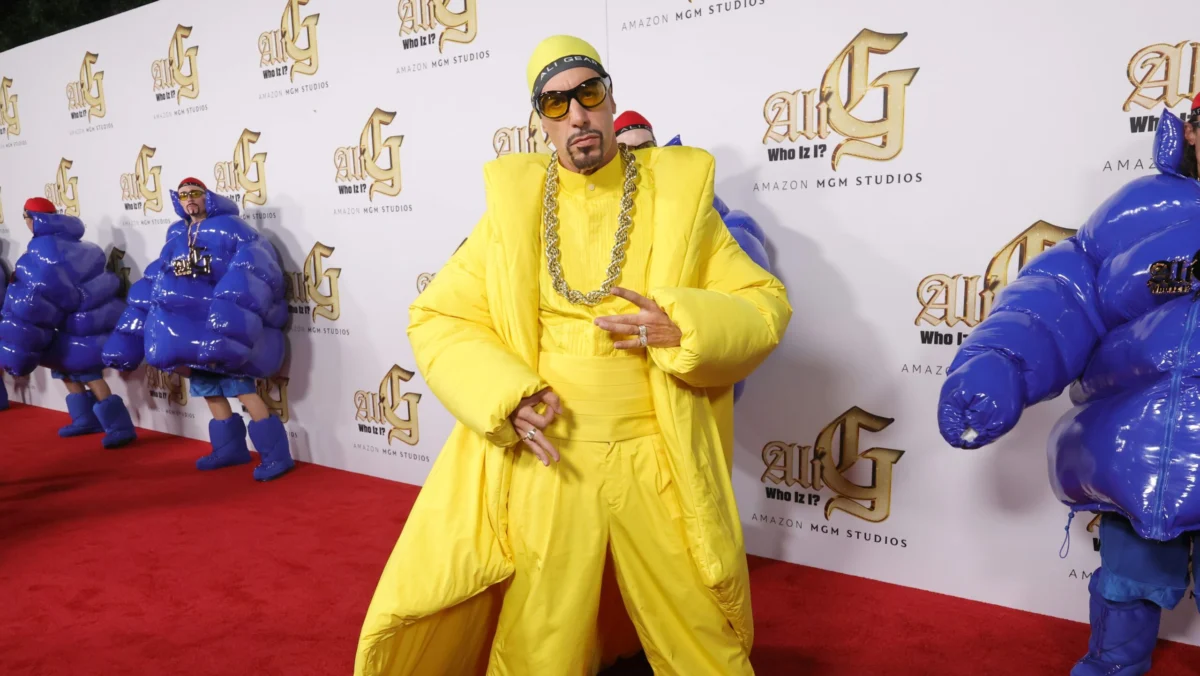
The recent release of Sacha Baron Cohen’s satirical sequel, Ali G: Who Iz I?, on Amazon Prime Video following a limited theatrical run, became the focal point of an intense online boycott campaign spearheaded by pro-Palestine activists. This digital protest, which accused the film and its creator of cultural insensitivity, quickly escalated to encompass allegations of anti-Semitism targeting Cohen, a prominent Jewish public figure. The controversy underscored the complex intersection of cultural criticism, geopolitical activism, and identity politics in contemporary media.
The Return of Ali G: A Rorschach Test
Sacha Baron Cohen’s decision to revive his iconic, controversial character Ali G for Ali G: Who Iz I? reignited long-standing debates about the nature of satire and cultural appropriation. The character, known for his exaggerated imitation of Black British and American hip-hop culture, has historically functioned as a "Rorschach test," eliciting varied interpretations from audiences. While Cohen has maintained that Ali G’s persona is a critique of white British youth adopting these styles, critics have often viewed it as problematic, accusing it of perpetuating stereotypes.
The initial trailer for Ali G: Who Iz I?, released on August 25, immediately triggered significant online backlash. British commentator Afua Hirsch articulated a common sentiment, arguing that the humor was outdated and offensive. She contended that "Black people don’t dress like that anymore. Even white people imitating Black people don’t talk like that anymore. Sexualizing black women and casually mocking working-class women is not accepted anymore. Baron Cohen’s so-called ‘humor’ is a crude compound of all these things." This criticism set the stage for the broader activist response.
Cohen’s Provocative Response to Criticism
Sacha Baron Cohen, a seasoned provocateur, appeared to anticipate and even satirize the outcry surrounding Ali G’s return. Following the initial negative reactions, he reposted the trailer with a wry observation: "In an age where a comedian’s career can be ended by a single un-PC joke, I thought I’d play it safe and bring this guy back."
As the criticism amplified, Cohen leaned further into his meta-commentary. He released a promotional clip featuring a new character, a progressive academic from "the Campaign for Ethical Comedy," also played by Cohen, who paradoxically urged a boycott of the Ali G project. This character, embodying a hyper-sensitive cultural critic, humorously laid out "five C’s" for comedic evaluation: "Consider, contextualize, consult community, and obtain consent before you laugh — that’s right, do the work before you smirk." This self-referential approach highlighted Cohen’s ongoing engagement with the evolving landscape of comedy and censorship.
The Coordinated Boycott by Pro-Palestine Activists
The online criticism quickly coalesced into an organized boycott campaign, prominently led by a U.K.-based online media activism platform called NewsCord. This group published an op-ed that harshly characterized Cohen’s work as "blackface," positioning the film as a prime target for their advocacy efforts. NewsCord primarily focuses its activism on issues related to the Israel-Palestine conflict, a key context for understanding the broader motivations behind the boycott.
NewsCord’s campaign against Ali G: Who Iz I? employed sophisticated digital tactics. The platform claimed to have facilitated the sending of approximately 55,000 emails aimed at pressuring cinema exhibitors to refuse to screen the film. Their system offered users personalized templates, often generated with the help of a "specialized language model," to mass-send complaint letters. An automated checklist on NewsCord’s Ali G action page directed users to target major cinema chains, including Cineworld and Odeon in the U.K., and Landmark and Cinemark in the U.S. The platform specifically highlighted that Picturehouse, a smaller London-headquartered chain, had informed NewsCord of its decision not to screen the film, which NewsCord hailed as a direct success of its campaign, removing Picturehouse from its "send list."
NewsCord’s Broader Agenda and Affiliations
The origins and broader agenda of NewsCord reveal a deep entanglement with pro-Palestine activism. NewsCord is an initiative incubated by the nonprofit Tech for Palestine, an organization that describes its mission as "cultivating a garden of projects and services that shut down genocidal speech." This mission statement underscores a broader objective of influencing public discourse on geopolitical issues through online activism.
Tech for Palestine and its affiliated projects have a history of controversial campaigns. NewsCord’s past advocacy includes demands for the "immediate release of Global Sumud Flotilla Participants," whom it controversially announced were "kidnapped in international waters by the Zionist entity." This framing is particularly notable given that the U.S. Treasury has designated the leaders of this flotilla as Hamas-affiliated operatives, highlighting the group’s alignment with specific, highly charged narratives surrounding the conflict.
The organization’s efforts to influence online information have also drawn significant criticism. Both Tel Aviv University’s Institute for National Security Studies (INSS) and the U.S. Anti-Defamation League (ADL) have criticized Tech for Palestine’s agenda to influence Wikipedia pages pertaining to the Israel-Palestine conflict and related topics, raising concerns about neutrality and factual integrity.
Expanding the Scope of Digital Activism
Tech for Palestine’s founder and CEO, Paul Biggar, has openly engaged in campaigns to manipulate online platforms. In October 2024, Biggar published an article alleging that Israel was "astroturfing IMDb’s review system to manufacture consent for genocide." He provided detailed instructions on how to "counteract the inflated popularity" of four documentaries focusing on the Hamas-led October 7 massacre in Israel, including We Will Dance Again (aired on Paramount+), by downvoting existing reviews and employing other measures against IMDb listings.
Another project incubated by Tech for Palestine, the Boycat app, further illustrates the scope of their activism. This app has urged boycotts of upcoming Disney films, including the 2025 release Snow White, starring Gal Gadot, citing her public support for Israel. Boycat has also targeted Captain America: Brave New World due to "its inclusion of Sabra, an Israeli superhero originally portrayed as a Mossad agent, played by Shira Haas, an actress with ties to the Israeli military." These campaigns demonstrate a concerted effort to link cultural products and personalities to the Israel-Palestine conflict, extending the boycott beyond traditional political targets.
Sacha Baron Cohen: A Target as a Jewish Public Figure
Sacha Baron Cohen’s identity as one of Hollywood’s most prominent Jewish figures working on-screen became a critical dimension of the boycott campaign. His career has often intertwined with his Jewish heritage and the exploration of prejudice. Early in his career, he gained recognition for a parody of a sweaty Hasid. His character Borat, in a highly controversial scene, famously sang "Throw the Jew Down the Well," a moment designed to expose the anti-Semitism of his unwitting audience. More recently, Cohen took on the serious role of legendary Israeli Mossad agent Eli Cohen in Netflix’s limited series The Spy.
In a widely circulated keynote address to the ADL in 2019, Cohen spoke extensively about his craft and the dangers of online propaganda. He stated, "as a comedian, I’ve tried to use my characters to get people to let down their guard and reveal what they actually believe, including their own prejudice." He then elaborated on how the internet had become "the greatest propaganda machine in history," spreading "the oldest conspiracy theory in history — the lie that Jews are somehow dangerous." He has also reportedly engaged forcefully with TikTok executives over the platform’s allowance of anti-Semitic rhetoric.
Monica Levinson, an executive producer on Ali G: Who Iz I? and a longtime collaborator with Cohen on projects like Borat and Brüno, publicly addressed the nature of the attacks. In a statement to The Hollywood Reporter, she remarked, "While we expected some pushback for resurrecting a character from a different time, we were really disheartened to see firsthand the attacks on Sacha because he is a Jewish public figure. The coordination, messaging and scale of the attack has been astounding."
The Film’s Release and Campaign’s Claims of Victory
Despite the orchestrated campaign, Ali G: Who Iz I? proceeded with its planned release, albeit with a limited theatrical run before becoming available on Amazon Prime Video. On October 23, as the film premiered in theaters, NewsCord declared victory in its campaign. The platform cited Amazon’s "stunt release" — a term used by the studio itself — as evidence of its impact, while inaccurately claiming that a total of "55,000 people emailed cinema chains" through its platform. This assertion conflated the number of emails sent with the number of unique individuals participating, potentially exaggerating the campaign’s reach.
The studio’s characterization of the theatrical run as a "stunt release" suggests that the film’s primary distribution strategy was always intended to be streaming, which may temper NewsCord’s claims of having significantly altered the film’s exhibition plan. However, the active participation of a small chain like Picturehouse in declining to screen the film demonstrates that targeted pressure campaigns can yield tangible results, at least at a localized level.
Broader Implications for Comedy, Activism, and Discourse
The controversy surrounding Ali G: Who Iz I? and the actions of pro-Palestine activists highlight several critical issues facing contemporary cultural production and public discourse. It underscores the ongoing tension between artistic freedom and the demands of social and political activism, particularly in an age where online platforms amplify voices and facilitate coordinated campaigns.
Sacha Baron Cohen himself weighed in on the boycott campaign prior to the film’s release, telling The Hollywood Reporter that "a lot of the stuff on social media is orchestrated, and not necessarily orchestrated by people who really believe in what they’re saying." He added, "I’m not surprised that prominent Jews are being targeted. I knew that this was going to happen. The level of organization is surprising, but this is a trend of Jews being portrayed in certain ways and trying to be silenced."
This episode serves as a potent example of how cultural products can become battlegrounds for broader political and ideological conflicts. The targeting of a comedian for his work, intertwined with his identity and the political affiliations of activist groups, raises significant questions about the boundaries of satire, the ethics of online campaigns, and the potential for such movements to spill over into identity-based attacks. The incident reflects a widening landscape where entertainment and art are increasingly scrutinized through a highly politicized lens, with significant implications for creators and audiences alike.