Apple is facing a significant supply chain crisis as a global memory chip shortage begins to severely restrict the availability of the MacBook Air, the company’s flagship consumer laptop. Industry analysts and retail sources indicate that the "RAM crunch" has moved beyond mere price increases and is now manifesting as widespread stockouts and shipping delays that could last well into the autumn. This development follows a period of mounting pressure on the semiconductor industry, driven largely by the insatiable demand for high-performance memory modules in artificial intelligence data centers.
The shortage is hitting the M5 MacBook Air lineup particularly hard, affecting both the 13-inch and 15-inch models. According to reports from Bloomberg’s Mark Gurman, Apple’s retail partners and internal storefronts are struggling to maintain inventory levels, with some shipments reaching their most constrained state in recent memory. The crisis, colloquially dubbed "RAMageddon" by industry observers, has already forced Apple to implement a $200 price hike across the MacBook Air range just five weeks ago, a move intended to offset the soaring costs of components.
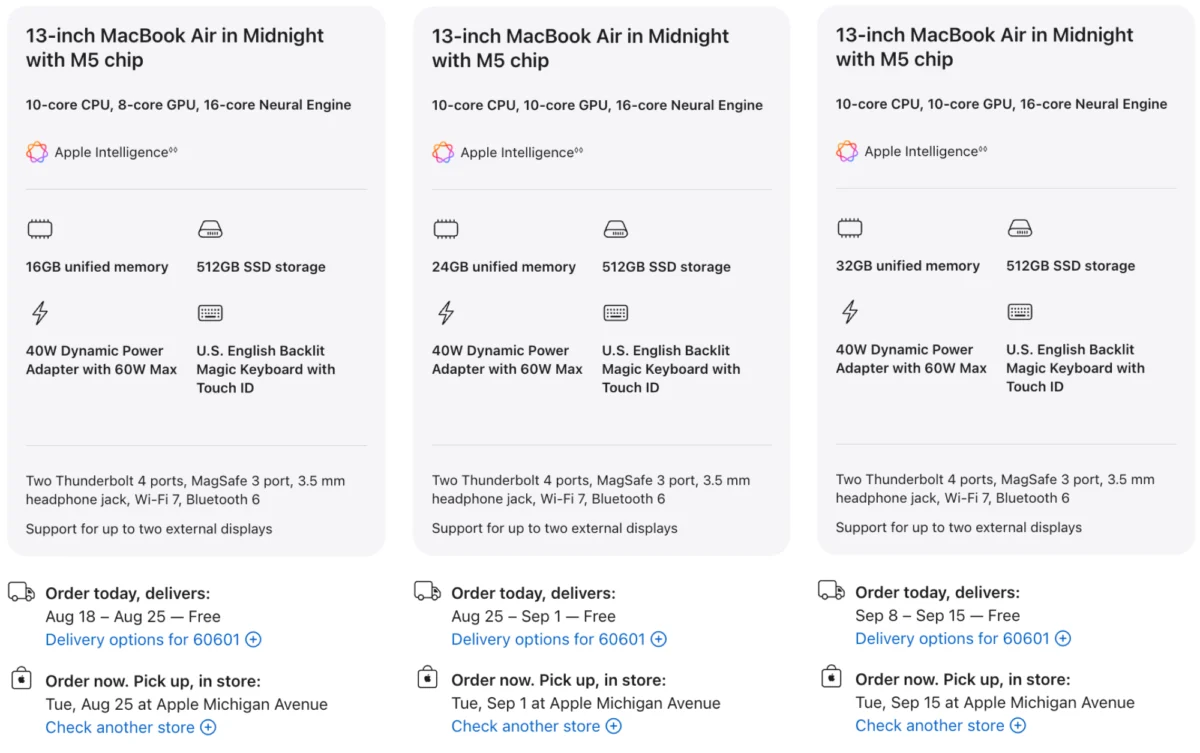
Data from Apple’s online storefront reveals the extent of the MacBook Air shortage. As of early August, almost every configuration of the current M5 MacBook Air is backordered, with estimated delivery dates slipping into September. For consumers seeking higher-tier configurations with 24GB or 32GB of unified memory, the wait times are even more pronounced. In many cases, these customized builds are showing delivery windows that are more than a month away, a rare occurrence for a product that is typically available for immediate shipping or same-day in-store pickup.
The Mechanics of the MacBook Air Shortage
The root cause of the current MacBook Air shortage lies in the shifting priorities of global semiconductor fabricators. The explosion of generative artificial intelligence has led to a massive surge in the construction of AI data centers, which require vast quantities of high-bandwidth memory (HBM) and standard DDR5 RAM. Because these data centers offer higher profit margins for chipmakers like Samsung, SK Hynix, and Micron, production capacity has been diverted away from the consumer-grade LPDDR5X memory used in laptops like the MacBook Air.
This pivot has left consumer electronics manufacturers competing for a dwindling supply of memory modules. Outgoing Apple CEO Tim Cook recently described the situation as a "100-year flood," suggesting that the current volatility in the component market is unlike anything the company has navigated in the modern era. While Apple’s massive scale usually grants it preferential treatment in the supply chain, the sheer volume of memory required for its AI-integrated M5 chips has made it vulnerable to these macroeconomic shifts.
The shortage is not limited to Apple’s official channels. While third-party retailers such as Amazon and Best Buy currently show limited stock with shorter shipping windows, industry experts warn that these inventories are likely remnants of older shipments. As these retailers deplete their current stock, they are expected to face the same backorder challenges currently seen on Apple.com. Some retailers have already begun adding disclaimers to their promotional materials, noting that the MacBook Air is "subject to availability."
Rising Costs and the Impact of RAMageddon
The economic fallout of the RAM crunch has been swift. When Apple raised the base price of the MacBook Air by $200 in late June, it marked a rare mid-cycle price adjustment for an existing product line. Historically, Apple tends to maintain pricing throughout a product’s lifecycle, but the unprecedented spike in memory and SSD storage costs made the previous pricing structure unsustainable. This "RAMageddon" effect has trickled down to almost every device in Apple’s portfolio that utilizes high-density storage or memory, including certain iPad Pro models.
For the average consumer, the MacBook Air shortage arrives at the worst possible time: the back-to-school shopping season. Traditionally, the months of July and August represent a peak sales period for Apple as students and educators take advantage of annual promotions. This year, Apple delayed its back-to-school offer from June to July, a move now understood to be a direct response to inventory concerns. By delaying the promotion, the company likely hoped to build up enough stock to meet the seasonal surge, but the persistent memory crisis has thwarted those efforts.
The scarcity of the MacBook Air has also led to a visible shift in Apple’s marketing strategy. Advertisements for the back-to-school season have increasingly highlighted the $1,999 base M5 MacBook Pro. By pushing consumers toward the more expensive Pro model—which typically has a higher profit margin and a different supply chain allocation for its components—Apple may be attempting to manage the demand for the currently unavailable Air models.

Strategic Product Shifts Amid Supply Constraints
The MacBook Air shortage has forced Apple to make difficult decisions regarding its broader product catalog. In a move to prioritize its highest-volume sellers, the company has reportedly removed several configurations of the Mac Mini and Mac Studio from its online store. These desktop units, which often share the same memory modules as the MacBook Air, have been sacrificed to ensure that whatever RAM is available can be directed toward the laptop lines.
Despite these tactical retreats, Apple is seeing record-breaking financial performance in its Mac division. In the company’s Q3 earnings call, Tim Cook noted that the Mac category experienced its "best June quarter yet," with revenue climbing 29 percent year-over-year. This growth was bolstered by the introduction of the MacBook Neo, a new budget-friendly entry in the lineup that has proven popular with price-sensitive buyers. However, Cook reiterated that the MacBook Air remains the "world’s most popular laptop," making its current shortage a significant hurdle for maintaining that momentum.
The disparity between record revenue and product shortages highlights the unique nature of the current market. While Apple is selling more Macs than ever, it is doing so at higher price points, which helps sustain revenue growth even if unit volume is constrained by component availability. However, if the MacBook Air shortage persists through the holiday shopping season, the company may struggle to meet the high expectations of Wall Street analysts for the final quarter of the year.
Geopolitical Maneuvers and the Chinese Chip Dilemma
To mitigate the effects of the memory crisis, Apple has reportedly turned to the political arena. According to reports from the Financial Times, the company is lobbying the Trump administration for special permission to source memory components from a blacklisted Chinese chipmaker. This manufacturer, which was placed on the "Entity List" due to national security concerns, represents one of the few remaining sources of large-scale memory production not currently overwhelmed by AI data center orders.
The move is seen as a desperate attempt to diversify a supply chain that has become dangerously concentrated. If Apple is granted a waiver, it could significantly alleviate the MacBook Air shortage by opening a new pipeline for DRAM and NAND flash storage. However, such a move is fraught with political risk, as it would require the administration to grant an exception to a major American corporation to deal with a sanctioned foreign entity during a period of heightened trade tensions.
The outcome of these lobbying efforts will have profound implications for the tech industry at large. If Apple succeeds, other tech giants like Dell, HP, and Microsoft may follow suit, seeking their own exemptions to bypass the RAM crunch. If the request is denied, Apple will remain at the mercy of the current market leaders, who show no signs of prioritizing consumer electronics over the lucrative AI sector.
The Long-Term Outlook for Consumer Electronics
The MacBook Air shortage serves as a harbinger for the broader consumer electronics industry. As AI continues to dominate the technological landscape, the competition for core components like memory and processing power will only intensify. This shift suggests that the era of consistently falling hardware prices may be over, replaced by a period of volatility where "subject to availability" becomes a standard caveat for even the most popular gadgets.
Industry analysts suggest that Apple may eventually be forced to redesign its internal architectures to use different types of memory that are less in demand by data centers. However, such a transition would take years of research and development. In the short term, consumers can expect continued delays and potential further price adjustments as Apple navigates the "100-year flood" of the global memory crisis.
For now, the MacBook Air remains the primary victim of this shift. As the most balanced offering in Apple’s lineup, its absence leaves a significant gap in the market. Whether Apple can resolve these supply issues before the end of the year remains to be seen, but the current state of the "RAM crunch" suggests that the road to recovery will be long and expensive for both the manufacturer and the consumer.