The Reserve Bank of Australia has officially acknowledged that the nation’s public is "furious" over a persistent cost of living crisis that remains the primary obstacle to economic stability. Andrew Hauser, the RBA’s Deputy Governor, warned on Tuesday that while the broader economy shows signs of resilience, the central bank’s core mission of taming inflation is far from over. This admission comes as a new economic analysis suggests that residents in Victoria could face significant increases in their utility costs due to shifting energy policies, further complicating the financial outlook for millions of households.
Speaking during a televised interview on the ABC’s 7.30 program, Hauser described inflation as the "one big problem" currently facing the Australian economy. While he noted that the country has maintained relatively low unemployment and has seen some growth in real household incomes, he emphasized that the current rate of price increases remains unacceptably high. The central bank is now under intense pressure as it prepares for its month-end board meeting, where mortgage holders fear a fourth interest rate hike this year. Although inflation eased slightly in July, the decline was less significant than economists had anticipated, keeping the possibility of further monetary tightening on the table.

RBA Concedes Australians Are Furious About Cost of Living
The RBA’s Hauser did not mince words when discussing the social impact of the bank’s fiscal policies. He noted that the anger felt by the public is a rational response to the erosion of purchasing power. According to Hauser, inflation acts as an "unfair" tax that disproportionately affects low-income earners who spend a larger percentage of their earnings on essential goods. Beyond the impact on individuals, he warned that high inflation damages price signals and creates an unpredictable environment for businesses, making long-term investment difficult.
Several external factors continue to fuel these inflationary pressures. Hauser pointed to the ongoing conflict in the Middle East, which has destabilized global energy markets, and an "unexpected global boom" driven by the rapid expansion of artificial intelligence. Furthermore, the Australian economy is struggling with a lack of supply potential, meaning it cannot currently produce enough goods and services to meet demand without driving prices higher. While the Deputy Governor maintained that a rate hike is not inevitable, he made it clear that the RBA’s primary mandate is to bring inflation back within its target range, regardless of the political or social friction it may cause.
Victorian Energy Bills Face Projected Spike Under Coalition Policy
Parallel to the central bank’s warnings, a new report from Nexa Advisory has sparked a political firestorm in Victoria. The analysis, commissioned by the non-profit group Environment Victoria, suggests that Victorian energy bills may rise by nearly $100 a year under a state Coalition policy to halt major transmission projects. Specifically, the report examines the potential impact of delaying the Western Renewables Link and the VNI West project. These projects are considered critical infrastructure for connecting new renewable energy sources to the state’s power grid.

The report estimates that postponing these projects would result in a nearly 40% increase in wholesale electricity prices by 2031. Without the ability to integrate cheaper wind and solar power, the state would likely be forced to rely on more expensive gas-fired generation. For the average household, this could mean an additional $472 in power costs over a five-year period. Small businesses could see their bills jump by more than $4,700, while large industrial users might face increases exceeding $11,000. By 2050, the cumulative cost to the state’s wholesale market could reach $33 billion, accompanied by an additional 8.6 million tonnes of carbon dioxide emissions.
The Battle Over Superannuation and Long-Term Stability
In Canberra, Treasurer Jim Chalmers has opened a new front in the government’s economic defense, targeting the Coalition and One Nation over their stance on the national superannuation system. Ahead of the release of the Intergenerational Report later this month, Chalmers warned that opposition plans to allow workers early access to their retirement savings would "diminish or destroy" the compulsory super regime. The Treasurer characterized these proposals as "crazy," arguing they would leave Australians significantly poorer in their senior years and place a massive burden on future federal budgets.
New Treasury projections indicate that the number of retirement-age Australians will nearly double to approximately 9 million by 2066. However, the existing superannuation system is expected to mitigate the cost of this demographic shift. The Intergenerational Report is projected to show that the share of older Australians relying on the aged pension will fall from 66% to 52% over the next four decades. Consequently, spending on pensions is expected to drop from 2.3% of GDP to 1.8% by 2066. This stands in stark contrast to other developed nations, such as the United Kingdom and Canada, where pension costs are expected to reach 10% and 8% of GDP, respectively.
Education Standards and the Call for a Digital Detox
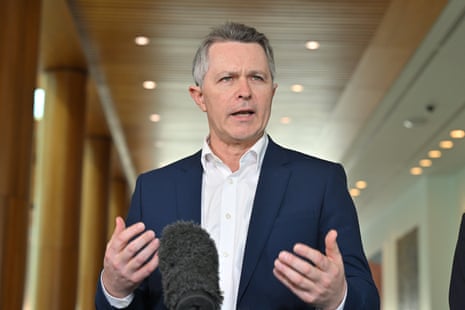
The economic debate has also extended into the classroom, following the release of the 2025 Programme for International Student Assessment (PISA) results. Education Minister Jason Clare highlighted a concerning trend: Australian year-nine students are regressing in reading and mathematics. While Australia remains above the OECD average, the gap between public and independent school students has widened to more than two years of learning. Clare attributed part of this decline to "cognitive stunting" caused by an over-reliance on technology in schools.
In response to the data, Clare has called for a "digital detox" in Australian educational institutions. While mobile phones have already been banned in many schools, Clare noted that tablets and laptops are now omnipresent, often serving as a distraction rather than a tool for learning. He suggested that while digital literacy and AI training are essential for the modern workforce, the current level of integration may be yielding negative academic results. The government is now looking toward curriculum reforms, particularly in mathematics, modeled after successful changes implemented in the United Kingdom over the past decade.
Integrity Concerns and Regional Migration Trends
Political tensions remain high regarding the distribution of government funds and the management of regional growth. Prime Minister Anthony Albanese recently defended a $6 million grant awarded to a golf club in his own electorate, Marrickville. Critics have characterized the grant as "pork-barrelling," noting that the infrastructure program from which it was drawn favored Labor-held or target seats. Albanese dismissed the criticism, stating that the funding was necessary to prevent raw sewage from the golf course from flowing into the Cooks River during flood events. He emphasized that he makes "no apology" for serving his local constituents.

Simultaneously, a new report from the Regional Australia Institute has revealed that migration is now fueling nearly half of all population growth in regional areas. In 2025, migrants accounted for 46.2% of regional growth, with a significant portion of those arrivals being working-age adults between 25 and 44. Healthcare providers have warned that any significant cuts to migration intakes could lead to catastrophic workforce shortages in rural areas. The institute is calling for a "nation-building approach" that prioritizes regional migration pathways to address skills shortages and support economic activity outside of the major capital cities.
Regulatory Oversight in the Digital Age
The government is also moving forward with its "digital duty of care" legislation, a move aimed at forcing social media platforms to take greater responsibility for the content they host. Prime Minister Albanese defended the bill against claims of censorship from the Coalition, specifically dismissing criticisms from Nationals leader Matt Canavan. The legislation would grant the Communications Minister and the eSafety Commissioner powers to require platforms to protect users from illegal or harmful content. Albanese noted that any new rules would be "disallowable," meaning the Senate maintains the power to reject them, ensuring parliamentary oversight.
However, the Australian Greens have expressed concerns that the legislation is too vague. Senator Sarah Hanson-Young warned that without tighter definitions, big tech companies might engage in "malicious compliance," finding loopholes to avoid genuine reform. The Greens are also pushing for higher penalties, suggesting that fines should be based on a percentage of a company’s global revenue rather than a fixed dollar amount. As the debate continues, the government remains firm in its stance that the era of self-regulation for digital platforms must come to an end to protect the mental health and safety of the Australian public.