T-Mobile issued a formal apology following a widespread cellular service disruption on Monday that left millions of subscribers across the United States without voice, text, or data capabilities for several hours. The incident has reignited a critical debate regarding the efficacy of the carrier’s much-vaunted satellite-to-cell partnership with SpaceX, as a significant number of affected customers reported they were unable to access the T-Satellite backup service during the period of terrestrial network failure. While the company has yet to provide a definitive technical post-mortem on the root cause of the primary outage, the apparent silence of the satellite backup system has raised questions about the reliability of space-based redundancy in urban and suburban environments.
The service interruption began in the early hours of Monday morning, quickly escalating into a nationwide crisis that saw "SOS" notifications appear on mobile devices from New York City to Seattle. For many, the outage was more than a mere inconvenience; it served as a real-world test for T-Satellite, a service marketed as a seamless safety net for when traditional cell towers are unreachable. However, as the terrestrial network remained dark, social media platforms were flooded with accounts from users who found their devices unable to establish a connection with the Starlink satellite constellation, despite being within the advertised coverage zones.
The Evolution of the T-Satellite Partnership
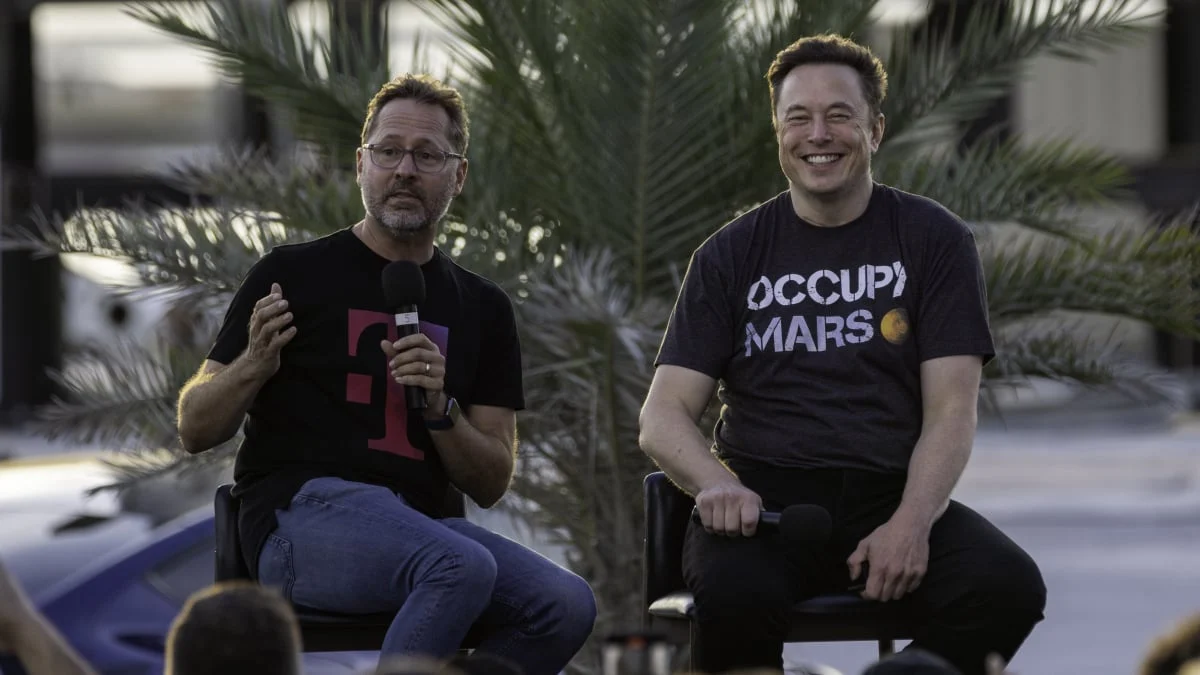
The framework for what would become T-Satellite was established in August 2022, when SpaceX CEO Elon Musk and then-T-Mobile leadership announced a high-profile "Coverage Above and Beyond" initiative. The partnership was designed to leverage SpaceX’s Low Earth Orbit (LEO) satellites to provide direct-to-cell connectivity, effectively promising to eliminate "dead zones" across the continental United States, Hawaii, Alaska, and Puerto Rico. After an extensive testing phase that began in early 2024, T-Mobile officially integrated T-Satellite into its consumer offerings last summer, positioning it as a revolutionary leap in mobile resilience.
T-Mobile’s marketing materials for the service emphasize that T-Satellite is designed to "connect you where towers can’t." The technology relies on specialized Starlink satellites equipped with "cell tower in space" payloads, which communicate directly with standard LTE and 5G smartphones without requiring specialized hardware or external antennas. In theory, when a phone loses its connection to a terrestrial site, it should automatically seek a satellite signal to facilitate emergency messaging and basic data transmission. This theoretical safety net, however, appeared to falter for many during Monday’s nationwide T-Mobile outage.
User Reports and the Failure of Automatic Failover
As the outage progressed, the discrepancy between marketing promises and user experience became a focal point of public frustration. On X, the social media platform formerly known as Twitter, and Reddit, thousands of users shared screenshots of their devices stuck in "SOS Mode" or displaying "No Service" icons. Many specifically questioned why their handsets did not transition to the T-Satellite network as advertised. One user noted that despite being in an open area, their device "tried and could not find a sat," while another lamented that the service, which they expected to be "amazing for exactly this," failed to activate during the critical window.
The frustration was compounded by recent executive commentary regarding the service. Just days prior to the outage, T-Mobile CEO Srini Gopalan had addressed the role of satellite connectivity during an earnings call, describing it as a "complementary" offering rather than a replacement for traditional cellular service. While Gopalan’s remarks were intended to manage expectations regarding data speeds and capacity, they did little to soothe customers who found that the "complementary" service was non-functional when the primary network collapsed.
Technical Barriers to Satellite Connectivity
Industry analysts point to several technical factors that may have prevented T-Satellite from functioning as a reliable backup during the T-Mobile outage. The most significant hurdle remains the requirement for a "wide, clear view of the open sky." Unlike traditional cellular signals, which can penetrate many building materials and bounce off urban structures, the high-frequency signals used by Starlink satellites are easily obstructed. Roofs, heavy foliage, and even the "urban canyons" created by skyscrapers can effectively block the line of sight required to maintain a stable satellite link.
During a localized emergency in a remote wilderness area, a user is likely to have the necessary sky clearance to send a T-Satellite message. However, during a nationwide outage that affects users in homes, offices, and vehicles, the vast majority of subscribers are likely indoors or shielded by obstructions. This physical limitation suggests that while T-Satellite may be an effective tool for hikers and rural residents, it currently offers limited utility as a general failover mechanism for the average urban or suburban customer. Furthermore, the handover process from a failing terrestrial tower to a satellite signal requires complex software orchestration that may have been hampered by the same underlying network issues that caused the outage itself.
Low Adoption and the "Three Zeros" Problem
Despite the high-profile nature of the SpaceX partnership, internal data suggests that T-Satellite has struggled to gain meaningful traction among the T-Mobile subscriber base. In an April 2026 earnings call, Gopalan admitted that usage was significantly lower than the company’s initial projections. By May 2026, the CEO provided a stark figure: satellite usage accounted for just 0.0002% of the company’s total network traffic. He characterized this as the "three zeros" problem, noting that even during the busiest summer months, the figure only rose to 0.0003%.
Independent data from Ookla, the parent company of Speedtest.net, corroborated this trend, indicating that T-Satellite engagement has actually declined since its initial launch. When the service first entered its beta period, T-Mobile reported that 1.8 million customers had signed up. However, the transition from a free beta to a paid model—where the service is either bundled into the $100-per-month "Experience Beyond" plan or offered as a $10-per-month add-on—appears to have dampened consumer enthusiasm. The lack of active users may also mean that many customers were simply unaware of how to manually trigger the service or were not on eligible plans when the Monday outage occurred.
Broader Implications for the Mobile Industry
The T-Mobile outage and the subsequent failure of its satellite backup have broader implications for the telecommunications industry’s "direct-to-device" (D2D) ambitions. Competitors such as AT&T and Verizon are also pursuing satellite partnerships, with AST SpaceMobile and Skylo being key players in the race to provide space-based redundancy. The events of Monday suggest that the marketing of these services may be outpacing their technical reality. If satellite backup cannot be relied upon during a major network failure in populated areas, its value proposition as a "safety feature" is significantly diminished.
Furthermore, the incident may draw the attention of federal regulators. The Federal Communications Commission (FCC) has been closely monitoring the development of supplemental coverage from space, emphasizing the importance of these technologies for public safety and emergency services. If a carrier markets a satellite service as a redundant safety net, but that net fails to deploy during a nationwide crisis, it could lead to increased scrutiny regarding advertising standards and network resilience requirements.
Next Steps for T-Mobile and SpaceX
In the wake of the disruption, T-Mobile faces the dual challenge of restoring consumer confidence and addressing the technical shortcomings of its backup systems. The company has stated that it is working to identify the specific cause of the terrestrial outage, but it has yet to issue a detailed statement regarding the T-Satellite performance issues reported by users. For SpaceX, the incident serves as a reminder that the "cell tower in space" model still faces significant atmospheric and structural hurdles before it can truly claim to provide "coverage above and beyond."
As the telecommunications landscape continues to shift toward a hybrid model of terrestrial and orbital connectivity, the Monday outage serves as a cautionary tale. While the promise of universal connectivity is a powerful marketing tool, the reality of physics and network architecture remains a formidable barrier. For the millions of T-Mobile customers who found themselves disconnected on Monday, the "future of connectivity" remains, for now, a work in progress. The industry must now reconcile the high-flying promises of satellite technology with the grounded reality of a standard Monday morning in America, where a clear view of the sky is often a luxury that mobile users cannot afford.