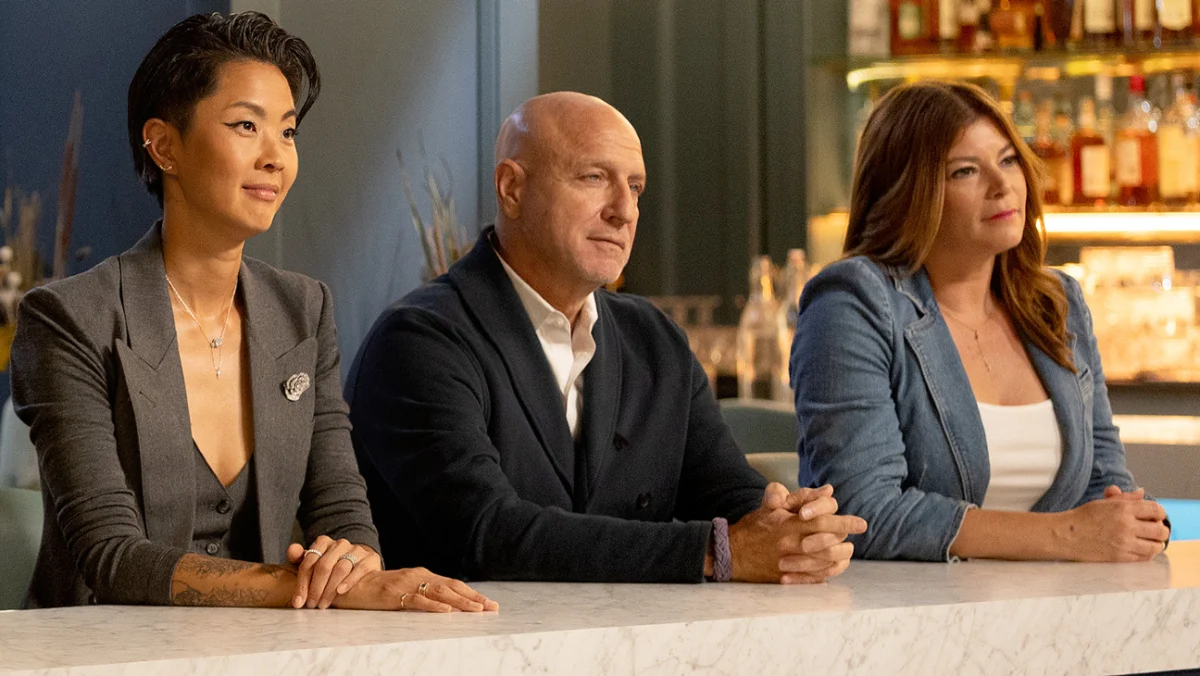
Celebrity chef Tom Colicchio asserts that Bravo’s Top Chef holds a cultural significance equivalent to a prestigious James Beard Award, a declaration made as the long-running culinary competition garners multiple Emmy nominations for its 23rd season. Colicchio, a cornerstone judge of the series, believes the show’s rigorous format, complex production, and profound impact on chefs’ careers elevate its standing far beyond typical reality television. His sentiment is echoed by fellow longtime judge Gail Simmons, who emphasizes the show’s unique challenges and its role in shaping culinary perceptions.
A Legacy of Culinary Excellence and Awards Recognition
Top Chef, which has aired for 23 seasons, has long been a fixture in the competitive reality television landscape, accumulating 57 Emmy nominations throughout its impressive run. The series last secured the coveted award for Best Reality Competition Program in 2010. This year, the show is once again a strong contender in that premier category, a testament to its enduring quality and appeal.
Beyond the top program honor, the series received additional nominations for its 23rd season. These include Best Reality Host for past Top Chef winner Kristen Kish, who is now in her third season leading the program. The show also earned recognition for outstanding casting and directing within the reality series genre, highlighting the intricate craft involved in its creation.
The Intricacies of Production: More Than Just a Studio Set
Colicchio and Simmons contend that Top Chef‘s demanding production environment sets it apart from many of its Emmy-nominated peers. Unlike shows primarily filmed in controlled studio settings, Top Chef frequently takes its elaborate kitchen setups on the road, creating substantial logistical hurdles. This mobility, they argue, necessitates a level of planning and execution that surpasses less complex productions.
"Our show is not done in a studio. It’s much easier to shoot a show in the studio," Colicchio recently shared with The Hollywood Reporter. He elaborated on the immense undertaking: "We’re out on location. We’ve got to pick up and build a kitchen, move 150 people on a crew, trucks, and it’s hard to do." He contrasted this with other reality programs that often operate within static, purpose-built sets, suggesting that the dynamic nature of Top Chef deserves greater acknowledgment.
Simmons strongly supports this view, highlighting the inherent difficulties of managing a mobile culinary operation. "It’s a more complicated show to shoot than a lot of other shows in the category, if I may say, and we’re on location in a different place every season," she noted. She pointed out the constant presence of "perishables and knives and fire at all times," elements that demand meticulous handling and can often be overlooked by viewers.
Season 23: Navigating Unforeseen Challenges
The Emmy-nominated 23rd season, filmed across diverse locations in North Carolina and Greenville, South Carolina, presented its own unique set of challenges beyond the typical complexities of on-location shoots. Simmons recalled a particularly arduous production period, noting that it wasn’t just difficult for the crew but also for the competing chefs.
The season saw one contestant withdraw midway through due to medical reasons, aggravating a prior injury, a rare occurrence on the program. "There were casualties along the way, not just eliminations," Simmons reflected, underscoring the intensity and unexpected difficulties encountered. She praised the production team’s ability to "piece the jigsaw puzzle together" under pressure, delivering a coherent and compelling narrative despite the setbacks.
Humanity and Camaraderie: An Evolving Dynamic
Beyond the technical difficulties, both Colicchio and Simmons lauded the "human story" and "humanity" that emerged as a central theme in Season 23. A memorable moment early in the season saw host Kristen Kish offer compassionate support to contestant Nana Araba, who was visibly emotional and frustrated after failing to plate all elements of her dish. This empathetic interaction resonated deeply with audiences and highlighted Kish’s evolving presence on the show.
Kish herself acknowledged her growing comfort in the hosting role, likening it to a "muscle being exercised." She described her ability to be "fully myself in all the different ways," reacting authentically to the unique energy of each season and batch of chefs. Her approach fosters a genuine, real-time dynamic, distinguishing Top Chef from more scripted or formulaic reality formats.
A notable shift in recent seasons has been the increasing camaraderie among the competing chefs, a departure from the cutthroat rivalries often depicted in reality television. Colicchio attributes this change partly to a broader evolution within the culinary industry itself, which he observes has become "a lot less cutthroat than it used to be." Many contemporary chefs, he suggests, grew up watching Top Chef and actively choose not to embody negative stereotypes.
"They don’t want to be that person," Colicchio explained, emphasizing that chefs now understand "you don’t have to be backstabbing to win this." The focus remains squarely on the food, mirroring the collaborative nature of a professional kitchen where teamwork is essential for success. This supportive environment, he believes, ultimately leads to a better experience for all involved and allows chefs to win on their own terms by making the best food.
Rhoda Magbitang’s Victory: A Testament to Pure Culinary Skill
The recent winner of Season 23, Rhoda Magbitang, exemplifies this meritocratic approach to judging. Colicchio affirmed that the judges’ decisions are based solely on culinary prowess. "We don’t judge on personality; we don’t judge on looks. We judge on food. Her food was consistently the best food," he stated. Magbitang’s strong finish and superior finale meal secured her victory, a clear demonstration that exceptional cooking reigns supreme.
Simmons further elaborated on Magbitang’s standout qualities, praising her articulate explanations of her culinary philosophy, her personal story, and her inherent confidence. She highlighted Magbitang’s "knack for putting together beautiful flavors" that were "spicy and complex and interesting," often employing deep techniques unfamiliar even to the seasoned judge. Simmons noted that the most successful Top Chef winners master the art of personalizing their culinary heritage, differentiating their dishes with a unique, individual voice.
A Culinary Benchmark: Elevating the Industry
For Colicchio, Top Chef transcends mere entertainment; it has become a "culturally really important" institution within the culinary industry. He places its prestige on par with esteemed accolades like the James Beard Award, which celebrates excellence in the American food scene, or Food & Wine‘s Best New Chef recognition. Winning Top Chef, he argues, is a significant "feather in your cap" that provides invaluable exposure and credibility for aspiring chefs.
The show’s influence extends to tangible career advancements, making it "easier to raise money" for winners looking to open their own restaurants. This is particularly crucial for demographics that historically face challenges in securing funding within the industry. Colicchio views Top Chef as a vital platform, stating, "My goal is to just keep doing this for our industry. I think if we ever go away, that’s one less thing. It’s like the Beard Award. If all of a sudden they stop doing it, what am I shooting for now?"
Simmons shares a similarly expansive vision for the show’s future, crediting its producers and Bravo for its ongoing evolution. She aims for Top Chef to continue broadening public perceptions of "good food," fostering greater appreciation for diversity, and expanding ideas of travel and compassion. She also seeks to shine a spotlight on the countless individuals working diligently behind the scenes in the food industry, whose efforts often go unnoticed. Simmons believes there are "endless locations" and "endless great young chefs" yet to be featured, all of whom she wishes to see succeed.
Anticipating Season 24: New Locations, New Stories
With Colicchio, Simmons, and Kish all confirmed to return, Top Chef is poised for its 24th season, announced by Bravo at NBCUniversal’s May upfront. While the specific filming location and production schedule remain under wraps, some details have emerged regarding the upcoming installment.
Simmons revealed that Season 24 will commence filming later than usual, pushing back the production start by a couple of months. This shift offers a rare personal benefit for Simmons, allowing her a full summer with her family and the opportunity to attend her children’s first day of school for the first time in years. While specifics are scarce, she confirmed that Season 24 is slated for a 2027 release.
Kish, though sworn to secrecy about the location, expressed immense excitement, teasing that the delayed schedule will ultimately make sense once the destination is revealed. She assured viewers that the upcoming season promises to be "incredible," both for the cast experiencing it and for the audience watching it unfold.
Simmons, ever the enthusiast for new culinary horizons, maintains a personal wish list for future seasons. While an international destination like Tokyo remains a dream, she expects the show to continue exploring diverse domestic locales. Her suggestions include vibrant cities such as Atlanta, Philadelphia, Nashville, and a return to Chicago, where the show last filmed for Season 4 nearly two decades ago. She also expressed a desire to explore regions like the Southwest, specifically New Mexico, recognizing the vast tapestry of unique cultural locations across the U.S. that offer rich storytelling opportunities and diverse culinary traditions for audiences to discover.
As Top Chef continues to evolve and push creative boundaries, its central role in the national culinary dialogue remains undisputed. Its blend of high-stakes competition, compelling human stories, and unwavering commitment to showcasing authentic food artistry ensures its ongoing relevance and cements its status as a vital institution within the American food landscape.