Treasury Secretary Scott Bessent on Monday declared the commencement of a sweeping financial offensive aimed at the total isolation of the Iranian regime, characterizing the move as an unprecedented effort to sever Tehran’s remaining ties to the international marketplace. Speaking from the Treasury Department in Washington, Bessent announced the launch of "Operation Economic Outcast," an aggressive campaign designed to systematically dismantle the financial networks that sustain the Iranian government and its regional proxies.
The announcement, made at the explicit direction of President Donald Trump, marks a significant escalation in the administration’s "maximum pressure" strategy. Bessent described the measures as an "economic onslaught" that will target not only the Iranian state but also any third-party "enablers" that continue to facilitate trade with the country. The objective, according to the Treasury, is to ensure that Tehran stands completely alone on the global stage, deprived of the revenue necessary to fund its military operations and nuclear ambitions.
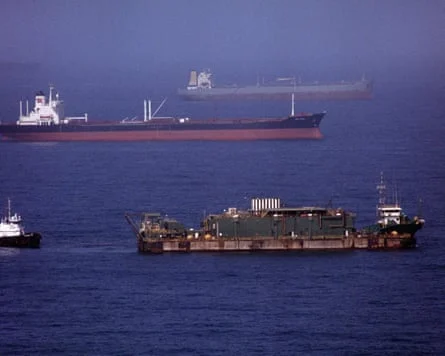
The sanctions are designed to hit five primary sectors of the Iranian economy: digital assets, technology, gold, aviation, and shipping. These areas have been identified by U.S. intelligence as the primary lifelines used by the regime to bypass existing restrictions. In tandem with the policy announcement, the Treasury’s Office of Foreign Assets Control (OFAC) moved to sanction more than 60 specific entities, individuals, and vessels across the globe, accusing them of aiding the Iranian Revolutionary Guard Corps (IRGC) in smuggling oil and procuring illicit missile technology.
Operation Economic Outcast: A Strategy of Economic Asphyxiation
Bessent’s rhetoric during the press conference was notably sharp, as he referred to the new policy as a form of "economic asphyxiation." He warned that the United States has mapped "every node, every facilitator, and every network" used by Iran to evade international law. The administration’s goal is to leave the Iranian leadership with two stark choices: total global isolation in a subsistence-level economy or a return to diplomatic norms that would allow for a eventual reintegration into the world market.
Despite the aggressive posture, the Treasury Department is not implementing the full weight of these sanctions immediately. Bessent explained that a "cure period" has been established to allow foreign nations and private corporations currently doing business with Iran an opportunity to "remedy bad behavior." When questioned by reporters about the delay, Bessent noted the sensitivity of the global markets, asking rhetorically, "Why would I want to blow up the global financial system?"
The Treasury Secretary emphasized that while the U.S. is currently engaging in "quiet diplomacy" with trade partners, its patience is not infinite. He warned that once the grace period expires, the "hammer of U.S. Treasury actions" will fall on those who have failed to divest. This graduated approach is intended to provide stability for the U.S. dollar and international banking while still achieving the primary goal of cutting off Iran’s access to hard currency.
The China Question and Secondary Sanctions
One of the most significant points of contention during the briefing involved the potential for secondary sanctions against major world powers, specifically China. As the largest importer of Iranian crude oil, China remains the primary obstacle to the administration’s goal of reducing Iranian oil exports to zero. Bessent notably evaded direct questions regarding whether Beijing would face immediate penalties for its continued energy purchases.
"We know who they are, they know who they are," Bessent said, referring to the countries continuing to trade with Tehran. He declined to "name names" regarding the world leaders President Trump has been in contact with, but he insisted that no nation would be considered above the law. The ambiguity surrounding China suggests a high-stakes diplomatic standoff, as the U.S. seeks to pressure Beijing into compliance without triggering a broader trade war that could destabilize the global economy.
The pressure on Iran is already manifesting in the currency markets. On Monday, the Iranian rial plummeted to an all-time low, trading at nearly 2 million per U.S. dollar on the unregulated market. This 4.5% drop in a single week reflects growing panic within Iran as the "economic D-Day" promised by Bessent in a recent op-ed nears reality. President Trump, posting on his Truth Social platform, claimed that "IRAN IS COMPLETELY COLLAPSING," though he provided no specific intelligence to support the assertion.
Regional Realignment and the UAE Shift
In a move that caught many international observers by surprise, the United Arab Emirates (UAE)—previously Iran’s most significant trading partner in the Middle East—announced it would cease all trade with Tehran. The decision is widely viewed as a result of intense coordination between Washington and Abu Dhabi. Tehran has condemned the move as a "desperate" ploy by the U.S., even as Iranian President Masoud Pezeshkian acknowledged that his citizens are facing "many problems" due to the tightening economic noose.

The shift by the UAE provides a template for what the Trump administration hopes to achieve with other regional actors. By forcing a choice between access to the U.S. financial system and trade with Iran, the Treasury is effectively creating a "sanitary cordon" around the Iranian economy. Bessent made it clear that those who stand with the United States will "reap the rewards" of partnership, while those who remain tethered to the Iranian regime will share in its "withering isolation."
Trade Tensions Escalate with Canada
While the Treasury focused on Iran, the administration is simultaneously managing a volatile trade dispute with Canada. President Trump on Monday threatened to increase tariffs on Canadian automobiles, trucks, and auto parts to 50% following the collapse of trade negotiations over the weekend. The new duties are scheduled to take effect on January 1, 2027, adding another layer of complexity to the North American economic landscape.
The breakdown in talks occurred after Canadian Prime Minister Mark Carney rejected a U.S. proposal, characterizing the demands as "unfair" and "uneconomic." In response, Trump blasted Canada on social media, stating, "WE DON’T NEED CANADA, THEY NEED US!" The President’s rhetoric has sparked a fierce backlash in Ottawa, where Carney has vowed "dollar for dollar" retaliation against U.S. exports.
The tension was further exacerbated by comments from Vice President JD Vance during a campaign stop in Maine. Vance referred to Canada as a "state" before calling it a "Freudian slip." He criticized the neighbor to the north for underinvesting in its military and suggested that Canada only exists safely under the "umbrella of protection" provided by the United States. These comments have fueled a growing movement in Canada to expel the U.S. ambassador, with a petition gaining hundreds of thousands of signatures.
Domestic Pushback and Republican Dissent
The administration’s trade policies are also facing internal resistance from within the Republican Party. Several GOP lawmakers expressed concern over a recent decision to temporarily pause tariffs on foreign beef, which would allow 300,000 metric tons of imports into the U.S. The President argued the move would lower food prices for American consumers, but ranchers in the Midwest and West claim it will devastate an industry already struggling with a 75-year low in cattle supply.
Senator Pete Ricketts of Nebraska and Senator Tim Sheehy of Montana, both frequent allies of the President, warned that flooding the market with lower-quality foreign beef is a "short-term fix" that compromises American farmers. Representative Ashley Hinson of Iowa also voiced opposition, stating that while lower prices are a priority, the administration should focus on allowing domestic market conditions to stabilize rather than relying on foreign imports.
In Maine, Republican Senator Susan Collins joined the chorus of critics, focusing on the impact of the Canadian trade war. Collins, who is facing a difficult re-election battle, noted that the "on-again/off-again" nature of the trade talks has created "higher costs, risk, and uncertainty" for Maine’s businesses, particularly those in the lobstering and farming sectors. Her decision to skip a campaign event with Vice President Vance highlighted the growing friction between moderate Republicans and the administration’s hardline trade agenda.
Political Friction and the Kushner-Jeffries Meeting
As the administration moves forward with its international economic agenda, domestic politics remain fraught with controversy. House Democratic Leader Hakeem Jeffries is facing a "fierce backlash" from within his own party following reports of a private meeting with Jared Kushner, the President’s son-in-law and influential advisor. Critics, including former Obama administration aides and progressive activists, have questioned why the Democratic leader would engage with a figure who has been a central target of ethics complaints regarding foreign business dealings.
Jeffries defended the meeting in a statement, arguing that Democrats must engage with the administration to address the "affordability crisis" facing American families. However, the timing of the meeting—just months before the 2026 midterm elections—has led to concerns that it could undermine Democratic efforts to investigate the Trump family’s financial ties to foreign governments if they retake the House.
The confluence of these events—the "Operation Economic Outcast" sanctions, the escalating trade war with Canada, and the internal political strife in Washington—underscores a period of intense volatility in U.S. foreign and domestic policy. As the Treasury Department begins the process of disconnecting Iran from the global economy, the consequences of these actions will likely reverberate through international markets and domestic polling booths for months to come.