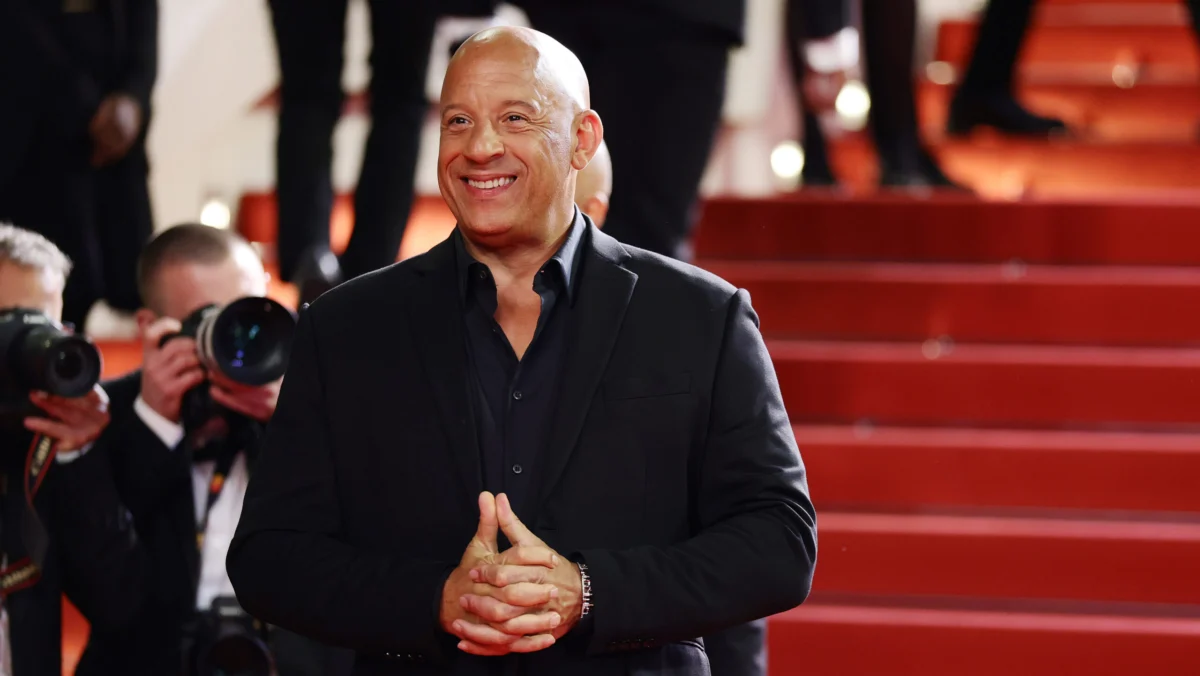
Hollywood veteran Vin Diesel has publicly expressed profound enthusiasm for the script of Fast Forever, the upcoming eleventh installment in the Fast & Furious saga, describing it as the finest screenplay he has encountered in decades and admitting to being moved to tears. The actor, who portrays the iconic Dominic Toretto, shared his powerful reaction on social media, signaling a highly anticipated conclusion to the blockbuster franchise slated for release in 2028.
Diesel took to Instagram on Saturday, detailing his experience reading the script penned by Michael Lesslie. In a post accompanying a trailer for the theatrical re-release of the original The Fast and the Furious, scheduled for August 21 to commemorate its 25th anniversary, Diesel wrote, "I just read the Fast Forever script by [Michael Lesslie]. It is the best script I have read in decades. I am still crying." His comments have immediately fueled widespread speculation and excitement among the franchise’s global fanbase, hinting at an emotionally charged and climactic narrative for the finale.
The actor further emphasized the interconnectedness of the series’ past and future, urging fans to revisit the original film in theaters. "When March 17th 2028 comes… you will thank God you got to see the first one in the theaters this summer," he added, linking the foundational experience of the franchise’s inception to the profound impact expected from its ultimate chapter. This deliberate connection underscores Universal Pictures’ strategy to bridge the series’ rich history with its impending conclusion.
The Emotional Resonance of Fast Forever
Diesel’s rare public display of emotion regarding a script is a significant indicator of the depth and quality of Fast Forever. Throughout his career, Diesel has been closely involved in the creative direction of the Fast & Furious films, often serving as a producer and a key voice in shaping the franchise’s narrative. His personal investment in Dominic Toretto’s journey and the overarching theme of "family" has been a cornerstone of the series’ enduring appeal. For an actor of his experience to describe a script in such superlative terms suggests that Lesslie’s work has tapped into the very core of what makes the Fast & Furious universe resonate with millions.
The phrase "I am still crying" particularly stands out, suggesting that the script delves into profound emotional territory, potentially exploring themes of loss, legacy, and redemption in ways not seen before in the action-heavy franchise. Fans have long been invested in the character arcs of Dom and his crew, and a finale capable of eliciting such a strong reaction from its lead actor promises a powerful and memorable cinematic experience. This emotional weight is expected to be a critical element in distinguishing Fast Forever from previous installments and solidifying its place in film history.
A Legacy Built on Speed and Family
The Fast & Furious franchise began in 2001 with The Fast and the Furious, a film centered on street racing culture and an undercover cop infiltrating an illicit racing crew. Over two decades, it has evolved from a series of relatively grounded action films into a global phenomenon, renowned for its increasingly outlandish stunts, diverse international cast, and unwavering commitment to the theme of "family." The films have consistently pushed the boundaries of physics and spectacle, culminating in an intricate cinematic universe that blends espionage, heist thrillers, and high-octane vehicular combat.
With a worldwide box office gross exceeding $7 billion, the Fast & Furious series stands as one of the most successful film franchises of all time. Its longevity is attributed not only to its thrilling action sequences but also to the strong emotional bonds between its characters, particularly the central figure of Dominic Toretto, portrayed by Diesel, who serves as the patriarch of this chosen family. The franchise has cultivated a fiercely loyal fan base, many of whom have grown up alongside the films and their evolving narratives.
The Road to the Finale
Fast Forever is positioned as the definitive conclusion to the main Fast & Furious saga. It follows 2023’s Fast X, which served as the first part of what was initially conceived as a two-part finale. Directed by Louis Leterrier, Fast X set the stage for a dramatic showdown, featuring franchise stalwarts Michelle Rodriguez, Tyrese Gibson, Ludacris, Jordana Brewster, and Sung Kang, alongside a new generation of antagonists and allies including Jason Statham, John Cena, Helen Mirren, Charlize Theron, Jason Momoa, Brie Larson, and Alan Ritchson.
The production timeline for the finale has seen some adjustments. A direct sequel to Fast X was initially anticipated for a spring 2025 release but was subsequently delayed. Vin Diesel officially confirmed in February 2024 that the next film, now identified as Fast Forever, would indeed serve as the grand finale, wrapping up the core narrative that has spanned over two decades. This confirmation has amplified expectations for a conclusion that honors the franchise’s past while delivering a satisfying and impactful resolution.
Paul Walker’s Enduring Presence
A significant element of the franchise’s emotional core, and a source of constant fan speculation, is the character of Brian O’Conner, famously portrayed by the late Paul Walker. Walker’s tragic death in a car crash on November 30, 2013, at the age of 40, occurred during the production of Furious 7. The filmmakers, in a testament to Walker’s legacy and the character’s importance, completed his remaining scenes using a combination of CGI, archival footage, and stand-ins by his brothers, Caleb and Cody Walker, culminating in an emotionally resonant send-off for Brian.
Vin Diesel has frequently alluded to the possibility of Brian O’Conner’s return in the finale, a prospect that carries immense emotional weight for both the cast and the audience. Last year, at FuelFest, an automotive event organized by Cody Walker, Diesel teased that the final movie would mark a "return to the car culture, to the street racing," and hinted at a reunion between Dom and Brian. "That is what you’re going to get in the finale," Diesel stated, suggesting that the narrative of Fast Forever might ingeniously weave Brian back into the story, perhaps through flashbacks, digital recreation, or a symbolic presence that honors his indelible mark on the family.
The prospect of Brian O’Conner’s character being meaningfully incorporated into Fast Forever is not merely fan service; it represents an opportunity to bring closure to a storyline deeply intertwined with the franchise’s identity and its real-world tragedy. Diesel’s emotional reaction to the script could very well be tied to how Lesslie has navigated this sensitive and crucial aspect of the Fast & Furious legacy.
Industry Expectations and Cultural Impact
The announcement of a potentially groundbreaking script for Fast Forever arrives at a pivotal moment for Universal Pictures and the broader film industry. Franchise filmmaking has become a cornerstone of Hollywood’s economic model, with established intellectual properties often guaranteeing significant box office returns. The Fast & Furious series is a prime example of this success, consistently delivering global blockbusters. A powerful, critically acclaimed finale could not only bolster Universal’s coffers but also elevate the franchise’s standing beyond mere commercial success, cementing its legacy as a compelling cinematic achievement.
The cultural impact of the Fast & Furious saga extends beyond the silver screen. Its themes of loyalty, chosen family, and the celebration of car culture have resonated deeply across various demographics. The films have also been praised for their diverse casting, contributing to a more inclusive representation in mainstream action cinema. The emotional resonance promised by Diesel for Fast Forever suggests a film that will not only entertain but also potentially provoke thoughtful discussion about its characters’ journeys and the overarching narrative arcs.
Universal’s Enduring Franchise
Universal Pictures has strategically expanded the Fast & Furious universe beyond the core film series. This includes the successful spin-off Hobbs & Shaw and, notably, a television series currently under development for Peacock, featuring Vin Diesel as a producer. This multi-platform approach ensures the longevity of the brand, even as the main saga concludes. The strength of the Fast Forever script is therefore not just about ending one chapter, but about reaffirming the overall value and potential for future storytelling within the Fast & Furious IP.
The studio’s commitment to delivering a high-quality finale is evident in the time taken for script development and the strategic delays. Ensuring that Fast Forever provides a satisfying and memorable conclusion is paramount, as it will inevitably shape how the entire franchise is remembered and how future spin-offs or derivative content are received. A truly exceptional script, as Diesel suggests, could provide the perfect springboard for these extended universe endeavors.
The Future Beyond Fast Forever
As the curtain prepares to fall on Dominic Toretto’s central narrative in Fast Forever, the industry and fans alike will be watching closely to see how Universal plans to evolve the Fast & Furious brand. While the core saga concludes, the universe is clearly poised for continuation through other mediums and character spotlights. The success of Fast Forever will undoubtedly influence these future ventures, potentially setting a new benchmark for how long-running franchises can gracefully conclude their main storylines while paving the way for new narratives.
The emotional impact Vin Diesel describes, combined with the strategic re-release of the original film, underscores a deliberate effort to celebrate the franchise’s history while looking towards its definitive ending. The promise of a script that is both "the best in decades" and capable of eliciting tears suggests that Fast Forever aims to be more than just another action film; it aspires to be a cinematic event that provides profound closure and leaves an indelible mark on its audience, much like the original film did a quarter-century ago.