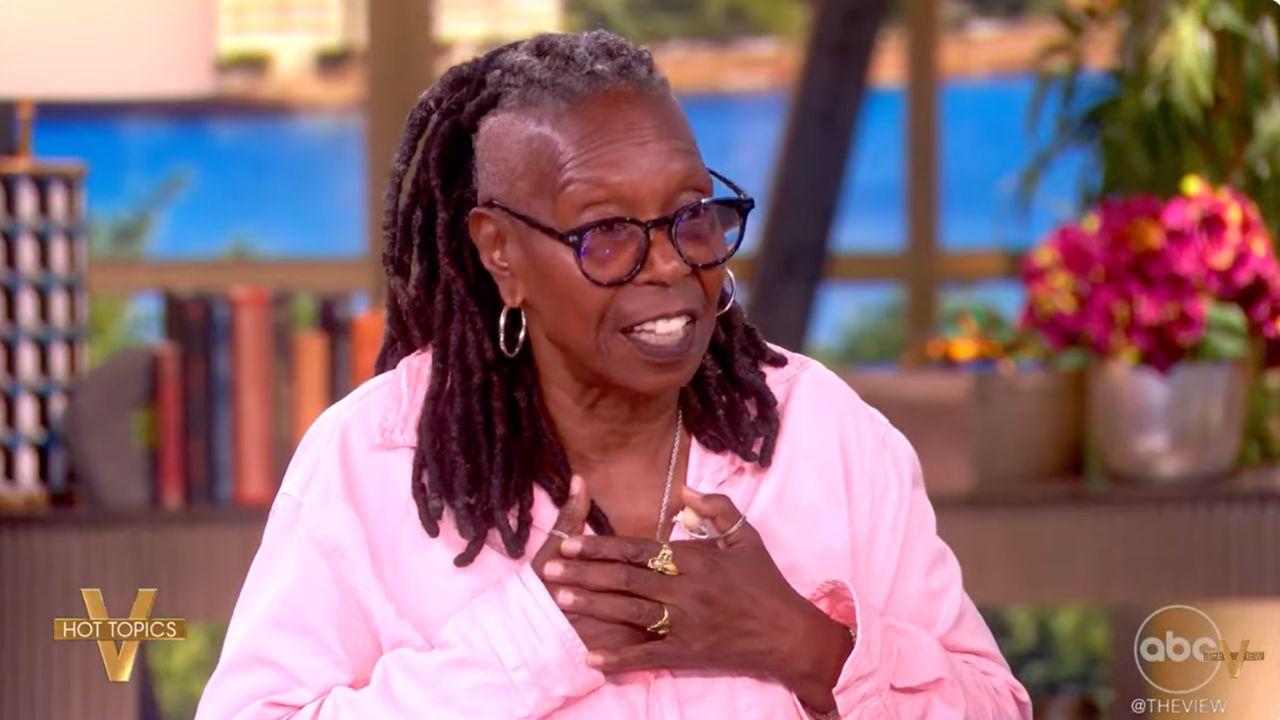
Whoopi Goldberg, the esteemed moderator of ABC’s long-running talk show "The View," recently disclosed a profoundly pointed question she consciously chose not to ask Senator Ted Cruz during his September 9 appearance: "What is your job now? What do you do?" The revelation, shared by Goldberg with her co-hosts the day after the Republican senator’s visit, quickly became a focal point for a broader discussion about perceived legislative stagnation and the engagement levels of elected officials, particularly as the nation approached critical midterm elections.
The unasked question, while directed at Senator Cruz, was framed by Goldberg as a general critique of politicians across the spectrum, reflecting a widespread public sentiment regarding the efficacy of governance in Washington. Her candid admission offered a glimpse into the internal deliberations of a seasoned interviewer navigating the complex landscape of political discourse on live television, balancing the urge for direct confrontation with the show’s established ethos of respectful, albeit often vigorous, debate.
The View: A Nexus of Political Dialogue

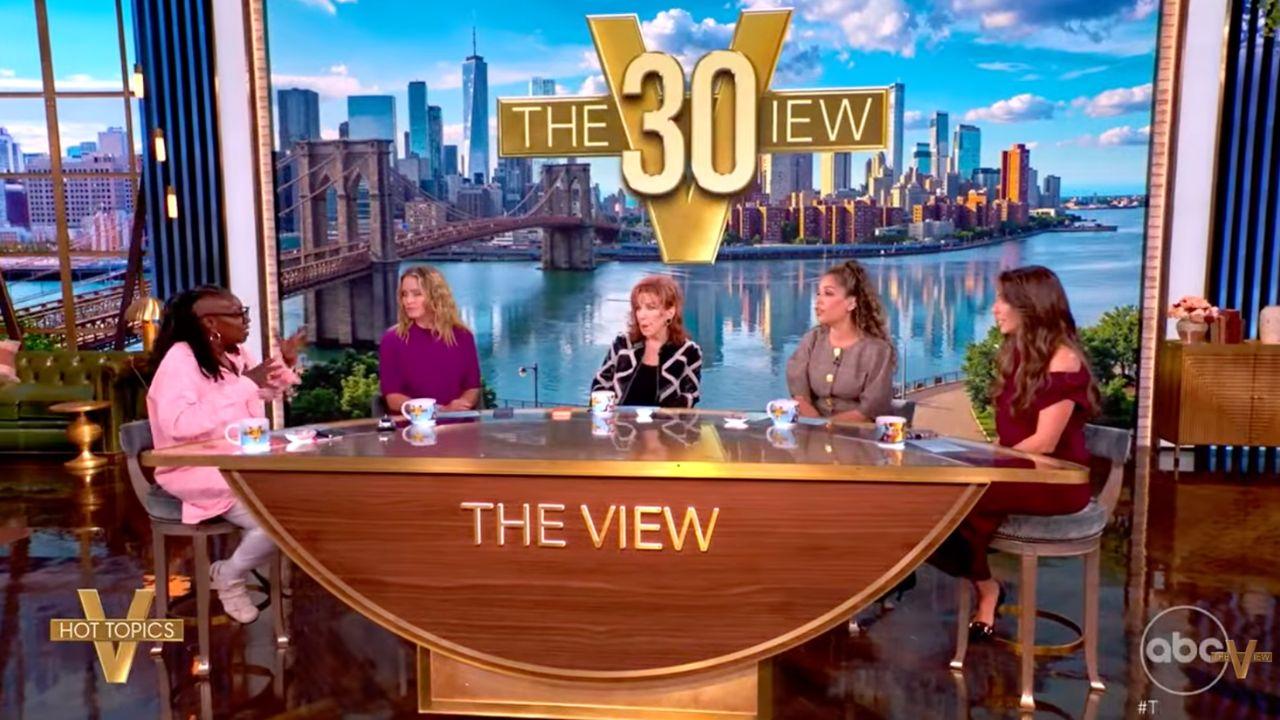
"The View" has long served as a prominent platform for political discussion, established by broadcasting icon Barbara Walters with a vision for women from diverse backgrounds to share their perspectives. Over its decades on air, the show has become synonymous with spirited debates, often inviting high-profile political figures from both sides of the aisle to engage in direct dialogue with its panel of co-hosts. Whoopi Goldberg, as the show’s lead moderator, plays a pivotal role in guiding these conversations, frequently interjecting with her characteristic blend of wit and earnestness.
Senator Ted Cruz, a conservative Republican representing Texas in the U.S. Senate since 2013, is a figure who frequently garners strong reactions, particularly within liberal-leaning media environments. His appearances on shows like "The View" are often anticipated for their potential for contentious exchanges, offering a rare opportunity for direct engagement between a prominent conservative voice and a panel known for its progressive viewpoints. His visit on September 9 marked his first time on the program, setting the stage for an already charged atmosphere.
Senator Cruz’s Appearance and Audience Dynamics
The anticipation surrounding Senator Cruz’s debut on "The View" was palpable, and upon his introduction, the live studio audience responded with vocal boos. This immediate, negative reaction underscored the deep political divisions prevalent in the country and the often-polarized nature of public sentiment towards figures like Cruz. However, Goldberg quickly intervened, taking a moment to address the audience directly and firmly.

She reminded the attendees of the show’s foundational principle, articulated by Barbara Walters, that "The View" is a space for open conversation, where individuals from all political leanings are welcome to express their views. Goldberg stressed the importance of respect, even in disagreement, joking that sometimes "it’s like a burp. It comes up and so just swallow it back down." Her swift action aimed to uphold the integrity of the program as a forum for dialogue rather than mere partisan acrimony, a delicate balance the show frequently navigates.
Despite the initial tension, the interview itself reportedly proceeded with a degree of civility. The co-hosts and Senator Cruz engaged in discussions on various serious topics, interspersed with moments of levity. For instance, when Cruz was asked to grade former President Donald Trump’s economy, he offered an "A." This prompted a playful retort from co-host Joy Behar, who quipped, "No. No, come on. Come on, it’s us. It’s just us." Cruz, in turn, acknowledged the panel’s differing views on Trump, stating, "I recognize that the day he came in, you guys didn’t like him, and you still don’t like him. That’s okay. That’s the beauty of democracy. You can have different views." This exchange exemplified the show’s capacity for respectful disagreement, even on highly sensitive political subjects.
The Weight of an Unasked Question for Ted Cruz
The significance of Goldberg’s unasked question — "What is your job now? What do you do?" — extends far beyond Senator Cruz alone. Her follow-up commentary, where she questioned whether "these guys… have they been to work? When is the last time anybody did anything?" articulated a broader frustration with the perceived lack of legislative productivity in Washington. This sentiment resonates deeply with many Americans who often feel that their elected representatives are more focused on political maneuvering and re-election campaigns than on addressing pressing national issues.

Goldberg’s remarks were made during a discussion about the Republican midterm convention, where she emphasized that many states are "purple," meaning they are not overwhelmingly Republican or Democrat. This observation highlights the complex and often nuanced political landscape of the United States, suggesting that politicians must cater to a broader electorate than just their partisan base. Her frustration, therefore, stems from a desire for politicians to actively govern and produce tangible results for all citizens, irrespective of their state’s dominant political color.
The critique was not without nuance. Co-host Alyssa Farah Griffin, a former Trump administration official, pointed out that Senator Cruz was actively "doing something good" in regards to restricting artificial intelligence (AI). Goldberg conceded this point, acknowledging that Cruz was indeed engaged in constructive work. However, she quickly pivoted back to her broader concern, asking, "But where’s the rest of them? Where is everybody?" This broader question was amplified by Sunny Hostin, another co-host, who explicitly asked, "Where’s Mitch McConnell?" Goldberg echoed the query, underscoring a collective frustration with the perceived invisibility and inaction of key political leaders leading up to crucial elections.
Analyzing the Public’s Demand for Accountability
Goldberg’s unspoken question taps into a prevalent public demand for greater accountability from elected officials. In an era of increasing political polarization and seemingly constant legislative gridlock, many citizens express disillusionment with the pace and effectiveness of government. The perception that politicians are not actively "working" or "doing anything" contributes to declining public trust in institutions and fosters a sense of disconnect between the governed and their representatives.
The mention of specific legislative work, such as Senator Cruz’s efforts on AI, serves as a crucial counterpoint. It demonstrates that some legislative activity does occur, even if it often remains below the radar of general public awareness, overshadowed by more contentious political debates. However, for many, these individual efforts do not sufficiently address the larger narrative of systemic inertia and the failure to tackle major national challenges effectively.
The dialogue on "The View," sparked by Goldberg’s internal debate, reflects the media’s evolving role in holding power accountable. While direct, confrontational questioning is often a hallmark of political journalism, Goldberg’s decision to self-censor in the moment, only to reveal her true query later, illustrates the complexities of live television. It raises questions about whether maintaining an amicable, albeit critical, dialogue serves a greater purpose than an instantly gratifying, but potentially incendiary, direct challenge.
Broader Implications for Political Discourse and Engagement
The exchange on "The View" and Goldberg’s subsequent revelation underscore several broader implications for contemporary political discourse. Firstly, it highlights the ongoing tension between entertainment and serious political journalism. "The View," while a news and current affairs program, also functions within the realm of entertainment, where maintaining a certain level of decorum and audience engagement is paramount. Goldberg’s choice to prioritize the show’s respectful environment over a direct, potentially explosive question reflects this delicate balance.
Secondly, it reinforces the public’s desire for transparency regarding the day-to-day work of their elected representatives. In a political climate where media attention often gravitates towards high-stakes debates and partisan clashes, the less glamorous, yet essential, work of legislating can go largely unnoticed. Goldberg’s question effectively calls for a more visible demonstration of this work, prompting a broader conversation about how politicians communicate their efforts to their constituents.
Finally, the incident serves as a microcosm of the challenges facing political engagement in a deeply divided nation. While "The View" strives to provide a platform for diverse viewpoints, the audience’s initial reaction to Senator Cruz, and Goldberg’s subsequent plea for civility, reveal the deep-seated emotions and ideological divides that characterize American politics. The ability to engage respectfully, even when fundamentally disagreeing, remains a critical, and often elusive, goal for both media platforms and the political system itself.
A Call for Visible Action and Accountability
Whoopi Goldberg’s ‘unasked question’ for Senator Ted Cruz on "The View" ultimately transcends the individual interaction, evolving into a poignant commentary on the state of political accountability and legislative action in the United States. It reflects a palpable public hunger for visible, tangible work from their elected officials, particularly as the nation grapples with a myriad of challenges. While the show successfully navigated a contentious guest appearance with civility, Goldberg’s post-show reflection amplified a widespread sentiment that in the halls of power, the answer to "What do you do?" needs to be more clearly articulated through impactful governance. The ongoing demand for politicians to demonstrate their value through concrete results, rather than just rhetoric, remains a defining feature of the current political landscape.