Reform UK spokesperson Robert Jenrick defended a record-breaking £72 million influx of political donations Sunday, asserting the funds are entirely compliant with current British law despite a looming legislative crackdown from the Labour government. The staggering sum, provided by two cryptocurrency billionaires, represents the largest single donation event in the history of United Kingdom politics and has immediately shifted the financial landscape of the country’s electoral system. Jenrick, who serves as the party’s shadow chancellor, told reporters he remains "very confident" in the legality of the contributions, even as government ministers suggest new transparency laws could be applied retrospectively to force the return of the money.
The financial windfall arrived in two equal installments of £36 million. The first was provided by Ben Delo, a cryptocurrency investor who recently returned to the UK from Hong Kong. The second was pledged by Christopher Harborne, a Thailand-based businessman and long-time political donor. The combined £72 million injection is nearly equivalent to the total amount of money raised by all British political parties combined during the 2023 calendar year, highlighting the unprecedented scale of the gift.
Reform’s Robert Jenrick ‘Very Confident’ £72m Donations Are ‘Perfectly Legal’ Amid Government Scrutiny
During appearances on Sky News and the BBC, Robert Jenrick dismissed concerns that the donations were intended to bypass upcoming regulations. The Labour government is currently fast-tracking a bill through Parliament designed to curb foreign influence in British politics. The proposed legislation would prohibit significant donations from British expats who have lived outside the country for more than a year unless they have maintained a primary residence in the UK for at least twelve months prior to the gift.
When questioned on whether Reform UK would return the funds if the law were found to be violated, Jenrick remained non-committal. "Who knows?" Jenrick said. "If people try and do something retrospectively, then maybe. But I am very confident these are perfectly legal and entirely in line with the law as it is and with the law in the future."
The timing of the donations has drawn intense criticism from Deputy Prime Minister Angela Rayner. Speaking on Sunday, Rayner warned that the government is closely examining the circumstances of the transfers. She emphasized that the public has a right to know "who is funding politics" and expressed concern that a small group of mega-wealthy individuals could exert disproportionate power over the democratic process. Rayner reaffirmed the government’s position that the new donation caps could be applied to funds received during the current legislative session, potentially placing Reform UK’s new fortune at risk.
Financial Windfall and the Rise of Cryptocurrency Influence
The £72 million surge has provided Reform UK with the capital necessary to professionalize its operations and expand its reach ahead of the next general election, which must be held by 2029. Political analysts suggest the funds will allow the party to field candidates in every constituency, hire permanent regional staff, and launch massive digital advertising campaigns across platforms like TikTok and Instagram. However, the source of the wealth—the unregulated and volatile cryptocurrency market—has become a point of contention.

Reform UK has recently pivoted toward a pro-cryptocurrency platform, proposing the creation of a Bitcoin reserve fund at the Bank of England and tax cuts for digital asset gains. Jenrick denied that the donations were a "quid pro quo" for these policy shifts, though he acknowledged that the UK should seek to compete with digital asset hubs like Dubai and the United States. He described the donors as "patriotic businessmen" who simply support the party’s broader anti-immigration and pro-growth agenda.
The background of the donors has also invited scrutiny. Ben Delo was previously convicted of violating the U.S. Bank Secrecy Act in relation to his cryptocurrency exchange, BitMEX, though he received a pardon from former U.S. President Donald Trump in 2025. Christopher Harborne has lived primarily in Southeast Asia for several years, though he remains a registered British voter. Critics argue that allowing individuals with minimal day-to-day ties to the UK to fund major political movements undermines the principle of domestic sovereignty.
Economic Challenges and the Brexit Debate
The row over political funding comes at a time of significant economic anxiety in the United Kingdom. Former Chancellor George Osborne added to the pressure on the government Sunday, stating that the British economy has "fallen off a cliff" since the country’s departure from the European Union. Osborne, a prominent figure in the "Remain" campaign during the 2016 referendum, argued that rejoining the EU Customs Union is the "fastest route to recovery" for a nation struggling with stagnant growth and trade barriers.
The Labour government, led by Prime Minister Andy Burnham, has so far resisted calls to reopen the Brexit settlement, focusing instead on domestic infrastructure and housing. However, Housing Secretary Angela Rayner admitted Sunday that the government’s ambitious target of building 1.5 million homes by the next election is a "stretch target" with only a "slim chance" of being fully met. While Rayner insisted the government is "not giving up," the admission highlights the difficulty of addressing the UK’s chronic housing shortage amidst high interest rates and planning bottlenecks.
Social Unrest and the Anti-Migrant Protest Surge
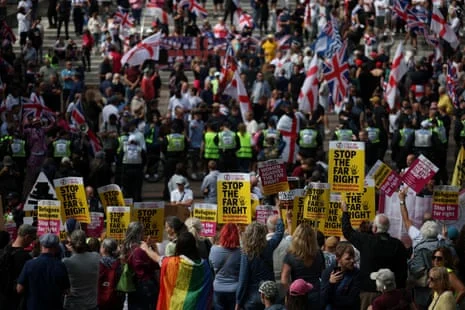
Beyond the halls of Parliament, the UK is grappling with a surge in social divisiveness and anti-migrant sentiment. Over the weekend, police were deployed to manage volatile protests in Portsmouth, Tamworth, and Glasgow. In Portsmouth, authorities issued a ban on face coverings after previous demonstrations saw masked groups blocking major transport hubs and the Port of Dover.
One particularly high-profile incident occurred on Tuesday night when a group of approximately 40 masked men surrounded a hotel in Portsmouth. The group shouted slogans and attempted to force entry, mistakenly believing that a visiting Pakistani youth cricket team staying at the hotel were newly arrived asylum seekers. Angela Rayner condemned the behavior as "completely unacceptable" and "intimidatory," stating that the sight of hundreds of people dressed in black balaclavas "crosses the line" of lawful protest.
The protests have highlighted the deep polarization within British communities. Counter-protesters from groups such as "Stand Up to Racism" have frequently clashed with anti-immigration marchers, leading to a heavy police presence in major city centers. Reform UK’s platform, which centers on a total freeze on non-essential immigration, has been credited by some as giving voice to these frustrations, while others accuse the party of inflaming tensions for political gain.

International Friction and the Future of AI Security
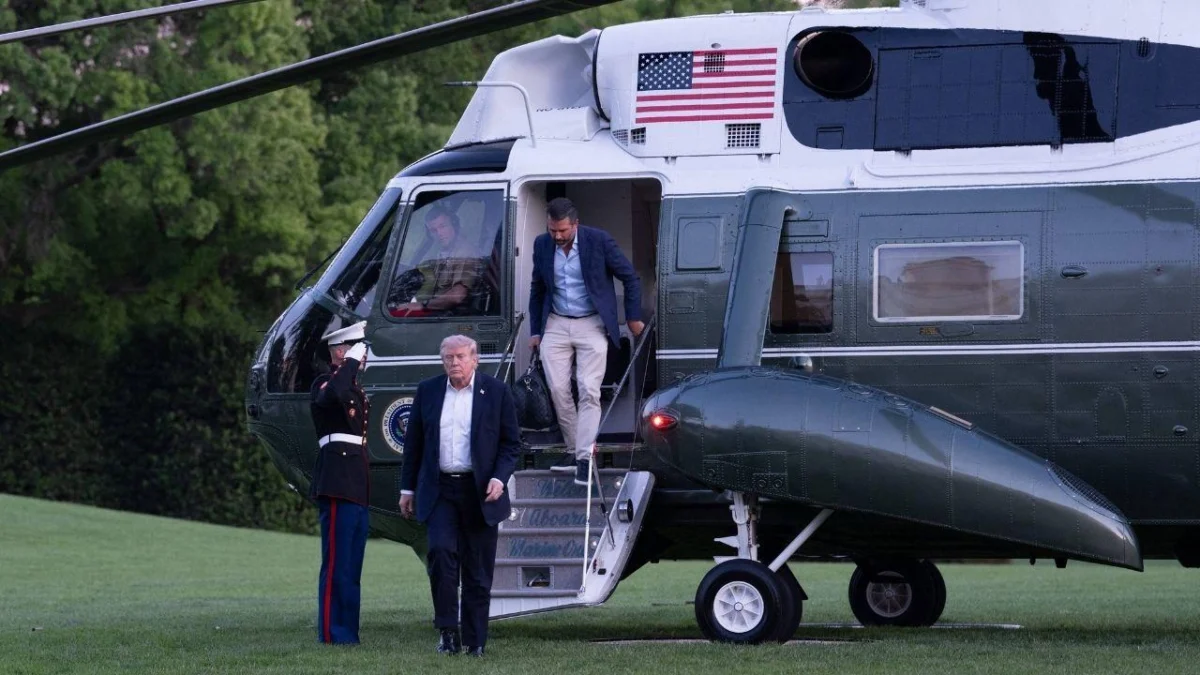
The political climate has been further complicated by the arrival of former U.S. President Donald Trump in Ireland. During his visit, Trump waded into the sensitive issue of Irish unification, telling reporters in Dublin that he would "love to see it unified." The remarks directly contradict the official position of the UK government, which maintains that a referendum on Northern Ireland’s status is not currently on the table.
Trump also commented on Prime Minister Andy Burnham, describing him as a "very nice guy" who is "unfortunately on the liberal side." Trump predicted that Burnham would eventually be forced to increase oil and gas drilling in the North Sea to sustain the economy, a move that would run counter to Labour’s "Green Energy Superpower" manifesto.
While geopolitical tensions simmer, the UK is also looking toward the future of technology and its impact on the workforce. Concerns regarding the rapid advancement of Artificial Intelligence (AI) have dominated headlines, with Anthropic CEO Dario Amodei calling for an industry-wide slowdown. Amodei warned that within a year, AI could be capable of autonomous actions that threaten the security of the internet.
The UK government has responded by highlighting its AI Security Institute, which aims to build national resilience against technological risks. Angela Rayner noted that the government is working with international partners to ensure that AI provides economic opportunities without compromising public safety. Pilot projects, such as an AI bootcamp in Preston, are currently being tested to retrain unemployed youth for the digital economy, though experts warn that the pace of innovation may outstrip the government’s ability to regulate it.
Conclusion and the Road Ahead
The controversy surrounding Reform UK’s £72 million donation has become a flashpoint for a broader debate on the health of British democracy. As the Electoral Commission prepares to review the filings, the pressure on Robert Jenrick and Nigel Farage to provide greater transparency remains high. The potential for retrospective legislation creates a period of significant legal uncertainty for the party, which must decide whether to spend the windfall on a massive campaign blitz or hold the funds in reserve in case a return is mandated.
With the economy underperforming, social tensions rising, and the global technological landscape shifting, the UK enters a volatile new chapter. The convergence of cryptocurrency wealth and populist politics has created a unique challenge for the established order, ensuring that the question of who funds British politics will remain a central theme of the coming years. For now, Reform UK stands as the most well-funded insurgent force in British history, while the government struggles to maintain the integrity of its legislative agenda against the power of global capital.