Exit polls released late Sunday suggest a significant political shift in the Sweden general election, as a centre-left opposition bloc led by the Social Democrats appears positioned to unseat the incumbent right-wing coalition. Data from the two major broadcasters, public service SVT and private channel TV4, indicate that the opposition parties have secured a narrow but decisive majority in the 349-seat Riksdag. If these projections hold, they would mark a sharp rebuke to the current administration and a potential stall in the momentum of the far-right Sweden Democrats, who have spent the last four years as a crucial pillar of government support.
According to the SVT/Valu exit poll, the left-leaning opposition bloc is projected to capture 51.3% of the vote, compared to 46.8% for the parties currently making up or supporting the government. This translates to a projected 183 seats for the opposition and 166 for the right-wing bloc. The Social Democratic Party, led by former Prime Minister Magdalena Andersson, remains the country’s largest political force, with 28.4% of the projected vote. While this represents a slight dip from previous highs earlier in the year, it places Andersson in a strong position to lead coalition negotiations.

Projections and Party Performance in the Sweden General Election
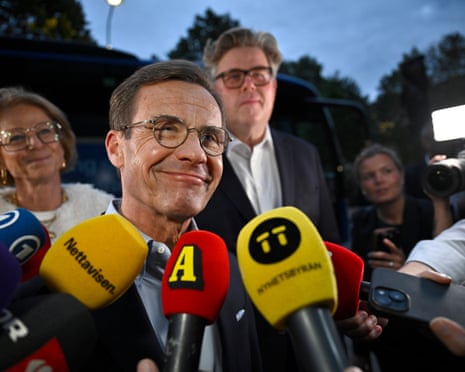
The preliminary figures suggest a complex night for the incumbent Prime Minister Ulf Kristersson and his Moderate Party. The Moderates are currently projected at 18.1%, a slight decrease from their previous performance. However, the most scrutinized result of the night belongs to the Sweden Democrats (SD). Long predicted to surge as the second-largest party, the SVT poll placed them in third with 17.2%, falling behind the Moderates. A separate poll by TV4 offered a slightly different perspective, placing SD at 18.5%, but both outlets agreed on the overall victory for the centre-left opposition bloc.
Smaller parties also played a pivotal role in the Sweden general election outcome. The Green Party saw a notable bump, rising to 7.4%, while the Centre Party and the Left Party secured 7.5% and 8.0% respectively. On the right, the Christian Democrats took 6.1% and the Liberals, who had hovered dangerously close to the 4% parliamentary threshold for much of the campaign, managed to secure 5.4%. This fragmentation underscores the challenge ahead for any leader attempting to form a stable majority government in a parliament where eight different parties hold influence.
A Polarized Campaign and the Far-Right Factor
The 2026 campaign was characterized by an unusually high degree of polarization and personal animosity between the country’s leading political figures. Debates were frequently punctuated by accusations of misinformation and the use of aggressive, "MAGA-inspired" advertising tactics. Central to the tension was the role of the Sweden Democrats, a party with neo-Nazi roots that has sought to mainstream its image over the past decade.

Under Prime Minister Kristersson, the right-leaning "Tidö" parties—the Moderates, Christian Democrats, and Liberals—broke a long-standing political taboo by governing with the explicit support of the SD. For the first time during this election cycle, Kristersson signaled he would be willing to offer formal ministerial posts to the far-right party if his bloc won. This prospect energized the opposition and made many Swedish voters nervous about the potential for a radical shift in the country’s social fabric.
Critics of the current government argue that the influence of the Sweden Democrats has already irrevocably changed the national conversation. During the last four years, the SD used its leverage to tighten migration policies and push for harsher criminal sentencing, often linking the two issues in a way that minority groups described as scapegoating. The introduction of rules barring many asylum seekers from permanent residency is cited by many as a primary example of this shift.
Voter Sentiment and Social Impact
The human cost of these policy shifts became a recurring theme on the campaign trail. Reports of families facing deportation despite long-term residency in Sweden fueled a sense of unease among those who view the country as a global leader in human rights. In one widely reported case, a 14-year-old born in Sweden faced deportation to Armenia, telling reporters he felt entirely Swedish and viewed the prospect of leaving as "hell."
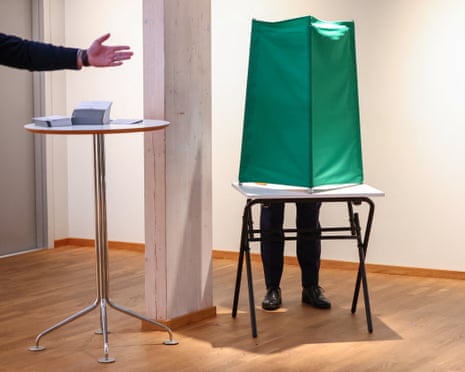
This sense of a "Pandora’s box" being opened was echoed by voters at polling stations across the country. In Stockholm, voters described a society that had become "harder" and "quieter." While the economy, healthcare, and law and order remained the top concerns for the electorate, the underlying debate about Swedish identity and the normalization of far-right rhetoric seemed to drive many to the polls.
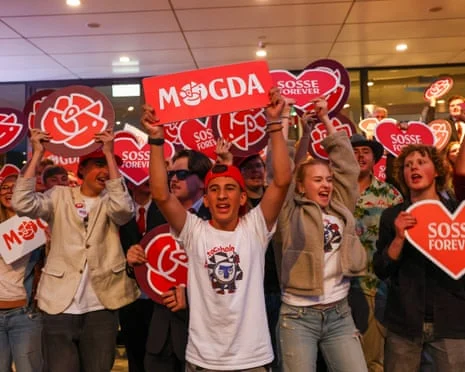
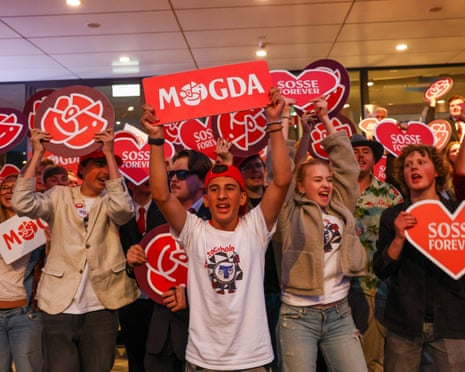
The Sweden general election also saw a cultural dimension to the political struggle. Benny Andersson, a member of the legendary pop group ABBA, made a high-profile appearance at a Social Democratic rally, performing a reworked version of the hit "Mamma Mia" where the lyrics were changed to "Magdalena" in support of the opposition leader. This celebrity endorsement served as a reminder of the broad coalition of support Andersson sought to build against the right-wing bloc.
Challenges for the Centre-Left Opposition Bloc
Despite the projected win, forming a government will not be a simple task for Magdalena Andersson. The centre-left opposition bloc is a diverse and often discordant group. It includes the traditionally pro-business Centre Party, the environmentalist Greens, and the Left Party, which holds more radical views on wealth redistribution and social welfare.
Experts point out that while these parties are united in their opposition to the Sweden Democrats, they remain deeply divided on issues like energy policy, forest management, and the specifics of migration law. The Social Democrats have themselves moved toward the right on issues of crime and immigration in recent years, a move intended to win back working-class voters but one that risks alienating their more progressive allies.
Sweden’s system of "negative parliamentarism" may assist Andersson in this process. In the Swedish system, a prime minister can be confirmed as long as a majority of parliament does not vote against them. This allows for the formation of minority governments that rely on the passive support—or abstention—of parties that are not formally part of the governing coalition. However, such arrangements are inherently fragile and require constant negotiation to pass legislation.
Logistics and High Turnout in the Sweden General Election
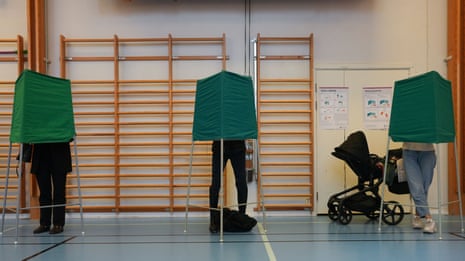
Election day was marked by high voter engagement, though not without logistical frustrations. While more than 3.5 million Swedes took advantage of early voting—a window that opened in late August—long queues were reported at several polling stations on Sunday. In cities like Umeå and parts of Stockholm, some voters reported waiting up to three hours to cast their ballots.
The Swedish Election Authority described the long waits as "unusual" and suggested that the complexity of the three-ballot system might need future simplification. Swedes vote simultaneously for the national Riksdag, regional assemblies, and municipal councils, using color-coded ballots (yellow, blue, and white). The process involves multiple steps to ensure voter privacy, which contributed to the bottlenecks seen during peak hours.
Jimmie Åkesson, leader of the Sweden Democrats, sparked controversy on election day by choosing to cast his ballot in Rinkeby, a Stockholm suburb with a high immigrant population. Critics labeled the move a "polarizing PR stunt." Åkesson used the opportunity to reiterate his campaign message, stating that the area "did not look like Sweden" and calling for a ban on religious head coverings like the niqab and burqa.
Global Context and Future Outlook
The results of the Sweden general election are being watched closely across Europe, where radical right-wing populist forces have made significant gains in recent years. From Giorgia Meloni’s victory in Italy to the National Rally’s influence in France and the AfD’s regional wins in Germany, the "creeping normalization" of the far-right is a continent-wide trend.
If the exit polls are accurate and the centre-left opposition bloc successfully forms a government, Sweden will provide a counter-narrative to this trend. It would suggest that there is a ceiling for far-right growth when traditional parties successfully mobilize around a platform of social cohesion and economic stability.
However, the final tally is expected to be exceptionally close. In the 2022 election, early exit polls similarly suggested a narrow lead for the left, only for the final count to shift in favor of the right. Election officials have urged patience as the actual votes are tabulated throughout the night.
The immediate next steps will involve the Speaker of the Riksdag meeting with party leaders to determine who has the best chance of forming a government that can survive a vote of no confidence. Whether Magdalena Andersson returns to the prime minister’s office or Ulf Kristersson manages a surprising comeback will depend on the final decimal points of the official count and the subsequent weeks of intense political bartering. Regardless of the final seat count, the 2026 election has confirmed that Sweden remains a nation deeply divided over its future direction and its place in a changing Europe.