Dallas-Fort Worth International Airport has abandoned plans to install facilities for Islamic pre-prayer ablution, known as wudu, following a directive from Texas Governor Greg Abbott threatening to withhold state funding, a move that has drawn sharp condemnation from the Council on American-Islamic Relations (CAIR) as a politically motivated and discriminatory act. CAIR characterized Governor Abbott’s intervention as another in a series of “anti-Muslim political stunts” designed to generate controversy and sow division, asserting that the governor’s outrage over the proposed wudu stations is both “ridiculous and hypocritical.”
Governor Abbott’s Directive and Airport Response
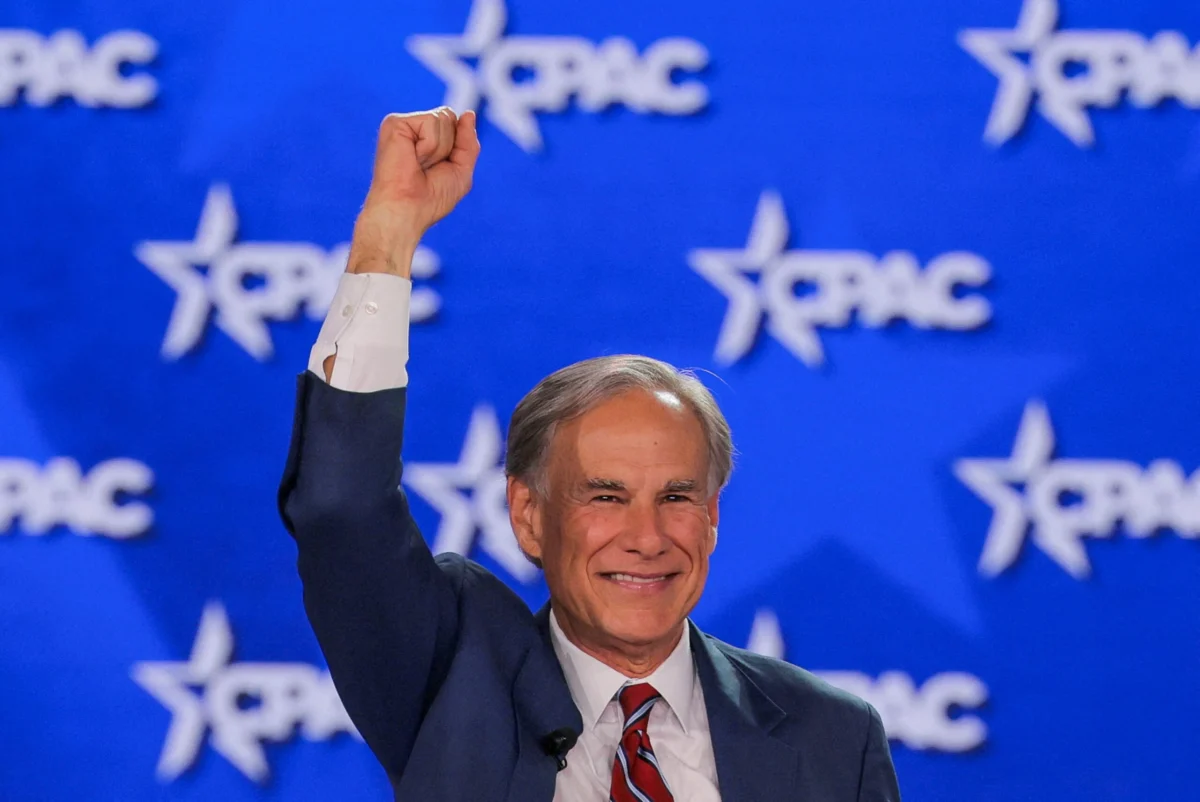
The controversy ignited last week when Governor Abbott ordered a review of proposed wudu facilities at Dallas-Fort Worth International Airport (DFW) and existing stations at Houston’s George Bush Intercontinental Airport (IAH). Abbott explicitly stated his intention to pursue the "possible revocation of active state grant funds" for both airports, accusing them of engaging in religious discrimination. In a statement released Friday, the Republican governor argued that such facilities are designed to “single out one subset of the population for special treatment based on religion,” which he deemed illegal.
Abbott further elaborated on his stance, asserting that government-owned facilities, such as airports, are constitutionally prohibited from facilitating this type of preferential treatment. He contended that while the government cannot favor secularism over religious practice, it also cannot endorse one religious view over others. This assertion has been met with legal arguments from civil rights advocates who maintain that providing religious accommodations in public spaces does not inherently violate constitutional provisions against government establishment of religion.
In response to the escalating public attention and the governor’s threat, DFW International Airport issued a statement explaining its decision to halt the wudu station project. An airport spokesperson noted that all proposed projects undergo rigorous evaluation for operational benefits, customer service impacts, operational risks, and costs. While an evaluation for the wudu stations was already planned, the airport stated it "accelerated its review due to elevated public interest this week and has determined not to proceed with the project as it would not deliver the originally anticipated operational benefits." This decision effectively capitulated to Governor Abbott’s pressure, a move CAIR has decried as yielding to political coercion rather than sound operational judgment.
CAIR’s Strong Condemnation and Accusations of Hypocrisy
The Council on American-Islamic Relations, a prominent Muslim civil rights organization, has been particularly vocal in its opposition to Governor Abbott’s actions. CAIR’s social media post directly challenged the governor, calling the airport washing station controversy the "most ridiculous and hypocritical" among the "silly controversies" Abbott has manufactured regarding Muslims. The group underscored the inclusive nature of such facilities, emphasizing that they are open to all travelers, not exclusively to Muslims.
CAIR representatives pointed out that the proposed wudu stations, which would feature sinks and faucets for washing feet, are functionally similar to existing amenities found in many public spaces. They drew parallels to interfaith prayer rooms and toilet bidets, which are common in airports globally and are utilized by individuals of diverse backgrounds for various personal hygiene and religious practices. While acknowledging that Muslim travelers might use them most frequently due to the requirements of Islamic prayer (wudu), CAIR stressed that these facilities are not exclusive and serve a broader purpose of accommodating diverse traveler needs.
The organization also highlighted what it perceives as a stark hypocrisy in Governor Abbott’s stance. CAIR referenced recent legislative actions in Texas, including a law mandating the display of the Ten Commandments in public school classrooms and the Texas State Board of Education’s decision to make Bible stories required reading in public schools. These initiatives, CAIR argues, demonstrate a clear governmental endorsement of specific religious texts and practices, a position that directly contradicts Abbott’s objections to providing religious accommodations for Muslims at airports.
Broader Context of Islamophobia and Political Stunts
CAIR’s criticism extends beyond the immediate airport issue, framing Governor Abbott’s actions within a larger context of rising Islamophobia and politically charged rhetoric targeting Muslim communities in the United States. The organization suggested that instead of expending taxpayer resources on what it terms "anti-Muslim political stunts," Governor Abbott should prioritize addressing pressing state issues such as data center security, school shootings, economic inequality, and the erosion of religious freedom for all.
The governor’s pushback against wudu stations comes at a time when anti-Muslim sentiment appears to be on the rise, with some politicians, including those aligned with former President Donald Trump, engaging in openly Islamophobic discourse. CAIR cited instances where prominent political figures have made disparaging remarks about Muslims or associated Islam with extremism. The organization also pointed to the tragic May hate crime incident in San Diego, where two gunmen killed three people at a mosque, as a stark reminder of the real-world consequences of escalating anti-Muslim sentiment.
Furthermore, CAIR’s own experience with Governor Abbott’s administration adds another layer to the narrative. Last year, Abbott declared CAIR a "foreign terrorist organization," a designation that the civil rights group is actively challenging in court. This prior action, coupled with the current opposition to wudu facilities, fuels CAIR’s assertion that Abbott is engaged in a pattern of targeting and marginalizing the Muslim American community for political gain.
Constitutional Interpretations and Religious Accommodations
The debate over wudu stations at public airports touches upon complex legal and constitutional questions regarding the separation of church and state and the provision of religious accommodations. Governor Abbott’s argument hinges on the principle that government entities cannot favor one religion over others, citing the Establishment Clause of the First Amendment. He believes that providing dedicated facilities for a specific religious practice constitutes such favoritism.
However, civil liberties advocates and legal experts often interpret the First Amendment more broadly, recognizing that reasonable accommodations for religious practices in public spaces are permissible and, in some cases, required. The U.S. Constitution prohibits the government from establishing a religion or prohibiting the free exercise thereof. Proponents of wudu stations argue that providing them falls under the umbrella of facilitating the free exercise of religion, especially when these facilities are available for general use and are not exclusively for one group.
This interpretation suggests that offering amenities like wudu stations, interfaith chapels, or even halal food options at public institutions does not equate to government endorsement of a particular faith. Instead, it is seen as an effort to ensure that individuals of all faiths can practice their religious obligations while navigating public life. The fact that such facilities are accessible to anyone who needs them, whether for ablution or other forms of cleansing, further strengthens the argument that they do not violate constitutional principles of religious neutrality.
Impact and Future Implications
The decision by DFW International Airport to scrap its plans for wudu stations, under pressure from Governor Abbott, has significant implications. It potentially signals a chilling effect on the provision of religious accommodations in public spaces across Texas, discouraging other institutions from offering similar facilities for fear of political backlash and loss of state funding. This could disproportionately affect Muslim travelers and other religious minorities who rely on such accommodations to fulfill their religious obligations.
The controversy also highlights the ongoing tension between religious freedom and secular governance in the United States. As religious diversity continues to grow, public institutions face increasing pressure to balance the needs of various faith communities with constitutional mandates and public opinion. Governor Abbott’s actions underscore a conservative political approach that often prioritizes a narrow interpretation of secularism and expresses skepticism towards accommodations for minority religions.
CAIR’s strong denouncement and its framing of the issue as a political stunt aim to mobilize public opinion and counter what it perceives as discriminatory policies. The organization’s reference to other instances of governmental religious favoritism in Texas, such as the Ten Commandments in schools, serves to draw a stark contrast and critique what it views as a selective application of religious freedom principles. The legal challenges CAIR faces from Abbott’s administration further embed this dispute within a broader political and legal battle over religious rights and the role of government in a pluralistic society. The outcome of these disputes, both in public discourse and potential legal challenges, will shape the landscape of religious accommodation in public spaces across Texas and potentially beyond.