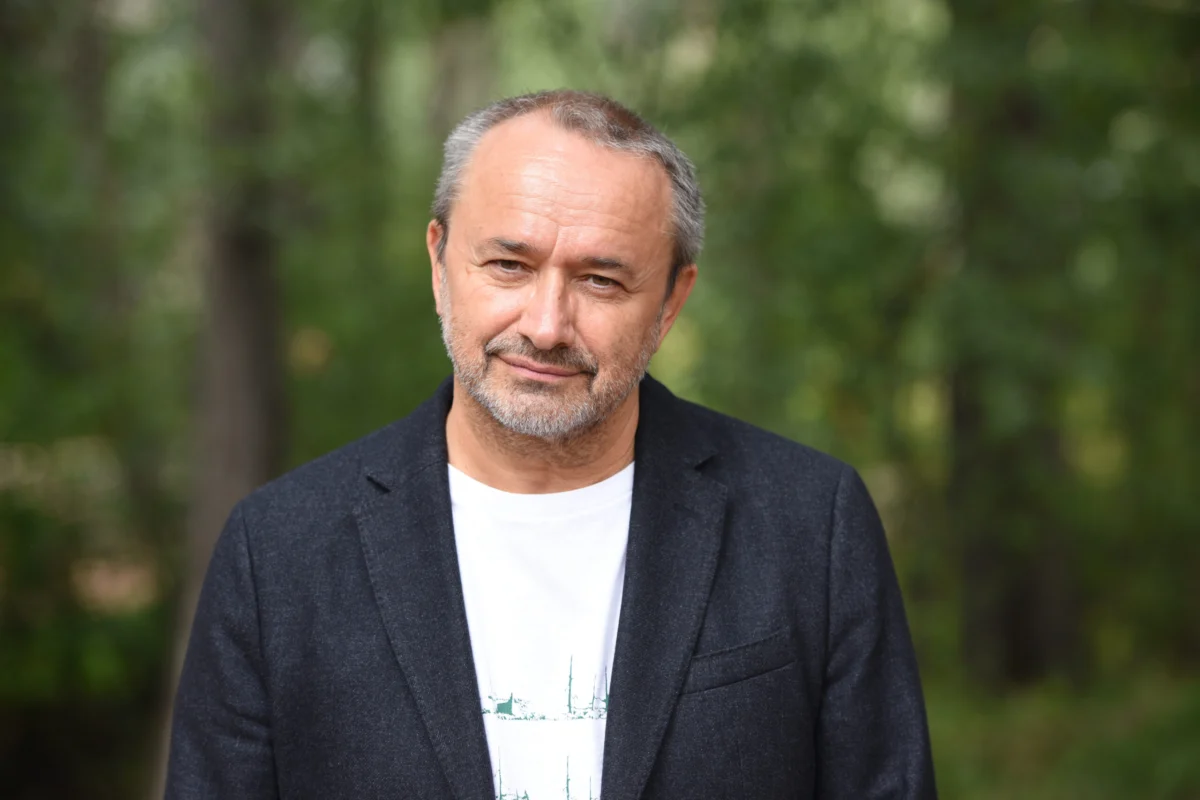
Andrey Zvyagintsev, the acclaimed Russian director, is once again making waves on the international film circuit with his latest feature, Minotaur. The film, a compelling political thriller, has garnered significant praise, winning awards at the prestigious Cannes Film Festival and receiving rapturous reviews at Telluride, signaling its strong entry into the competitive American awards season. Audiences can now get an exclusive first look at the film’s intensity with the release of its official trailer.
A Familiar Trajectory with Unprecedented Challenges
Zvyagintsev’s journey with Minotaur echoes the successful path of his previous critically lauded works, Leviathan and Loveless. Both earlier films earned accolades at Cannes, premiered to North American audiences at Telluride, and subsequently generated significant Oscar buzz, leading Zvyagintsev to engage directly with Academy voters in Los Angeles to champion his unflinching cinematic portrayals of contemporary Russian society. This familiar trajectory of critical acclaim and awards anticipation is once again unfolding for Minotaur, with the director appearing calm and composed in Beverly Hills following a tastemaker screening, even as his new film, celebrated at Cannes and Telluride, enters the American awards race.
However, beneath the surface of this seeming continuity, the production and context surrounding Minotaur mark a stark departure from Zvyagintsev’s previous endeavors. For the first time in his career, the director opted to produce a film entirely outside of Russia. The production of Minotaur was relocated to Latvia, a move necessitated by the film’s brutally frank depiction of his homeland at the onset of the Ukraine war. This change in production locale reflects a profound shift in Zvyagintsev’s artistic and personal circumstances.
Political Undercurrents and Oscar Ambitions
The geopolitical landscape has directly impacted Minotaur‘s awards eligibility. Unlike Loveless and Leviathan, both of which were nominated for the International Feature Oscar as Russia’s official entries, Minotaur will not represent Russia. Instead, it has earned a coveted spot on the French shortlist for the category, with a final decision from the committee expected this week. This development underscores Zvyagintsev’s evolving relationship with his native country and his growing ties to France, where he relocated after the war in Ukraine began due to his vocal criticism of Russia’s actions.
Adding another layer of significance to Minotaur‘s release is the nearly decade-long hiatus Zvyagintsev endured between films. The director revealed earlier this year that he nearly succumbed to a severe case of long COVID, which left him physically incapacitated for an entire year. His ability to not only recover but to produce a film of Minotaur‘s caliber, maintaining his streak of critical success despite immense personal and political obstacles, represents a profound triumph of artistic resilience. This perseverance is also a testament to the inherent strength and resonance of Minotaur, which many critics are hailing as a culmination of the master filmmaker’s career to date. The exclusive trailer, available now, offers a glimpse into this powerful and timely cinematic achievement.
A Modern Retelling of Infidelity and Betrayal
Minotaur draws its narrative inspiration from Claude Chabrol’s 1969 film The Unfaithful Wife. Zvyagintsev intentionally bypassed Adrian Lyne’s 2002 erotic thriller Unfaithful, which also adapted Chabrol’s work, to ensure a direct and unadulterated interpretation of the original source material. While remaining cannily faithful to Chabrol’s core premise—the tragic fallout experienced by a husband upon discovering his wife’s infidelity—Zvyagintsev’s version is urgently updated for the contemporary moment. Set in 2022, the drama’s intimate implications resonate directly with the tumultuous political landscape that forced the director to leave his homeland.

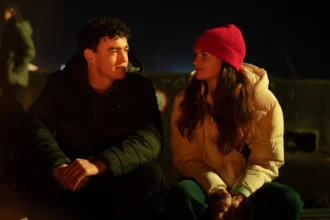
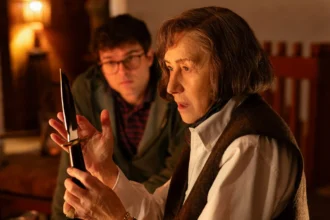
The film immediately immerses viewers in the world of Gleb (Dmitriy Mazurov), a powerful CEO, as he meticulously tracks the subtle signs of his wife Galina’s (Iris Lebedeva) infidelity: clandestine smiles, hidden texts, and mysterious afternoon escapes. However, Gleb’s personal crisis unfolds against a backdrop of escalating national pressure. He finds himself under intense political scrutiny to support the mounting war effort, while simultaneously witnessing a mass exodus of colleagues from his company and his country. This masterful intertwining of intimate domestic conflict with a bleak geopolitical canvas is a distinctive hallmark of Zvyagintsev’s filmmaking, a style that has defined his career for decades and, notably, led Russian officials to brand his earlier work, Leviathan, as "evil" and "beyond all limits."
Zvyagintsev explained his significant creative alterations to the Chabrol source material, particularly in expanding the professional sphere of his protagonist. "Chabrol completely left out life in the office," Zvyagintsev observed. "What was this relationship that the main character had with his colleagues? What exactly is happening there? I needed to create it." This expansion allows the Minotaur to explore the profound impact of the war on the lives of ordinary citizens, even those in positions of power, directly linking personal betrayal to national disintegration.
Giving Voice to the Unfaithful
Another pivotal departure from Chabrol’s original narrative is Zvyagintsev’s decision to grant Galina, the unfaithful wife, a voice to advocate for herself before the story’s inevitable unraveling. While Minotaur largely retains the husband’s perspective, Galina is given agency to articulate her motivations. As heard in the trailer, she defiantly states, "I’m tired of being your shadow."
Zvyagintsev elaborated on this choice, stating, "She is looking for love, sex, compassion, tenderness. I wanted to show Galina’s tragedy, what exactly was happening with her on the inside — what pushed her to cheat." This nuanced portrayal of Galina’s inner turmoil adds depth and complexity to the narrative, moving beyond a simplistic depiction of infidelity to explore the underlying human needs and desires that drive such actions.
Despite the palpable political undertones, Zvyagintsev maintains that Minotaur is not overtly political, but rather that the contemporary geopolitical setting serves as a natural and necessary backdrop for his adaptation of Chabrol’s story. He highlighted a particular 15-minute, wordless centerpiece scene that transforms the film’s mood and narrative. During a screening at Telluride, Zvyagintsev noted the audience’s "really reacting" to his interpretation of the scene, particularly to his use of dark, subtle humor. "I didn’t really expect it — at that point, the American audience really started to laugh," he recounted. "Just because of the mise-en-scène. And then they laughed again!" This unexpected comedic element within the intense drama demonstrates Zvyagintsev’s mastery of tone and his ability to elicit diverse audience responses.
A Universal Message in a New Chapter
While Zvyagintsev observes that Minotaur resonates uniquely with audiences across different geographical and cultural contexts, its core themes of love, betrayal, loyalty, and corruption possess a chilly, incisive power that transcends borders. This brutal commentary on universal human experiences remains consistent with the global language through which Zvyagintsev has told his stories throughout his career. The director acknowledges that he has entered a new chapter, both personally and professionally, a shift powerfully symbolized by France’s impending decision regarding Minotaur‘s Oscar representation.
"I do understand: How will it feel for France to give their place to a Russian director?" Zvyagintsev reflected, acknowledging the complexities. "Me not yet being a French citizen, in the sense [of not having] a passport, but representing them — I would be very proud, and very grateful." This statement encapsulates the unique circumstances surrounding Minotaur, a film that is not only a profound artistic achievement but also a powerful symbol of resilience, adaptation, and the enduring power of cinema to transcend political boundaries.
Minotaur is scheduled for release in theaters on November 20, following its premiere on Tuesday at the Toronto International Film Festival.