Independent Senator Fatima Payman sparked a heated confrontation during a late-night Senate estimates hearing in Canberra, accusing Prime Minister Anthony Albanese of "petty" behavior for denying her additional staff. The tensions reached a breaking point when Payman suggested the government’s refusal to increase her staffing allocation could lead to a repeat of the violent threats recently faced by other independent lawmakers. The comparison, specifically referencing an alleged attack on Independent MP Helen Haines, was immediately branded "outrageous" by senior Labor ministers, signaling a deepening rift between the former party member and the current administration.

Payman, who defected from the Labor Party in 2024 following disagreements over policy, has repeatedly claimed that her office is dangerously under-resourced. During the hearing, she argued that the lack of an additional adviser has left her current employees facing extreme burnout and "psychosocial hazards." The situation was punctuated by the revelation that her office recently required a biohazard team to intervene after human waste was mailed to her premises. Payman’s decision to connect these security concerns to her ongoing dispute over staffing levels has transformed a bureaucratic disagreement into a high-stakes debate over the safety of Australian politicians.
The Clash Over Staffing Allocation and Political Safety
The core of the dispute lies in the Prime Minister’s discretionary power to assign additional staff to crossbenchers and independents. While most independent senators are granted one or two specialized advisers to manage the heavy legislative workload, documents tabled during the estimates hearing revealed that Payman currently has no such advisers. She told the committee that she requested an additional staffer two years ago, but the request remains unprocessed.

Payman’s rhetoric intensified as she addressed Trade Minister Don Farrell, who was representing the government at the hearing. She implored Farrell to raise the issue with the Prime Minister, citing the physical and mental toll on her team. "Is the prime minister waiting for something like what happened to Dr. Helen Haines to occur to my office, to me, for him to take our request seriously?" Payman asked. The reference to Haines, who has been the subject of documented threats and an alleged violent incident, was intended to highlight the vulnerability of independent members who lack the institutional protection of a major party.
Minister Farrell reacted sharply to the comparison, stating, "I personally think that’s an outrageous suggestion." He formally requested that Payman withdraw the comments, but the senator refused. Payman maintained that the two-year delay in her staffing request justified her extreme concern, asserting that the welfare of her staff was being compromised by political maneuvering.

Contextualizing the "Haines-Style Attack" and Rising Political Violence
The "Haines-style attack" mentioned by Payman refers to a broader trend of escalating hostility toward female politicians in Australia. Dr. Helen Haines, the Independent MP for Indi, has become a symbol of the unique risks faced by those outside the traditional party structure. Recent police data indicates that violent and menacing threats against Australian politicians have doubled in the last two years, creating a climate of fear that many lawmakers say is unprecedented.
For an independent like Payman, the lack of staff is not merely an administrative hurdle but a security vulnerability. Without enough personnel to vet correspondence, manage public appearances, and handle constituent anger, offices become overwhelmed. Payman’s description of her staff dealing with biohazardous material illustrates the physical nature of these threats. The senator argued that an additional adviser would provide the necessary oversight to mitigate these "psychosocial hazards" and ensure a safer working environment.
Federal Government Responds with Security Upgrades
In response to the growing concerns voiced by various members of Parliament, the Albanese government has moved to accelerate security upgrades for high-risk offices. Finance Minister Katy Gallagher confirmed that at least nine members of Parliament will see security crackdowns at their electorate offices following specific concerns raised in the wake of the alleged incident involving Helen Haines.
While Gallagher did not disclose the identities of the MPs receiving the upgrades, she emphasized that the government is taking the safety of all representatives seriously. Beyond electorate offices, security protocols within the public spaces of Parliament House in Canberra are also being reviewed and bolstered. The move suggests that while the government rejects Payman’s specific link between staffing and violence, it acknowledges that the threat landscape for politicians has shifted dramatically.

One Nation Surge and Migration Policy Disputes
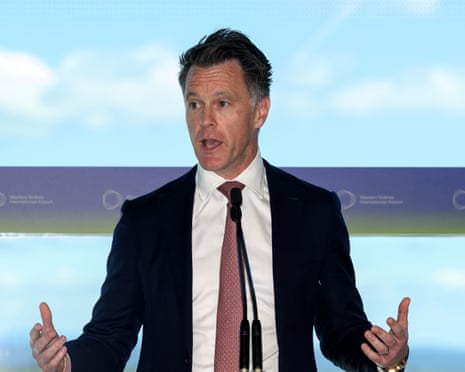
The political climate in Australia is further complicated by a resurgence of support for the right-wing One Nation party, particularly in regional areas. New South Wales Premier Chris Minns recently urged the federal government to be "serious" about meeting net migration targets, citing internal polling that shows Labor and One Nation are neck-and-neck in the strategic Hunter region. The poll, commissioned by Advent Energy, suggests both parties hold 32% support ahead of the March state election, with the Coalition trailing at 14%.
One Nation’s platform, which includes a call for net-negative migration for three years followed by a strict ceiling of 130,000 arrivals, appears to be resonating with voters concerned about infrastructure and housing. The Albanese government has targeted a net overseas migration figure of 245,000 for the 2026-27 period, a goal that Minns argues must be met strictly to maintain public faith in the immigration system. "There’s no use saying we’re going to have an average of 200,000… and then it comes in at 300,000," Minns said during a radio interview, highlighting the tension between state and federal Labor leaders over the issue.
Ethics and Oversight: AI and Aged Care Algorithms
The Senate estimates hearings also delved into the technological and ethical challenges facing the Australian government. Greens Leader David Shoebridge called for the development of "ethical Australian AI" following a warning from the Australian Signals Directorate (ASD) regarding cyber threats. Shoebridge criticized the government’s reliance on major U.S. technology firms, referring to them as "tech bros" who produce the very systems that create digital vulnerabilities. The ASD report warned that businesses must adopt cutting-edge AI to defend against increasingly sophisticated digital attacks.
Simultaneously, the government is facing a backlash over its use of algorithms in the aged care sector. Opposition aged care spokesperson Anne Ruston urged Labor to abandon its "fundamentally flawed" Integrated Assessment Tool following a damning report by the Commonwealth Ombudsman. The investigation found that an algorithm-based tool used to determine home support funding was "unreasonable and unfair," often leaving vulnerable seniors without adequate care. The report followed investigative journalism that described the tool as "inhumane," sparking a national conversation about the risks of automating essential social services.

Gendered Harassment of Public Servants
The toxicity of modern political discourse was also highlighted by Jim Betts, Secretary of the Department of Infrastructure, Transport, Regional Development, Communications, Sport and the Arts. Betts informed senators that female public servants are being subjected to "vile and misogynistic" comments on social media platforms managed by parliamentarians. He specifically criticized the "selective editing" of Senate estimates footage, which he claimed is often used to unfairly humiliate public officials.
Betts argued that while parliamentary oversight is essential, the practice of posting out-of-context clips with inflammatory captions has led to a degradation of professional standards. The Australian Secretaries Board has expressed formal concern that public officials are increasingly becoming targets of hostility, particularly when proceedings are weaponized for social media engagement. This testimony adds another layer to the debate over the "Haines-style" culture of intimidation that Payman referenced in her staffing plea.
Future Outlook for Crossbench Relations
The fallout from Fatima Payman linking Haines-style attack to staffing allocation is likely to persist as the federal election cycle approaches. The refusal of Minister Farrell to yield on the staffing issue, combined with Payman’s refusal to withdraw her remarks, suggests a stalemate that could impact legislative cooperation in the Senate. As an independent, Payman’s vote is often crucial for the government to pass contested bills, but the current "petty" dispute threatens to alienate her further.
As Canberra grapples with these internal conflicts, the broader Australian public is left watching a political landscape marked by security fears, technological anxiety, and shifting electoral loyalties. The calls for civility from leaders like Defence Minister Richard Marles—who noted that a more respectful discourse is "what Helen Haines would want"—seem increasingly at odds with the reality of late-night committee rooms and social media-driven politics. The coming months will determine whether the government can stabilize its relationship with the crossbench or if the "outrageous" rhetoric of the current session becomes the new standard for Australian political engagement.