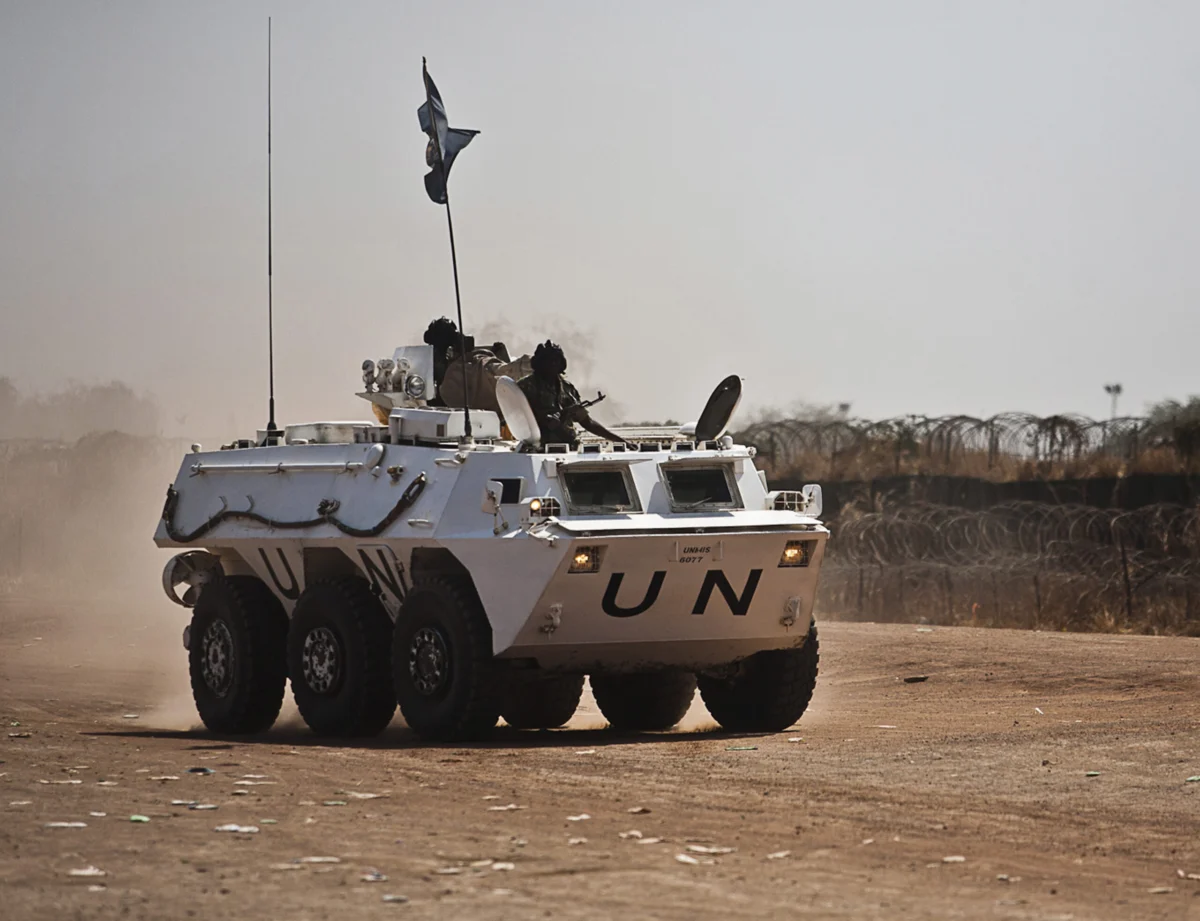
Deadly intercommunal fighting has erupted in a disputed territory straddling the border of Sudan and South Sudan, claiming the lives of at least 26 people and leaving 82 others injured. The United Nations confirmed the grim toll on Thursday, announcing it has bolstered its security presence in and around Abyei town to de-escalate the escalating violence and protect civilians. The clashes underscore the persistent instability in the Abyei region, a territory whose final status remains a contentious issue since South Sudan’s secession from Sudan in 2011.
Escalation of Violence in Abyei
The recent outbreak of violence at the Amiet Common Market was reportedly triggered by a series of retaliatory killings. According to a statement from the UN Interim Security Force for Abyei (UNISFA), tensions flared after the killing of a Ngok Dinka man on Monday, which was swiftly followed by the death of a Misseriya man on Tuesday. These individual acts of violence quickly escalated into widespread intercommunal hostilities around the bustling market.
UNISFA indicated that the initial killings created a volatile atmosphere, exacerbating long-standing friction between the Ngok Dinka and Misseriya communities. These communities, whose livelihoods are intrinsically linked to the land, frequently find themselves at odds over access to vital resources, particularly grazing lands and water sources essential for their livestock.
Deep-Rooted Disputes Over Resources and Territory
The Abyei region has long been a flashpoint for conflict, primarily driven by competing claims over its oil-rich land and the seasonal migration of pastoralist communities. The Misseriya, predominantly Arab pastoralists originating from Sudan, traditionally migrate southward into Abyei during the dry season in search of sustenance for their herds. This annual migration often brings them into direct conflict with the Ngok Dinka, who are considered the permanent residents of the region and whose traditional lands are utilized by the migrating herds.
These clashes are not isolated incidents but represent a recurring pattern of friction over scarce resources in an already fragile geopolitical environment. The unresolved political status of Abyei, with both Sudan and South Sudan laying claim to the territory, further complicates efforts to achieve lasting peace and security for its inhabitants. The region is currently jointly administered, a precarious arrangement that does little to quell the underlying tensions.
UNISFA’s Response and Calls for Dialogue
In response to the escalating violence, UNISFA has taken immediate steps to reinforce its security presence and prevent further loss of life. Lieutenant General Ganesh Kumar Shreshta, a commander within UNISFA, emphasized the force’s commitment to restoring order and protecting civilians. "We are actively engaging with the leaders of the two communities who have reiterated their commitment to dialogue and a peaceful resolution to the hostilities," Shreshta stated.
He underscored the immediate priority: "Our priority is to prevent further loss of life. We urge all community leaders to embrace dialogue and advance peaceful coexistence." The UNISFA force, comprising 3,000 police officers and soldiers, is mandated with the critical task of safeguarding the civilian population in Abyei.
On Thursday, UNISFA reiterated its commitment to security on its official X account, formerly Twitter. "On the ground, we are taking all measures to protect civilians and prevent retaliation," the statement assured. This proactive stance aims to quell the cycle of violence and discourage any further retaliatory actions that could plunge the region into deeper conflict.
The Political Vacuum and Historical Context
The enduring conflict in Abyei is inextricably linked to the unresolved political status of the region since South Sudan’s independence in 2011. The Comprehensive Peace Agreement that paved the way for South Sudan’s separation from Sudan in 2005 included provisions for a referendum on Abyei’s status, but this referendum has never been held due to disagreements between the two nations. This political vacuum has left the region vulnerable to intermittent bursts of violence, often exacerbated by resource competition and ethnic tensions.
The contested nature of Abyei has historically been a significant point of contention in bilateral relations between Khartoum and Juba. Both countries have historically viewed the region as strategically and economically important, particularly due to its known oil reserves. The absence of a definitive resolution perpetuates instability and hinders development efforts within Abyei itself.
Impact on Civilian Populations and Regional Stability
The recurrent clashes in Abyei have a devastating impact on the civilian population, disrupting daily life, hindering economic activities, and displacing communities. For the Ngok Dinka, who are deeply rooted in the land, the violence threatens their ancestral homes and livelihoods. For the Misseriya pastoralists, the conflict jeopardizes their traditional migration routes and their ability to sustain their herds, which form the bedrock of their economy.
Beyond the immediate human cost, the instability in Abyei has broader implications for regional security. A volatile border region can serve as a breeding ground for illicit activities and further destabilize an already fragile South Sudan. The country is in the midst of a crucial period, preparing for its first general elections since gaining independence in 2011, which are scheduled for December. Any resurgence of widespread conflict could jeopardize these democratic aspirations and plunge the nation back into widespread instability. South Sudan has been working to consolidate peace following a devastating five-year civil war that concluded with a 2018 agreement, a conflict that claimed thousands of lives.
The Path Forward: Dialogue and Reconciliation
The immediate focus for UNISFA and humanitarian organizations on the ground remains on de-escalation and the protection of civilians. However, the long-term solution to the Abyei conflict lies in a political resolution that addresses the core issues of territorial claims and resource sharing. Continued dialogue between the Ngok Dinka and Misseriya communities, facilitated by UNISFA and potentially involving higher levels of government from both Sudan and South Sudan, is crucial.
The commitment expressed by community leaders to dialogue offers a glimmer of hope. It is imperative that these commitments translate into concrete actions that foster trust and understanding between the communities. Addressing the root causes of the conflict, including equitable access to land and water, and finding a mutually agreeable framework for the governance of Abyei, are essential steps toward achieving lasting peace.
The international community, including the United Nations, will likely continue to play a vital role in mediating discussions and providing support for peacebuilding initiatives. The future of Abyei, and by extension, the stability of the border region between Sudan and South Sudan, hinges on the ability of all stakeholders to move beyond entrenched positions and embrace a path of reconciliation and peaceful coexistence. The lessons learned from past conflicts underscore the urgency of finding a sustainable solution before further lives are lost and the region is plunged back into deeper turmoil.