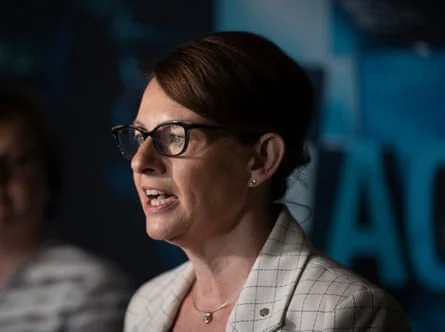
Australian Member of Parliament Andrew Hastie revealed during a high-level parliamentary inquiry on Friday that Microsoft’s artificial intelligence assistant, Copilot, suggested he respond with celebratory language to a constituent who had written to him about a plan to end his life via voluntary assisted dying. The shadow minister for defense used the anecdote to highlight what he described as the dangerous shortcomings of American-developed software and to bolster his call for the development of sovereign Australian AI capabilities.
The incident occurred when a man suffering from a terminal illness reached out to Hastie, his local representative, to disclose his intention to utilize Western Australia’s voluntary assisted dying laws. According to Hastie, when he sought to draft a response using the integrated AI tool, the software provided several automated suggestions, including "congratulations!", "great to hear from you," and "that is wonderful news!"
The revelation underscored the central theme of the inquiry: the tension between the rapid adoption of powerful generative AI tools and the need for ethical, cultural, and national safeguards. Hastie argued that such tone-deaf responses demonstrate a lack of contextual understanding and localized nuance that could have devastating consequences if integrated into sensitive government or social services.
Technical Failures and the Need for Sovereign AI
The failure of the AI to recognize the gravity of a terminal illness and the sensitivity of assisted dying has sparked a broader debate about the "black box" nature of large language models (LLMs). While these systems are trained on massive datasets, they often prioritize linguistic patterns over ethical weight or emotional intelligence.
Hastie’s testimony served as a catalyst for discussions regarding the Albanese government’s strategy to bring major tech firms like Anthropic and OpenAI to Australian shores. By hosting these companies locally, the government hopes to impose stricter oversight and ensure that the models are better aligned with Australian values and legal frameworks.
However, the defense establishment warned the inquiry that the risks of rejecting these global leaders are equally severe. Cutting off access to top-tier American AI models could be "catastrophic" for Australia’s national security, according to senior intelligence officials. The debate is no longer about whether to use AI, but how to ensure it does not become a liability in moments of crisis.
National Security Risks and US Dependency
Abigail Bradshaw, the director general of the Australian Signals Directorate (ASD), provided a sobering assessment of the nation’s current technological standing. She informed the inquiry that her agents rely on advanced AI on a daily basis to detect and neutralize "highly capable malicious cyber actors" targeting Australian infrastructure.
"If a digital adversary has access to newer, more capable models than we do, they may be able to identify and exploit vulnerabilities in systems and networks before we can identify them," Bradshaw said. She emphasized that the speed of modern cyber warfare necessitates the use of frontier AI tools that can process data at a scale impossible for human analysts.
Despite the necessity of these tools, Bradshaw admitted that Australia’s top cyber-intelligence agency is currently "entirely reliant" on processing power housed within the United States. This dependency creates a strategic vulnerability; if Australia were to be cut off from US-based servers during a global conflict, its defensive capabilities would "dramatically" erode.
Building Local Infrastructure to Prevent a "Bad Day" Shutdown
To mitigate these risks, the Department of Defense is moving to localize its technological footprint. Chris Crozier, the department’s chief AI officer, testified that the government is already working with Google to establish a network of interconnected datacenters across Australia. These facilities are designed to operate independently of the United States to ensure continuity of service.
Crozier highlighted the risk of foreign entities holding the "off-switch" for critical Australian systems. "Somebody can’t wake up and have a bad day and decide they’re going to turn it off," Crozier said, referring to the potential for diplomatic or corporate shifts to disrupt local operations.
The goal, according to Crozier, is to move beyond mere usage of foreign tools toward a model of total data sovereignty. This includes keeping the compute power, the applications, the data, and the ultimate decision-making processes physically located within Australian borders. This would allow the Australian Defence Force to protect and maintain the physical infrastructure necessary for its operations.

Andrew Hastie Says AI Advised Him to Reply ‘Congratulations!’ Amid Regulatory Push
As the government moves toward 2026, the year Prime Minister Anthony Albanese hopes to introduce draft laws for broader AI standards, the pressure to regulate is mounting. The Office of AI, situated within the Department of the Prime Minister and Cabinet, argued that bringing tech firms under Australian law would provide law enforcement with better tools to combat platform-based threats.
The proposed regulations would likely include mandatory reporting for security breaches and requirements for companies to reserve a portion of their computational power for local research. Furthermore, the government is considering strict conditions for any developer looking to train advanced models on Australian soil, including early government access to the models for safety testing.
Bradshaw noted that such "frontier access" would allow Australian experts to integrate more deeply with technical teams at the world’s leading AI firms. This would ensure that the tools used by the ASD and other agencies are not only the most advanced but also the most secure against potential backdoors or algorithmic biases.
The Copyright Conflict and the Creative Backlash
One of the most contentious pillars of the proposed AI standards involves copyright law. AI developers have signaled a reluctance to train models in Australia unless the government implements significant legal reforms regarding data scraping. Currently, a proposal that would allow AI companies to scrape nearly everything Australians post online by default has met with fierce opposition.
Creatives, including authors, journalists, and artists, have argued that such a move would amount to the theft of intellectual property. They are calling for a licensing model where tech giants must pay to access Australian content. However, the Attorney General’s department suggested that striking individual deals for "billions" of pieces of information might be functionally impossible for developers.
Jenna Priestly, assistant secretary at the Attorney General’s department, confirmed that any loosening of copyright laws would not only affect local content but also foreign-made material distributed within Australia. This creates a complex legal landscape where the government must balance the demands of the tech industry against the rights of the creative sector.
Political Divisions and the 2026 Deadline
The inquiry has also highlighted sharp political divisions within the Australian parliament. Greens senator David Shoebridge has been a vocal critic of the government’s approach, calling for a "pause" on AI development until more robust safety and copyright protections are in place. Shoebridge expressed frustration on Friday, claiming that the Labor government had refused him a seat on the inquiry committee.
Meanwhile, Labor ministers have been engaging in high-level diplomacy with Silicon Valley. Recent meetings with executives from OpenAI and Anthropic have emphasized the urgency of the situation. Jeff Bleich, a special envoy for Anthropic, warned that Australia may have only months to establish effective regulations before the window for global influence closes.
The Department of the Prime Minister and Cabinet remains committed to the 2026 deadline for draft legislation. However, officials like Bradshaw warned that any further delay could result in major AI providers looking to other nations to establish their regional hubs, leaving Australia behind in the global technological race.
Ethical Implications for Public Service
The incident where Andrew Hastie says AI advised him to reply ‘congratulations!’ to a man seeking assisted dying serves as a stark reminder of the ethical stakes involved in AI integration. As government agencies look to automate administrative tasks and constituent services, the potential for high-stakes errors increases.
For proponents of sovereign AI, the solution lies in building models that are specifically fine-tuned on Australian datasets and social norms. They argue that a model trained on the specific legal and cultural context of Western Australia’s assisted dying laws would be far less likely to suggest a celebratory response to a terminal diagnosis.
The inquiry is expected to continue as the government weighs the benefits of rapid AI adoption against the significant risks to privacy, security, and human dignity. The outcome will likely shape Australia’s technological and economic landscape for decades to come, determining whether the nation becomes a leader in ethical AI or remains a dependent consumer of foreign-run systems.