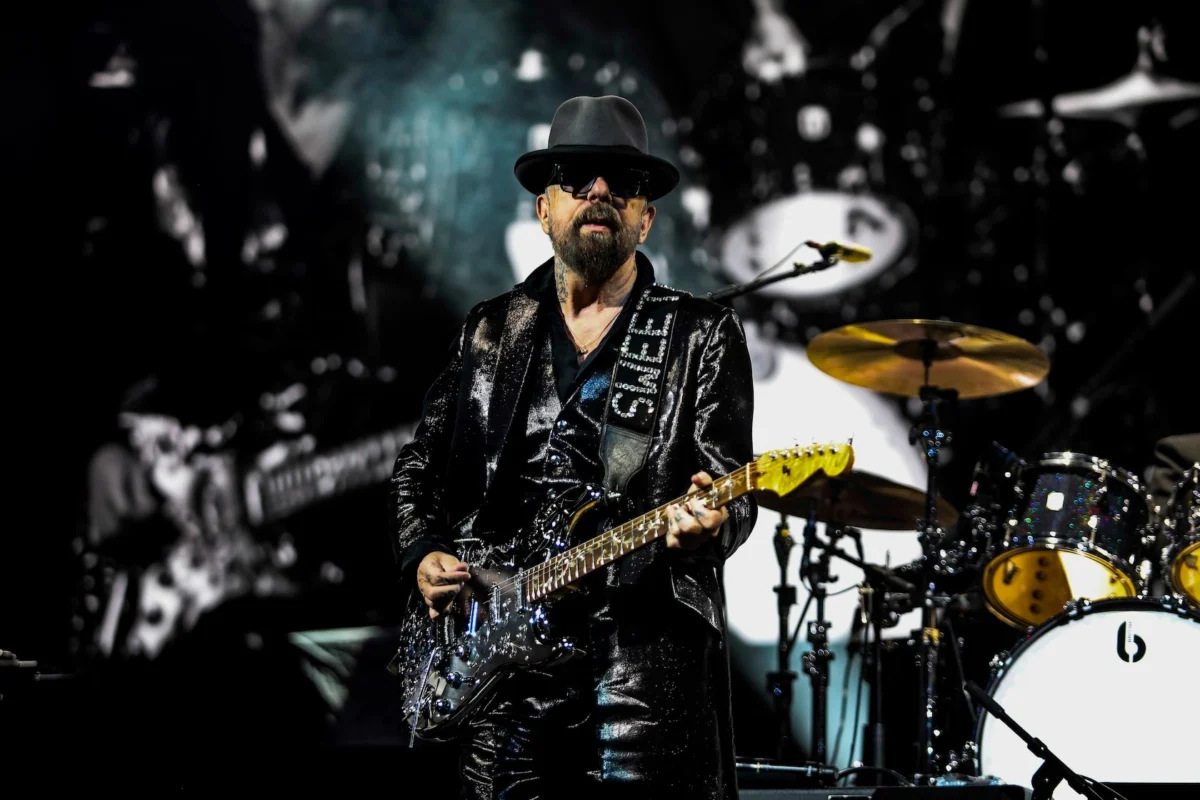
Eurythmics legend Dave Stewart has unveiled a radically unconventional new album, "The Way It Was Back Then," released September 18, a project born not from traditional studio meticulousness but from a spontaneous, "back to front" recording process at his Bahamian island studio. This collection marks a significant departure from Stewart’s prolific four-decade career, which spans solo work, influential bands like the Eurythmics and SuperHeavy, and high-profile production for music titans.
A Spontaneous Genesis for ‘The Way It Was Back Then’
Stewart, a distinguished inductee into both the Rock And Roll Hall of Fame and the Songwriters Hall of Fame, confessed to Billboard that the album’s creation was an unplanned endeavor. "I didn’t know I was making an album," he stated during a Zoom interview from the offices of Rare, an artist’s rights company he co-founded in London. The 10-track album was conceived in a manner antithetical to standard recording practices, with Stewart embracing a "back to front" methodology.
The genesis of "The Way It Was Back Then" can be traced to Stewart’s solo acoustic cover project, "Dave Does Dylan," from the previous year. This earlier work established a precedent for his new album’s intimate and improvisational approach. "I just sang the songs with the acoustic guitar, straight into (the recording), just like the Dylan songs," Stewart recalled.
He elaborated on the raw, unscripted nature of the initial recordings. "I didn’t have any of the words written down or in my mind; I just sang them stream of conscious, into the mic. What I got was the spontaneous, one-take vocal and guitar, or with a funny little keyboard called an Orchid." Stewart initially intended to refine these early takes, but upon listening back, he found himself reluctant to alter the authentic, unpolished moments.
Embracing the "Homemade" Aesthetic
The core of Stewart’s unconventional process lay in reversing the typical studio workflow. "Usually you play everything and make a track and then the singer sings on top of it. This was the exact opposite. It was very homemade," he explained. This philosophical shift allowed for a more direct and emotionally resonant capture of the music.
Following these initial vocal and guitar recordings, Stewart and engineer Jesse Samler meticulously overdubbed all other instruments. The only other vocal contributions came from "a couple of local ladies who don’t really sing – one of them sings a bit in church – to sing these high backing vocals" on select tracks. Despite this minimalist vocal approach, the album achieves a surprising sonic richness and diversity.
Tracks like "Your Wishes," the second song on the album, are adorned with lush orchestral arrangements, demonstrating Stewart’s mastery of sonic textures. In contrast, the title track, "The House Where I Was Born," the Bowie-esque "Thin Ice," and "All Done" explode with high-octane, full-band energy. "Black Cat," a song Stewart describes as a personal favorite, builds to a powerful guitar solo that was, in its original recording, an extensive 15-minute improvisation. The intimate ambiance of "Makes Me Happy (And Sad)" evokes the feeling of a Pink Floyd demo, showcasing the album’s broad stylistic palette.
A Collaborative Effort Rooted in Spontaneity
Stewart and Samler navigated the instrumental layering with a shared vision. "Jesse plays the drums really good, and we both play the bass and keyboards and guitar, or whatever the songs needed," Stewart remarked. The album’s creation presented a unique challenge for Stewart, who admitted to not having fully learned the songs until he began preparing for live performances.

"It was funny; I have these concerts in my home town, Sunderland (England) where I’m playing the whole album and not anything else, and I said to Jesse, ‘Hey, I better learn these songs,’ ‘cause the only time I ever sang them was when we were recording them," he revealed. This anecdote underscores the album’s highly organic and spontaneous development.
Lyrical Depth and Emotional Resonance
Beyond its innovative production, "The Way It Was Back Then" delves into profound lyrical themes. Stewart revisits his past with palpable nostalgia in the title track and "The House Where I Was Born." These songs were inspired by personal reflections on his childhood neighborhood, including observations made while staying in the house opposite his former home and revisiting his old school.
The track "Cry If You Want To" stems from a deeply personal place, inspired by one of his daughters’ significant health challenges. "Black Cat," meanwhile, serves as an anthem of defiant resilience. Stewart shared his perspective on life’s dualities: "I count my blessings and find myself lucky, but it doesn’t stop me from having really deep emotional struggles and feelings in my own world."
For Stewart, the album’s off-the-cuff approach evolved into a form of musical therapy, allowing him to process these complex emotions. He reflected on the shift in perspective that comes with age. "When you’re younger you’re very busy and you’re doing this and that, you don’t have the same introspective or reflective way of looking at things as you do when you get older," he stated.
Now 74, Stewart finds that his later work is increasingly about capturing the essence of specific periods and moments. "I find that as you get older it’s more about the feeling you have of this particular period or that particular time, the feeling you had when that particular moment happened," he explained. "So the songs tended to be more about that… even though they’re descriptive in certain ways in use places and people or whatever. But I was emoting the feeling of that time and place more than the details, I think."
A Unique Release Strategy and Future Plans
In another departure from industry norms, "The Way It Was Back Then" is being released in limited physical editions on vinyl and CD through Bay Street Records. Additionally, it is available via Stewart’s Art of Chaos app, which offers a range of exclusive supplementary content. Stewart indicated a potential broader release on other platforms after an initial period.
"After it’s been out for a while, I might allow it on other (platforms) that might become available," Stewart mentioned. He is also planning "pop-up concerts for the U.K." following his hometown shows in Sunderland. Stewart’s intention is to create an experience where listeners actively seek out the album.
He expressed satisfaction with the final product, noting, "I actually love it now that I’m hearing it after the fact. My first thought back when we started was, ‘Oh, is this an album?’ Now hearing it, I’m going, ‘Yeah, it is.’ It’s not just me and Jesse; it sounds like a record, which makes me happy.” This sentiment highlights the journey from an experimental process to a fully realized artistic statement.
The tracklist for "The Way It Was Back Then" includes:
- The Way It Was Back Then
- Your Wishes
- Cry If You Want To
- The House Where I Was Born
- Black Cat
- Makes Me Happy (And Sad)
- Oh Jesse
- All Done
- Thin Ice
- What’s A Man Supposed To Do