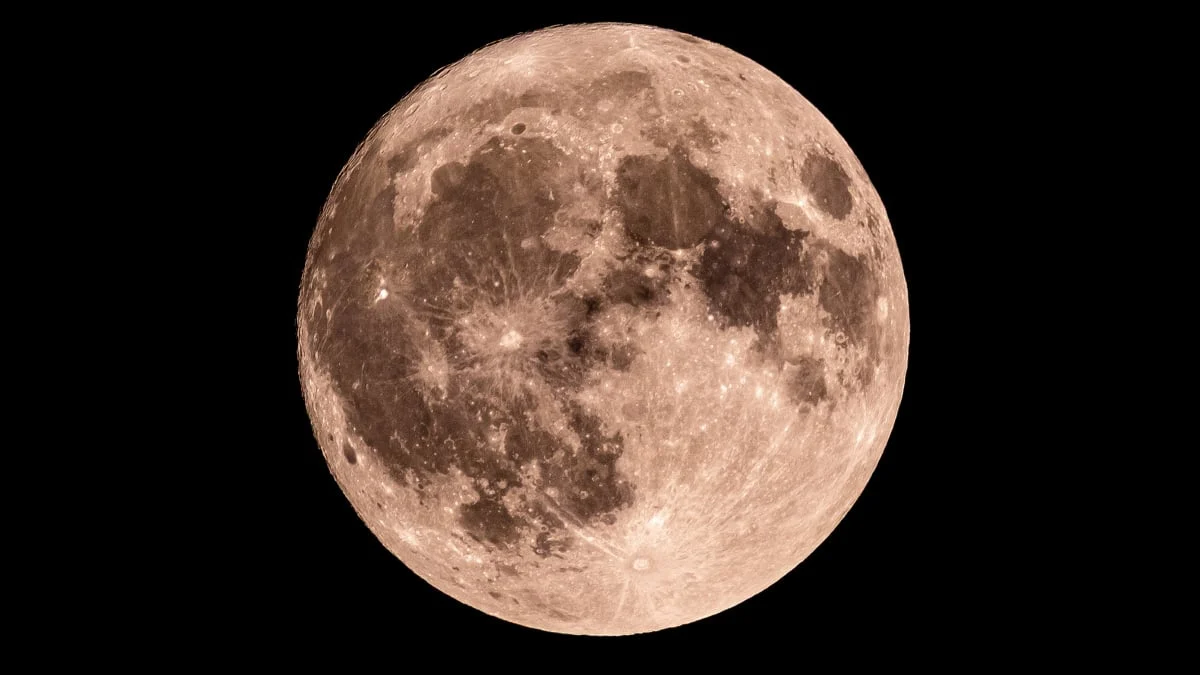
The lunar cycle reaches a significant milestone on Friday, September 18, 2026, as the Moon enters its First Quarter phase, providing a distinct visual display where approximately 45 percent of the lunar surface is illuminated from the perspective of Earth. This phase occurs when the Moon is positioned at a 90-degree angle relative to the Earth and the Sun, creating a sharp "half-moon" appearance that is ideal for both amateur and professional astronomical observation. According to NASA’s Daily Moon Guide, this specific period of the lunar month offers a unique opportunity to view the rugged topography of the lunar surface due to the high-contrast shadows cast along the terminator line—the dividing line between the light and dark sides of the Moon.
Understanding the First Quarter Phase on September 18, 2026
The First Quarter Moon is often described as a "half-moon," though scientifically, it represents the point where the Moon has completed exactly one-quarter of its monthly orbit around the Earth. On September 18, 2026, the Moon will be in its waxing stage, meaning the visible illuminated portion is steadily increasing. For observers in the Northern Hemisphere, the right side of the Moon will be bathed in sunlight, while the left side remains in shadow. This transition is a critical marker in the 29.5-day synodic month, the time it takes for the Moon to return to the same position relative to the Sun.
As the Moon moves toward the September 26 Full Moon, the degree of illumination will expand nightly. On September 18, the 45 percent illumination level makes it a prime candidate for evening viewing, as the Moon will rise around midday and reach its highest point in the sky near sunset. This timing allows for high visibility during the early evening hours before the Moon sets around midnight. The clarity of the lunar features during this phase is largely due to the angle of sunlight, which highlights the depth of craters and the height of lunar mountain ranges.
Key Features Visible During the September 18, 2026 Moon Phase
For those utilizing the naked eye on the evening of September 18, several prominent lunar "seas" or maria will be clearly visible. These include Mare Crisium (the Sea of Crises), Mare Serenitatis (the Sea of Serenity), and Mare Fecunditatis (the Sea of Fertility). These features are not actually bodies of water but are vast, dark basaltic plains formed by ancient volcanic eruptions early in the Moon’s history. Their darker appearance compared to the surrounding lunar highlands is a result of their iron-rich composition, which reflects less sunlight.
Stargazers equipped with binoculars will be able to resolve more intricate details along the lunar surface. The Endymion Crater, located near the northeastern limb, and the Posidonius Crater, situated on the edge of Mare Serenitatis, become standout targets during this phase. Additionally, the Mare Nectaris (the Sea of Nectar) becomes visible, showcasing a smaller, more circular basaltic plain that is surrounded by rugged terrain. The shadows within these craters on September 18 will be particularly long, providing a three-dimensional perspective of the lunar landscape that is lost during the flat lighting of a Full Moon.
Advanced Observation: Apollo Landing Sites and the Altai Scarp
For observers with access to high-powered telescopes, the Moon phase on September 18, 2026, offers a glimpse into the history of human space exploration. The landing sites of Apollo 11 and Apollo 17 are positioned in regions that will be well-lit during this phase. Apollo 11, the site of the first human landing in 1969, is located in the southwestern region of Mare Tranquillitatis. While the hardware left behind by the astronauts is too small to be seen even by the most powerful Earth-based telescopes, the specific geographical landmarks of the "Sea of Tranquility" provide a profound sense of connection to the mission.
Furthermore, the Rupes Altai, also known as the Altai Scarp, will be a prominent feature for telescopic viewers. This massive cliff face or escarpment stretches for hundreds of miles and represents the rim of an ancient impact basin. On September 18, the angle of the sun will catch the edge of the Altai Scarp, making it appear as a bright, jagged line cutting across the lunar surface. This geological formation is a testament to the violent history of the early solar system and the massive impacts that shaped the lunar crust.
The Mechanics of the 29.5-Day Lunar Cycle
The changing appearance of the Moon is a result of its constant motion in orbit. As the Moon travels around the Earth, the geometry between the Earth, Moon, and Sun shifts daily. Although the Sun always illuminates exactly half of the Moon, the portion of that illuminated half that we can see from our vantage point on Earth changes. This cycle, known as the lunar phases, consists of eight distinct stages: New Moon, Waxing Crescent, First Quarter, Waxing Gibbous, Full Moon, Waning Gibbous, Third Quarter, and Waning Crescent.
The transition from the New Moon to the First Quarter on September 18, 2026, represents the "waxing" half of the cycle, where light is "growing" from the right side. Following the First Quarter, the Moon will enter the Waxing Gibbous phase, where more than half of the surface is lit but the Moon has not yet reached its full circular appearance. This progression is essential for various biological and environmental systems on Earth, including the regulation of tides and the migratory patterns of certain nocturnal species.
Preparation for the September 26 Full Moon
Following the First Quarter phase, public attention will shift toward the upcoming Full Moon on September 26, 2026. This event occurs when the Earth is positioned directly between the Sun and the Moon, allowing the entire day-side of the Moon to be visible from our planet. In many cultures, the Full Moon in late September is referred to as the Harvest Moon, as it occurs closest to the autumnal equinox. The abundance of bright moonlight during this time historically allowed farmers to work late into the night to bring in crops.
The period between September 18 and September 26 is often considered the best time for lunar photography. As the Moon moves through its gibbous phase, the increasing light allows for shorter exposure times, while the lingering shadows near the terminator still provide enough detail to capture the Moon’s texture. By the time the Full Moon arrives on September 26, the shadows will vanish, and the Moon will appear as a brilliant, flat disc, making it the brightest object in the night sky.
The Impact of Lunar Observation on Modern Science and Culture
The study of the Moon phase today explained through modern technology has transformed how the public engages with the night sky. In 2026, NASA and other international space agencies continue to utilize lunar phases to plan missions for the Artemis program, which aims to return humans to the lunar surface. The lighting conditions on September 18, 2026, are not just of interest to backyard astronomers but are critical for solar-powered lunar rovers and landers that require specific angles of sunlight to operate.
Moreover, the predictability of the lunar cycle provides a sense of rhythm to human life. From the maritime industry, which relies on lunar-driven tides for navigation and shipping, to the field of chronobiology, which studies how lunar cycles affect human sleep and behavior, the Moon remains a central figure in terrestrial existence. The First Quarter phase on September 18 serves as a reminder of the celestial mechanics that have governed the Earth-Moon system for billions of years.
Future Implications for Lunar Exploration and Public Engagement
As the global community looks toward the end of the decade, the interest in lunar phases is expected to grow alongside the expansion of the "lunar economy." Private companies and government agencies are increasingly viewing the Moon as a gateway to deeper space exploration, including missions to Mars. Understanding the landscape visible on September 18, 2026, helps foster a greater public appreciation for the Moon not just as a light in the sky, but as a physical destination with mountains, valleys, and historical landmarks.
Educational programs and planetariums across the United States are expected to hold viewing events on the night of September 18 to capitalize on the First Quarter’s high visibility. These events aim to inspire the next generation of scientists and engineers by providing a direct look at the lunar surface through high-quality optics. The accessibility of the First Quarter Moon makes it an ideal entry point for students to learn about orbital mechanics, geology, and the history of the Apollo missions.
The Moon phase on September 18, 2026, stands as a significant event in the astronomical calendar, offering a wealth of detail for observers of all levels. Whether viewed with the naked eye, binoculars, or a telescope, the First Quarter phase provides a window into the complex and beautiful nature of our closest celestial neighbor. As the Moon continues its journey toward the Full Moon on September 26, it remains a constant source of wonder and scientific discovery.