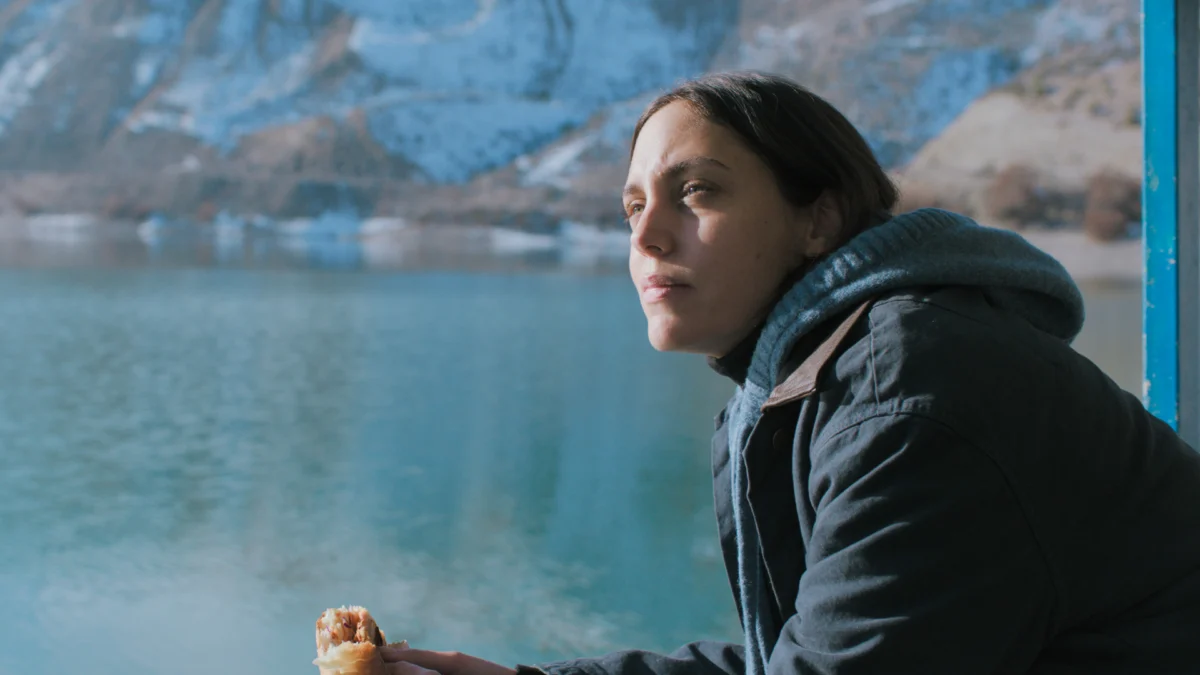
Acclaimed Turkish filmmaker Yesim Ustaoglu is set to make her return to the prestigious San Sebastian International Film Festival, entering the official competition with her latest feature, What Remains. The announcement was accompanied by the release of an exclusive clip, offering a first look at the highly anticipated drama ahead of its world premiere on September 22. Ustaoglu’s participation marks a significant moment, as she returns to the Basque Country festival where she previously clinched the coveted Golden Shell in 2008 for her critically acclaimed film, Pandora’s Box.
Yesim Ustaoglu’s Distinguished Career and Return to San Sebastian
Yesim Ustaoglu stands as one of the most prominent and respected voices in contemporary Turkish and European cinema. Her work consistently explores themes of identity, societal constraints, and the human condition, often focusing on the struggles of individuals seeking liberation and self-discovery. Her 2008 triumph at San Sebastian with Pandora’s Box not only secured the festival’s top honor, the Golden Shell, but also saw its lead actress, Tsilla Chelton, recognized with the Silver Shell for Best Actress, solidifying Ustaoglu’s international standing. This previous success sets a high bar for What Remains, positioning it as a film of significant interest for festival attendees and the global film community.
The San Sebastian International Film Festival, established in 1953, is one of the oldest and most distinguished film festivals in Europe, holding an "A" list accreditation from the FIAPF (International Federation of Film Producers Associations). Known for its strong focus on Spanish-language cinema and its role as a gateway for Latin American and European films to reach a broader audience, the festival attracts top-tier talent and industry professionals annually. Ustaoglu’s repeated selection for the main competition underscores her enduring relevance and artistic vision within the international film landscape. The festival, running from September 18-26, provides a crucial platform for independent and art-house cinema, fostering critical discussion and facilitating global distribution.
Exploring the Heart of What Remains
What Remains delves into the profound journey of Elif, a poet portrayed by Turkish star Öykü Karayel. The narrative centers on Elif’s courageous decision to break free from a life she perceives as stifling, embarking on a quest to "reconnect with her inner voice and conscience and allow her creativity to flow again." This premise suggests a deep exploration of existential themes, personal liberation, and the challenges inherent in redefining one’s identity. The film’s synopsis further elaborates that as Elif begins to question fundamental conventions of family, personal identity, and the very meaning of existence, her transformative journey inadvertently challenges those in her immediate circle to re-evaluate their own lives, ultimately steering the entire family dynamic in an unforeseen direction.
The ensemble cast supporting Karayel includes Metin Akdülger as Mehmet, Ali Kayra Kul as Selim, and Ilyas Salman as Mustafa. The dynamic between Elif and Mehmet is particularly highlighted in the exclusive clip, which was unveiled globally on Monday. The scene depicts a poignant and emotionally charged conversation, culminating in Mehmet’s piercing question to Elif: "Do you even love me anymore?" This line, delivered with palpable tension, immediately establishes a core conflict within the film, hinting at the personal sacrifices and difficult confrontations inherent in Elif’s pursuit of self-actualization.
Director’s Personal Vision and Thematic Depth
Yesim Ustaoglu has revealed that the genesis of What Remains was deeply personal, stating that the project began to take shape "precisely when I started asking this question again." This introspective origin suggests a direct link between the filmmaker’s own experiences and the narrative unfolding on screen. She elaborated that the feature film emerged from a profound desire to "break free from a sense of suffocation and weariness," a feeling she observed not only within herself but also resonated widely among those in her surroundings.
Ustaoglu describes this "suffocation" as a systemic force that traps lives in cyclical patterns, leading to standardization, grinding down individual spirit, and ultimately diminishing the capacity for creativity. Her reflection on this pervasive modern malaise informs the film’s central struggle. For the director, the only viable path out of this existential trap appeared to be a radical one: "to stop everything, step outside it all, leave, look, and try to understand." This philosophy underpins Elif’s journey, suggesting that the film will resonate with anyone who has felt constrained by societal expectations or the mundane routines of modern life.
Global Collaboration and Industry Impact
The production of What Remains exemplifies the increasingly collaborative nature of independent cinema on a global scale. The film is a Ustaoglu Film production from Turkey, brought to fruition with significant international co-production partners. These include Luxembourg’s Tarantula, Bulgaria’s RFF International, and France’s Cite Films. This multi-national funding and production model is crucial for independent filmmakers, allowing access to diverse talent pools, financial incentives, and broader distribution networks that might be unavailable through a single national entity.
Further strengthening its international reach and visibility, Mubi, a prominent curated streaming service and distributor for arthouse and independent films, is a co-producer on What Remains alongside Pak Ventures and Yuvision, with collaboration from Istos Film. Mubi, which also owns The Match Factory, the global sales agent for the film, has already acquired all rights for the movie in Turkey. This strategic integration from production to distribution ensures a robust pathway for What Remains to reach audiences worldwide. The involvement of Mubi underscores its growing influence in supporting and elevating quality independent cinema, often playing a pivotal role in bringing culturally significant works to a global audience that might otherwise struggle for visibility.
The Landscape of Turkish Cinema and Female Directors
Yesim Ustaoglu’s continued success and international recognition also shine a spotlight on the broader landscape of Turkish cinema. Over the past few decades, Turkish films have gained increasing traction on the international festival circuit, with a new generation of filmmakers exploring diverse genres and pressing social issues. Directors like Nuri Bilge Ceylan, Semih Kaplanoğlu, and Zeki Demirkubuz have brought critical acclaim to the country, often delving into profound human dramas and existential queries.
Within this context, Ustaoglu stands out as a leading female voice, consistently challenging norms and providing nuanced portrayals of women in complex situations. Her filmography, which includes works like Journey to the Sun (1999), Cloud Atlas (2004), and Somewhere in Between (2012), often examines the intersection of personal struggle with broader socio-political realities. Her return to San Sebastian with What Remains not only solidifies her individual legacy but also reinforces the importance of diverse perspectives and strong female narratives in a global film industry that continues to strive for greater inclusivity.
Anticipation and Future Prospects
As the 74th San Sebastian International Film Festival prepares to open its doors, anticipation for What Remains is building. The exclusive clip has already sparked discussions among film enthusiasts and critics, setting the stage for what promises to be a thought-provoking and emotionally resonant cinematic experience. The film’s premiere on September 22 will be a key event, where its critical reception will undoubtedly influence its trajectory in the awards season and its subsequent international release.
The global sales efforts by The Match Factory, combined with Mubi’s distribution power, position What Remains for significant exposure beyond the festival circuit. The themes of self-discovery, identity, and the quest for creative freedom explored in the film possess universal resonance, suggesting a broad appeal to audiences grappling with similar questions in their own lives. Yesim Ustaoglu’s latest work stands as a testament to her enduring artistic vision, promising a powerful addition to her acclaimed filmography and a compelling entry into the discourse of contemporary world cinema.