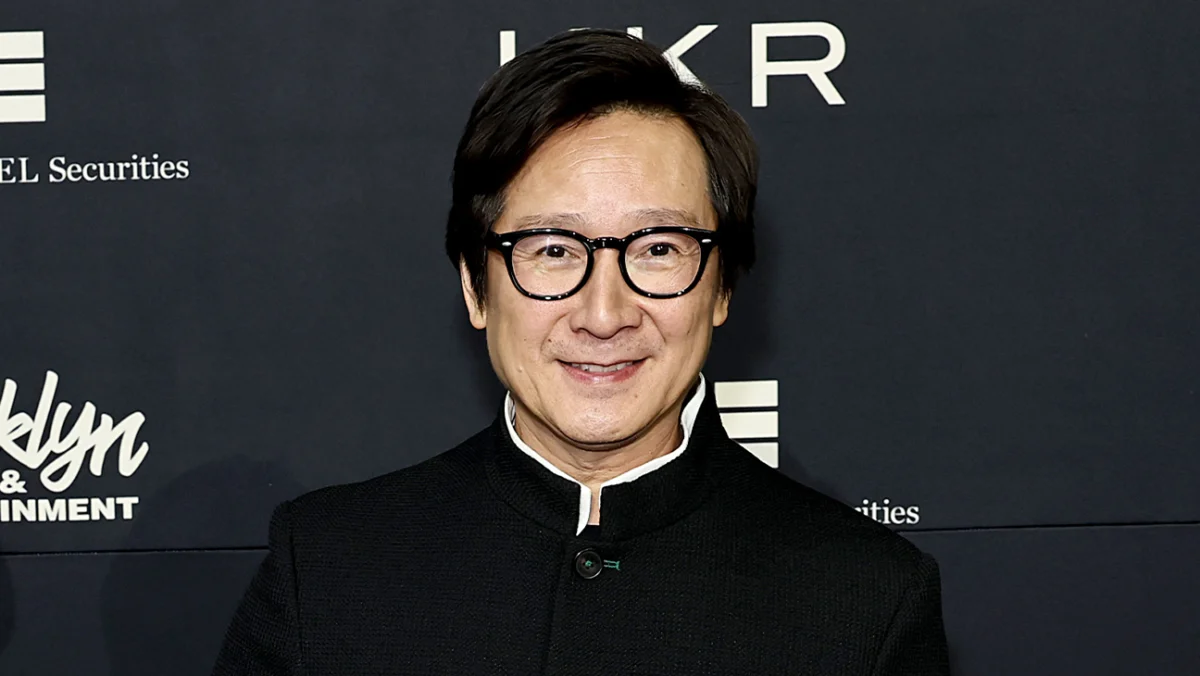
Actor Ke Huy Quan has revealed a pivotal, financially impactful moment from his early career, detailing in his new memoir the receipt of a "generous" $100,000 residuals check for his role as Short Round in the 1984 blockbuster Indiana Jones and the Temple of Doom. The Oscar winner recounts the unexpected windfall, which arrived when he was merely 12 years old, as a significant turning point for his family, highlighting the extraordinary nature of such a payment for a child actor in that era.
Early Beginnings and a Blockbuster Role
Quan’s journey into Hollywood began serendipitously when he was cast as Harrison Ford’s young sidekick, Short Round, in Steven Spielberg’s prequel to Raiders of the Lost Ark. At the time, Quan, a Vietnamese refugee, had no prior acting experience, having accompanied his brother to an open audition where Spielberg himself noticed him. The role in Indiana Jones and the Temple of Doom launched him into immediate global recognition, securing his place in cinematic history alongside one of film’s most iconic adventurers.
The film, a highly anticipated sequel, was a massive commercial success, further cementing the Indiana Jones franchise as a cultural phenomenon. Released three years after the original, Temple of Doom saw Indiana Jones navigate perilous adventures in India, rescuing enslaved children and confronting a Thuggee cult. Quan’s character, Short Round, became an instant fan favorite, celebrated for his spirited performance, quick wit, and unwavering loyalty to Indy. This early triumph set the stage for Quan’s subsequent role in another 1980s classic, The Goonies.
The Unforeseen Residuals Check
In his recently released memoir, Never Say Die, Quan vividly recounts the moment his parents presented him with the unexpected check. He described walking into the kitchen to find his parents, their faces alight with a mixture of surprise and disbelief, holding an envelope from Lucasfilm. The sum, nearly $100,000, was unfathomable to the young actor, who had already received his base compensation for his work on the film.
"I didn’t understand how more money could suddenly appear," Quan wrote, reflecting on his youthful confusion about the concept of residuals. His parents, who had immigrated to the United States from Vietnam, were equally astonished by the unexpected financial boon. For a family building a new life, the arrival of such a substantial amount was not merely a bonus but a fundamental shift in their economic circumstances, providing a crucial safety net and opportunities that might otherwise have been out of reach.
Understanding Residuals in 1980s Hollywood
Residuals, in the context of the film industry, are payments made to actors, writers, and directors for the reuse of their work beyond the initial release. These payments typically cover broadcasts, streaming, home video releases, and other forms of distribution. While a standard component of industry contracts today, the landscape of residuals was vastly different in the 1980s. At that time, it was exceptionally rare for actors, particularly child actors or those in supporting roles, to receive a share of a film’s profits or ongoing revenue. Such clauses were typically reserved for the biggest stars, those with significant box office draw and negotiating power.
Quan underscored this historical context in his memoir, emphasizing the rarity and generosity of the gesture from Spielberg and Lucasfilm. "Back then, almost no actors got a piece of a movie’s profits," he explained. "Even today, only the biggest stars do. That a kid like me, making his first film, would be included in something like that was unheard of." The fact that Indiana Jones and the Temple of Doom was a guaranteed box office hit, being the sequel to the highly successful Raiders of the Lost Ark, made the decision to include a young, unknown actor in the residuals payout even more notable and magnanimous.
The "Quiet Gesture" and Lasting Impact
Quan characterized the inclusion of a residuals clause in his contract as a "quiet gesture from Steven and George," referring to Steven Spielberg and George Lucas, the creative forces behind the Indiana Jones franchise. This act of foresight and generosity had profound and lasting consequences. The "small share," as he called it, was genuinely "life-changing" for his family, offering a level of financial security that was otherwise unimaginable. This initial support undoubtedly played a role in stabilizing his family’s new life in America, allowing them to pursue educational and other opportunities.
Beyond the immediate financial benefit, the experience of receiving the residuals check likely instilled in Quan an early understanding of the value of his work and the potential for long-term compensation in the entertainment industry. It set a precedent for professional conduct and fair treatment that would resonate throughout his career, even during periods when roles became scarce.
A Career Defined by Highs and Lulls
Following his success in Indiana Jones and the Temple of Doom and The Goonies, Quan continued to act, but opportunities for Asian actors in Hollywood were limited and often confined to stereotypical roles. Facing a dearth of meaningful parts, he eventually transitioned behind the camera, working as a stunt coordinator and assistant director, contributing to films such as X-Men and The One. This period of his life, though productive, was marked by the quiet ache of not pursuing his passion for acting, a sentiment he would later share publicly.
His memoir, Never Say Die, details not just the triumphs but also the struggles and uncertainties that followed his initial burst of childhood fame. For many years, Quan harbored doubts about his acting capabilities and whether he could ever surpass the achievements of his youth. This period of introspection and professional pivot ultimately led to a remarkable resurgence in his career, culminating in his acclaimed performance in the 2022 film Everything Everywhere All at Once.
The Resurgence and Industry Recognition
Quan’s return to acting with Everything Everywhere All at Once was nothing short of a cinematic phenomenon. His portrayal of Waymond Wang, a character spanning multiple dimensions and personalities, resonated deeply with audiences and critics alike. The performance garnered him widespread critical acclaim, including the Golden Globe Award for Best Supporting Actor and, most notably, the Academy Award for Best Supporting Actor at the 2023 Oscars.
During his emotional acceptance speech at the Golden Globes, Quan specifically thanked Steven Spielberg, acknowledging the profound impact Spielberg had on his life and career by giving him his first opportunity. "As I grew older, I started to wonder if that was it, if that was just luck," Quan reflected at the time. "For so many years, I was afraid I had nothing more to offer. No matter what I did, I would never surpass what I achieved as a kid." This poignant reflection underscored the full-circle journey from a child actor receiving an unexpected "generous" residuals check to an adult actor achieving the industry’s highest honors.
Broader Implications for Industry Compensation
Quan’s revelation about his early residuals check also provides a valuable historical lens through which to view ongoing discussions about compensation and fair pay in Hollywood. The recent SAG-AFTRA and WGA strikes highlighted issues of residuals, particularly in the era of streaming, where traditional models of payment have been challenged. The rarity of Quan’s 1980s residuals payment for a non-star underscores how far the industry has (or hasn’t) come in ensuring equitable compensation for all talent, not just the marquee names.
The fact that Spielberg and Lucas went beyond standard practice to include a young, first-time actor in a profit-sharing agreement serves as a powerful testament to their individual generosity and perhaps a broader recognition of the contributions of all cast members, regardless of their billing. It challenges the historical norm and suggests a progressive approach to talent compensation that was ahead of its time.
A Legacy of Generosity and Perseverance
Ke Huy Quan’s story is a compelling narrative of early success, professional hiatus, and a triumphant return. The "generous" $100,000 residuals check from Indiana Jones and the Temple of Doom stands not just as a financial footnote but as a symbol of the foundational support and recognition he received at the very beginning of his career. It speaks to the enduring power of kindness and fair dealing within a competitive industry.
From a bewildered child holding an envelope to an acclaimed Oscar winner, Quan’s journey is a testament to perseverance and the lasting impact of early opportunities. His memoir offers a candid look into the realities of navigating a demanding profession, while his public acknowledgments continually reinforce the profound influence of the people who believed in him from the outset, particularly Steven Spielberg and George Lucas, whose "quiet gesture" provided not only financial stability but also an invaluable lesson in generosity and professional respect.