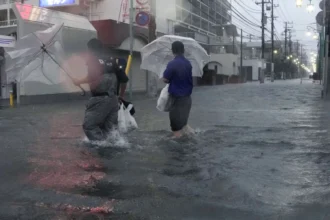
The swirling brown waters of the August 26 monsoon floods transformed the lives of hundreds of children in Nepal, leaving them orphaned or separated from their families and facing a bleak, uncertain future. Nine-year-old Ram Thakur’s harrowing escape is a poignant example of the chaos and trauma that swept through the Himalayan nation, displacing tens of thousands and claiming over 1,400 lives.
The Flood’s Devastating Reach: Children Adrift
As the deluge surged, Ram and his mother fled their home in Dhading district, climbing a steep incline to escape the rising torrent. His mother’s desperate plea, “Climb up faster, don’t look behind,” echoed in his ears as he scrambled to safety. When he finally dared to look back, the water was still dangerously close, but his mother was gone. Nearly four weeks later, Ram remains in a temporary shelter in Nuwakot district, clinging to a sliver of hope that his parents, his father a guide and driver who was due to start work later that morning, will somehow find him. He is one of more than 500 children currently housed in government-run schools and makeshift shelters across Nepal’s flood-ravaged regions, their parents either confirmed dead or missing.
Under Nepali law, a person is legally declared dead only after being missing for 12 years. While an exemption exists for disaster situations, it requires a judicial declaration of death obtained through a district court. This legal nuance leaves many children like Ram in a state of limbo – not yet officially orphans, but effectively parentless in the aftermath of one of Nepal’s most catastrophic natural disasters. The floods, triggered by relentless monsoon rains, unleashed landslides and inundated villages, leaving at least 5,000 others missing in addition to the confirmed fatalities.

A Day of Terror and Separation
The morning of August 26 began like any other for Ram. He was en route to school with his mother when the terrifying cry of "Run, flood!" shattered the relative calm. The frantic scramble for higher ground led to Ram’s separation from his mother. He spent a day stranded on a hill with 13 other survivors, his fear and hunger palpable, before being rescued by an army helicopter. His school bag, containing much-needed biscuits and his lunchbox, was lost to the raging waters.
Now, sharing meals of dal, rice, and saag with 26 other children in a Nuwakot shelter, Ram struggles to comprehend his parents’ prolonged absence. He believes their swimming ability should have ensured their survival and return by now. A counsellor at the shelter notes that Ram still rushes outside whenever he hears a helicopter, his eyes scanning the skies with desperate anticipation.
The Scale of Child Displacement and Loss
A comprehensive post-flood assessment conducted this month by Nepal’s National Child Rights Council and the nonprofit Save the Children revealed the staggering impact on the nation’s youth. The assessment identified over 1,000 children residing in temporary shelters. Of these, more than 100 were completely unaccompanied, while another 439 were without their parents but had other relatives present. Ayush Joshi, program director for Save the Children in Nepal, highlighted these figures to Al Jazeera.

In total, an estimated 32,000 children were displaced by the floods. Officials and aid organizations are engaged in an urgent race against time to trace and reunite these vulnerable children with their families. Leon Muwoni, who heads child protection efforts at UNICEF Nepal, confirmed that as of now, 18 children have been successfully reunited with their parents.
Echoes of Trauma in Shelters
The temporary shelter in Nuwakot, where Ram is staying, has been transformed into a child-friendly space. Six of its eight rooms are equipped with waterproof mats, bedding, and toys, with bunk beds under construction. A seventh room serves as a storage for relief supplies, and the eighth is dedicated to food preparation. The shelter is staffed by Nepal Police personnel and representatives from various nonprofits, supported by a dedicated counsellor.
Further north, in a shelter in Dhading district, four-year-old Shibani Tama remains withdrawn and silent. Her parents are confirmed dead, and she has little recollection of her former life or any surviving relatives. Her only coherent account to rescuers and counselors is that she was at school when teachers urged her and her classmates to flee to higher ground.
"She does not speak to anyone. Doesn’t let anyone comb her hair, too. Barely lets us change her clothes in two to three days after insisting," said Yamuna Bhattarai, a caregiver at the shelter. "It is very disturbing to see her and others who are in extreme shock. All of them are in dire need of psychosocial help."

Siblings as Solace: The Burden of New Responsibilities
Many children who have lost both parents are grappling with basic life skills, having never learned to wash, dress, or feed themselves independently. In some heartbreaking instances, young children have become the primary caregivers for their even younger siblings.
Ten-year-old Sanju Lama was accompanying her two-year-old brother to their grandmother’s house in Rasuwa district, the area most severely affected by the floods, when strangers intervened and helped them escape the rising waters. Their home was swept away, and their parents, who should have been present, are now missing.
"Sanju gets shocked by loud sounds, even when her name is called out," Bhattarai observed. "She keeps holding her little brother’s hand tight, almost all the time. At night, she often wakes up scared." Despite her own trauma, Sanju finds solace in reading English poems to her younger brother. "They are the only ones for each other now," Bhattarai added, underscoring the profound bond forged in tragedy.
The educational infrastructure has also been severely impacted. UNICEF reports that 18 schools have been destroyed and 20 more damaged in the affected districts, leaving an estimated 10,000 school-age children facing an uncertain academic future. Many of these schools are situated precariously close to riverbanks, posing ongoing risks.

The Struggle for Support: Help Falling Short
Despite the dedicated efforts of nonprofits, counselors, and childcare staff, the provision of support in the temporary shelters often falls short of the overwhelming needs. While toys, books, and play materials have been distributed, many children remain withdrawn and unable to engage. Some exhibit behaviors that suggest they are processing their trauma through play, with volunteers observing children creating and reenacting family scenarios with dolls.
"These children probably don’t even understand what exactly has happened or why," said Joshi of Save the Children. "They are clueless about the next day, and the future in totality." The living conditions in many overcrowded shelters offer little privacy, exacerbating the children’s distress.
Authorities and aid organizations are exercising extreme caution when placing children with individuals claiming to be relatives. This stringent approach is crucial to prevent potential cases of trafficking or child labor. "Some of the children whose relatives have been located are kept in shelters if those relatives cannot provide sufficient documentation or proof of guardianship, to avoid the risks of trafficking or child labour," explained Leon from UNICEF.
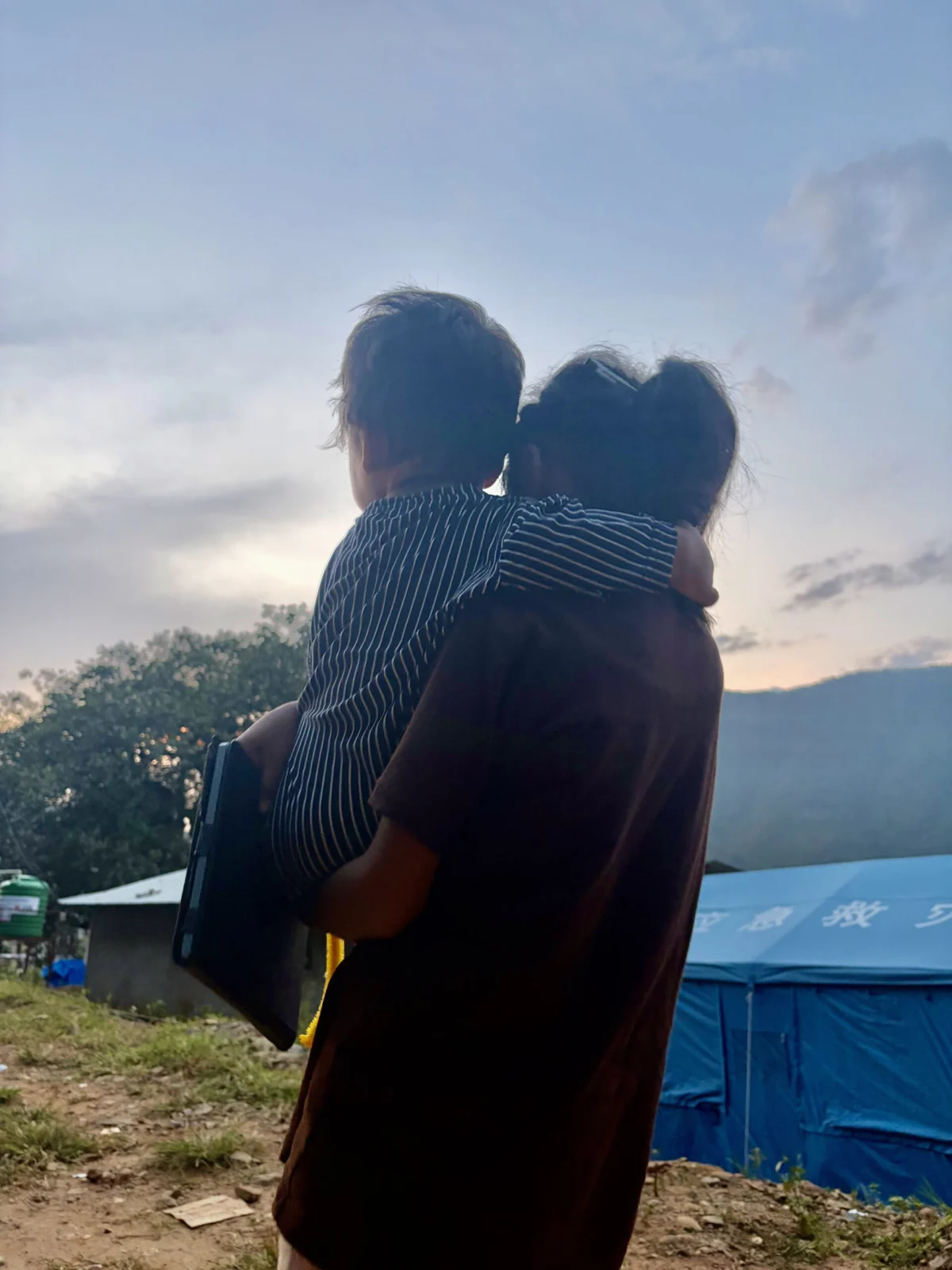
As dusk settles over Nuwakot, Ram Thakur sits on the porch of the shelter, his gaze fixed on the horizon. He watches the setting sun paint the sky in hues of orange, still hoping for the sight of a helicopter that might bring his parents home. But as darkness descends, the hope of an immediate reunion fades, leaving him and countless other children to face another night with the chilling uncertainty of their orphaned futures.