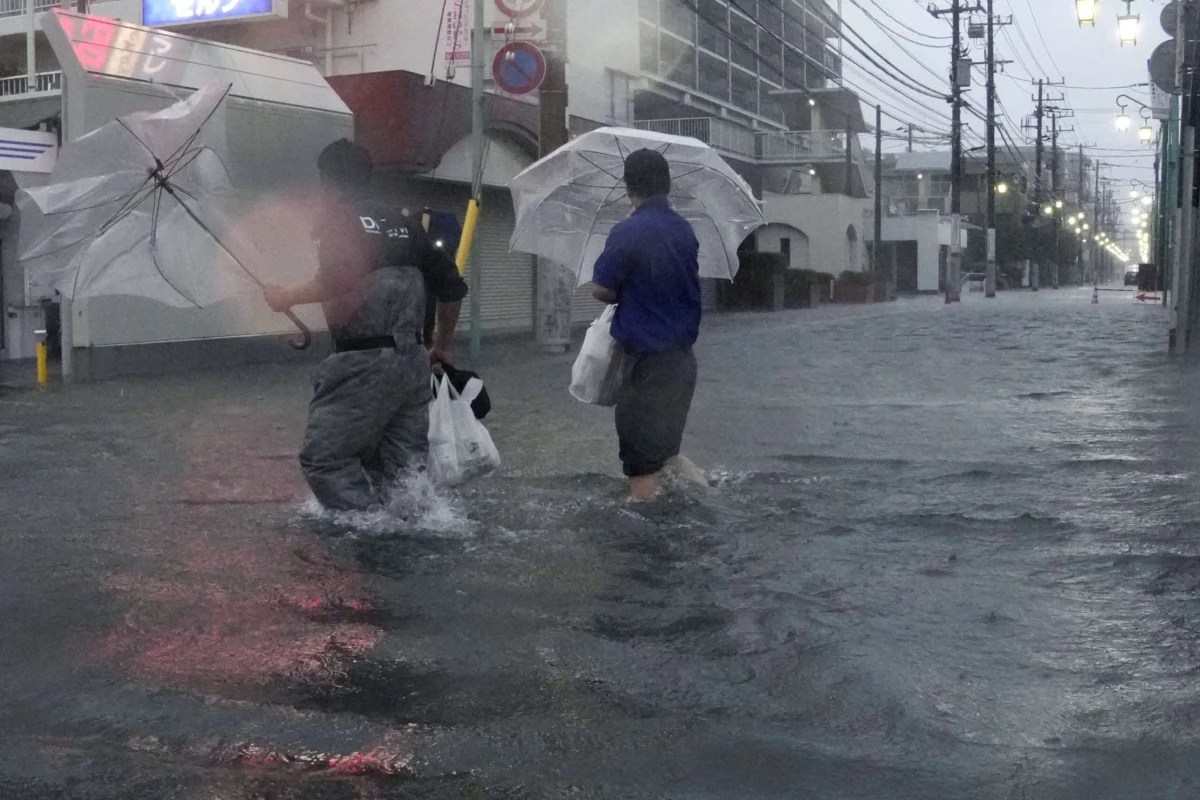
Typhoon Dujuan slammed into Japan’s eastern coast, unleashing torrential rains and powerful winds that triggered widespread flooding, deadly landslides, and massive travel disruptions for millions, particularly in the densely populated regions surrounding Tokyo. The destructive storm forced the evacuation of over 1.6 million people as it carved a path of devastation across the archipelago.
Typhoon Dujuan Unleashes Fury on Japan
On Monday, as Typhoon Dujuan bore down on Japan, its sustained wind speeds clocked in at approximately 144 kilometers per hour (89 miles per hour). The storm’s center was located about 130 kilometers (80 miles) south of Katsuura, a coastal town not far from the nation’s capital. This proximity to Tokyo meant that significant portions of the metropolitan area and surrounding prefectures were directly in the typhoon’s path, experiencing its most severe impacts.
The immediate aftermath of the typhoon’s passage saw thousands of households plunged into darkness due to widespread power outages. These disruptions underscored the sheer force of Dujuan and the vulnerability of Japan’s infrastructure to extreme weather events. The full extent of the damage continues to be assessed, but early reports paint a grim picture of a nation grappling with the consequences of a powerful natural disaster.
Fatalities and Widespread Damage Reported
Tragically, the ferocity of Typhoon Dujuan has claimed lives. Kyodo News, citing local authorities, confirmed that at least two individuals have died as a direct result of the storm. These fatalities highlight the perilous conditions residents faced, particularly in areas prone to landslides and flash floods. The number of casualties is expected to be updated as rescue and recovery operations progress.
By early Tuesday, the typhoon had begun to move away from the Japanese mainland, tracking northeastward over the Pacific Ocean and heading towards the Aleutian Islands. The Japan Meteorological Agency (JMA) reported that Dujuan’s winds had slightly diminished as it moved offshore. However, forecasters warned that the threat of heavy rainfall persisted in many areas.
Takuya Hosomi, a representative from the JMA, cautioned that "there’s a risk the rain will continue as the typhoon moves north." This ongoing precipitation poses a significant danger of further flooding and landslides, even as the immediate threat of the typhoon’s core winds recedes. Residents in affected regions remain on high alert, urged to heed all official warnings and advisories.

Travel and Transport Grinds to a Halt
The impact of Typhoon Dujuan on Japan’s sophisticated transportation network was immediate and severe, causing extensive travel chaos. Major airports experienced widespread delays and cancellations as airlines scrambled to ensure the safety of their operations. Japan Airlines reported cancelling 135 flights on Monday, while All Nippon Airways grounded 140 flights, leaving thousands of passengers stranded at hubs like Tokyo’s Haneda Airport.
The disruption extended beyond air travel. Several key rail services were suspended, including the vital Shinkansen bullet train lines that connect Tokyo with Osaka, a major economic and cultural corridor. Japan Railways confirmed these suspensions, further isolating communities and hindering efforts to move essential personnel and supplies.
Record-Breaking Rainfall and Localized Flooding
The JMA had issued stark warnings on Sunday, anticipating that both rainfall and winds would intensify significantly even before the typhoon made landfall. The agency projected that the total rainfall accumulated through Tuesday could surpass the average monthly rainfall for September, potentially leading to record-breaking downpours.
These forecasts proved accurate as social media buzzed with images and videos of flooded streets. In Kamakura, a popular tourist destination south of Tokyo, roads in front of the iconic station were submerged, rendering them impassable. Kamakura Mayor Takashi Matsuo issued a public advisory via X, stating, "There is flooding in various parts of the city, so travelling by car is dangerous."
The city of Ichikawa, located to the east of Tokyo, also experienced significant inundation, with floodwaters submerging parts of the urban landscape. These localized flooding events underscore the destructive power of Dujuan’s heavy rainfall, overwhelming drainage systems and turning streets into rivers.
Cultural and Sporting Events Disrupted
The severe weather conditions forced the premature closure of several high-profile events, highlighting the broad societal impact of Typhoon Dujuan. The Tokyo Game Show, one of the world’s largest video game trade fairs, concluded its final day early on Monday due to the intensifying storm. This abrupt end meant that exhibitors and attendees had to evacuate the venue under challenging circumstances.
Beyond the tech industry, the entertainment and sports sectors also felt the brunt of Dujuan’s fury. A major outdoor music festival scheduled to take place in Chiba Prefecture was cancelled. Similarly, a planned baseball match in the same region was also called off, depriving fans of scheduled entertainment and impacting local economies that rely on such events.

Japan’s Resilience in the Face of Typhoons
Typhoon Dujuan marks the 25th typhoon to affect Japan this year, a statistic that underscores the nation’s perennial exposure to such powerful meteorological phenomena. Japan’s geographical location in the Western Pacific makes it a frequent target for tropical cyclones, particularly during the late summer and early autumn months.
The country has developed a sophisticated system of disaster preparedness and response over decades of facing such threats. This includes advanced weather forecasting, robust building codes designed to withstand high winds, and comprehensive evacuation protocols. However, even with these measures in place, the sheer intensity of storms like Dujuan can overwhelm local infrastructure and pose significant risks to life and property.
The recurring nature of typhoons in Japan has fostered a culture of resilience and preparedness among its citizens. Communities often have established plans for securing homes, stocking essential supplies, and assisting vulnerable neighbors. This collective awareness and proactive approach are crucial in mitigating the impact of these annual weather challenges.
Broader Implications and Future Outlook
The economic toll of Typhoon Dujuan is expected to be substantial, encompassing damage to infrastructure, agricultural losses, and the disruption of business operations. The cost of repairs, emergency response, and lost productivity will likely run into billions of dollars. Furthermore, the impact on the tourism sector, which is vital to Japan’s economy, could be significant, especially if recovery efforts are prolonged.
As Japan assesses the immediate damage, attention will inevitably turn to long-term strategies for adapting to a changing climate. Scientists have suggested that climate change may be contributing to an increase in the intensity of tropical cyclones, making them more powerful and unpredictable. This trend could necessitate further enhancements to Japan’s disaster preparedness infrastructure and urban planning.
The ability of Japan to withstand and recover from such natural disasters is a testament to its organizational capacity and the preparedness of its people. However, the recurring frequency and increasing intensity of these events present an ongoing challenge. The nation’s response to Typhoon Dujuan will undoubtedly inform future strategies for confronting the ever-present threat of severe weather in the Pacific region. The focus now shifts to the recovery and rebuilding efforts, ensuring that communities can return to normalcy and are better prepared for the typhoons that will inevitably follow.