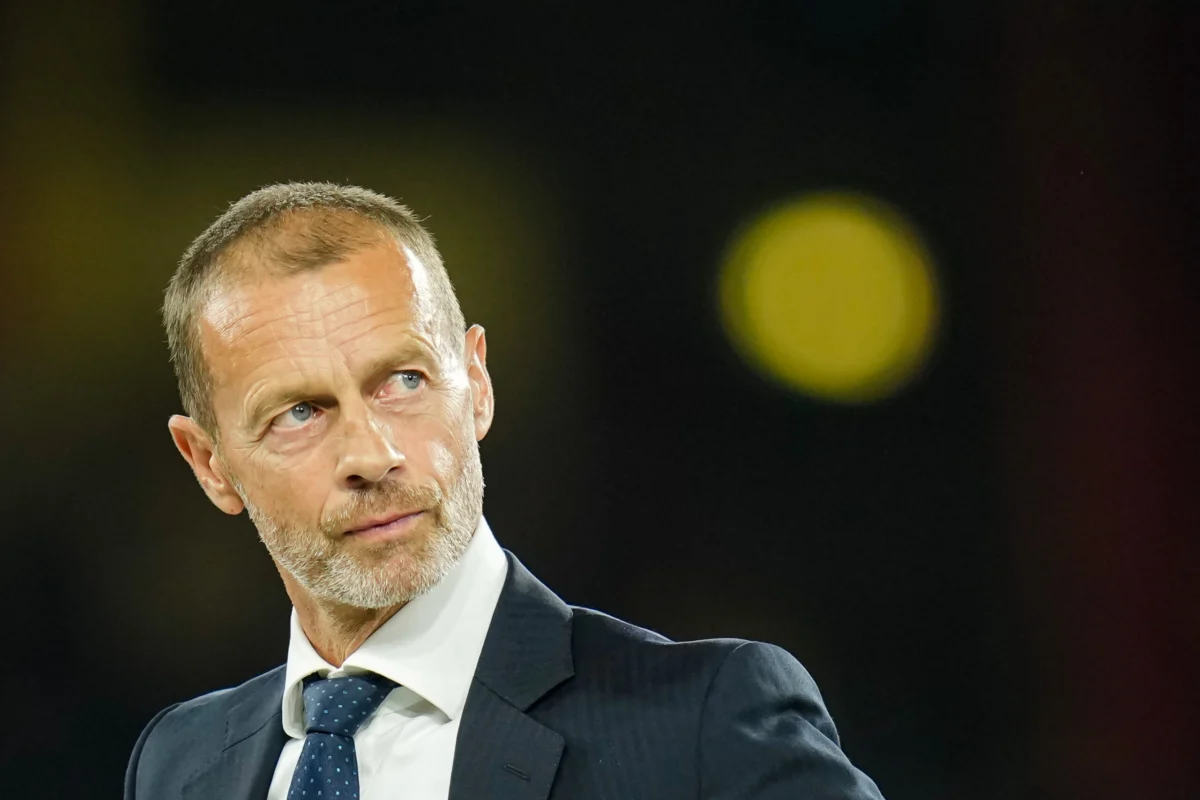
UEFA President Aleksander Ceferin declared on Wednesday that trust within world football remains fractured, even after FIFA’s recent proposal to review its decision-making processes, signaling a deep-seated skepticism regarding the global governing body’s leadership and transparency. Ceferin’s pointed remarks, delivered via a video address to the Portugal Football Summit, marked his first public commentary since FIFA President Gianni Infantino extended an offer to re-examine FIFA’s strategic initiative frameworks. This public stance underscores the significant schism that has developed between Europe’s football confederation and FIFA’s top leadership.
Ceferin Highlights Pillars of Trust and Implied Betrayal
Speaking at the influential gathering of football professionals, Ceferin articulated his vision for restoring faith in the sport, emphasizing the critical importance of unity, transparency, and governance structures that genuinely serve the broader football community. He directly, albeit implicitly, critiqued those within football’s administration who he believes have prioritized personal ambitions over the collective good of the game.
"Trust in our sport rests on three pillars: unity, transparency, and governance that serves the many, not the few," Ceferin stated during his address. He followed this with a stark observation: "In recent times, all three were disregarded by people who had sworn to protect them." This sentiment clearly targets the circumstances surrounding FIFA’s now-abandoned private investment plan, which had been a significant point of contention.
The UEFA president elaborated on the lasting damage caused by the controversial proposal, even though the initiative itself has been shelved. "The project that shattered the unity of world football may be abolished, but the trust it broke has not returned, and repairing it is our work now," he asserted. While Ceferin refrained from naming Infantino or FIFA directly, his commentary was widely interpreted as a pointed rebuke of FIFA’s recent actions and the leadership’s approach to significant financial dealings.
The Abandoned Investment Plan: A Catalyst for Distrust
The core of Ceferin’s criticism revolves around FIFA’s aborted plan to sell a substantial stake – 20 percent – of its commercial rights, including those associated with the highly lucrative World Cup. This ambitious proposal, aimed at securing significant private investment, faced overwhelming opposition and was ultimately withdrawn in July following a strong backlash from UEFA, the Asian Football Confederation (AFC), and the Confederation of North, Central America and Caribbean Association Football (CONCACAF).
UEFA, under Ceferin’s leadership, has consistently championed the principle that football’s core assets should not be subject to commercialization in a manner that could undermine its integrity or accessibility. "Football is not for sale," Ceferin reiterated, a message he has long advocated and which he urged the attendees of the Portugal Football Summit to continue promoting. This slogan has become a rallying cry for those who believe that the soul of the sport should not be bartered for financial gain.
The collapse of the investment deal highlighted a deep division within global football governance, pitting FIFA’s central authority against the concerns and operational realities of its constituent confederations. The aggressive pursuit of the deal, despite widespread reservations, fueled accusations that FIFA was moving too quickly and without adequate consultation, eroding confidence among its member associations.
Infantino’s Response: A Review or a Tactic?
Ceferin’s strong statement comes just days after Infantino attempted to quell the growing dissent by dispatching a letter to the FIFA Council and the presidents of all 211 member associations. In this communication, Infantino proposed commissioning an independent external review of FIFA’s governance framework for major strategic initiatives. He also suggested initiating consultations with confederations, member associations, and other stakeholders to bolster FIFA’s decision-making processes.
The proposed review, as outlined by Infantino, could delve into the roles of the FIFA president, the FIFA Council, the FIFA Bureau, and the FIFA Congress, with an stated aim of enhancing transparency and accountability. This offer of dialogue and introspection was presented as a move to address the criticisms leveled against FIFA and to rebuild a more robust governance structure.
However, Infantino’s outreach appears to have fallen short of appeasing several key federations that had been vocal critics of the abandoned investment proposal. Reports suggest that the letter has not succeeded in winning over these dissenting voices, who may view the proposed review as a tactical maneuver rather than a genuine commitment to systemic reform. The timing of Infantino’s letter, coming after significant public pressure and internal criticism, has led some to question its sincerity and effectiveness.
The Road Ahead: Rebuilding Trust and Governance
The ongoing friction between UEFA and FIFA, personified by Ceferin and Infantino, points to a broader struggle for control and direction within international football. Ceferin’s insistence that trust has not been restored suggests that the proposed review is insufficient to mend the damage caused by the investment plan saga. He argues that substantive changes in behavior and decision-making are required, not just procedural reviews.
"The game will remain safe if those who govern it remember whom they govern it for," Ceferin concluded, a clear reminder to the leadership that their primary responsibility lies with the millions of players, fans, and clubs that constitute the global football ecosystem. This statement underscores a fundamental difference in philosophy: UEFA’s focus on serving the football community versus FIFA’s perceived drive for commercial expansion and centralized power.
Infantino, meanwhile, has expressed his continued commitment to leading FIFA and is widely expected to seek re-election for another term as president in March 2027. His ability to navigate the current crisis and mend the fractured relationships within the football world will be crucial in determining his legacy and the future direction of FIFA. The upcoming presidential election could become a referendum on his leadership and the governance reforms he proposes.
The controversy surrounding the private investment plan has ignited a wider debate about the financial models and governance practices within world football. Critics argue that FIFA, under Infantino, has pursued a path that prioritizes revenue generation over the long-term health and equitable development of the sport. The resistance from confederations like UEFA highlights a growing demand for greater accountability and a more inclusive approach to decision-making.
As the sport navigates this period of uncertainty, the emphasis remains on whether FIFA can truly implement reforms that rebuild trust and ensure that its governance serves the interests of football as a whole. The coming months will be critical in observing whether Infantino’s proposed review leads to meaningful change or if the divisions within world football continue to widen, potentially impacting the sport’s stability and its global appeal. The demand for transparency and accountability from football’s governing bodies is louder than ever, and the response from FIFA will shape the future of the beautiful game.