Netflix’s new series, A Different World, a modern reimagining and sequel to the iconic 1980s sitcom, initially navigates the challenging terrain of its revered predecessor before ultimately establishing its own distinct identity. While early episodes leaned heavily on nostalgia, featuring familiar faces and echoing established dynamics, the production found its stride by the season’s conclusion, delivering a fresh yet timeless portrayal of contemporary college life. This evolution allowed the Netflix college comedy to move beyond mere homage, cementing its place as a significant narrative in its own right.
The original A Different World, which aired from 1987 to 1993, became a cultural touchstone for its groundbreaking depiction of life at a historically Black college or university (HBCU), Hillman College. It explored themes of identity, social justice, romance, and academic pursuits through the eyes of its young, predominantly Black cast. Its impact resonated deeply, offering a nuanced portrayal of Black youth that was largely absent from mainstream television at the time, and inspiring a generation of viewers to consider attending HBCUs.
Navigating the Shadow of a Legacy
The new Netflix iteration, categorized as a spinoff-sequel-reboot, opens with a landscape populated by modern young people, reflecting contemporary concerns, fashions, and music, including an updated opening theme performed by Brandy. Despite these superficial updates, the initial episodes frequently feature original cast members and revisit their familiar storylines, creating a sense that the series might struggle to differentiate itself from its celebrated origins. This approach, while designed to appeal to long-time fans, posed an early hurdle for establishing the new ensemble.
The creative team, led by creator Felicia Pride and returning director Debbie Allen, clearly holds deep affection for the source material. This reverence is evident in the show’s detailed world-building, which incorporates Hillman College’s rich history at every turn. Buildings are named after non-returning characters from the original series, and dialogue frequently references decades-old exploits, serving as Easter eggs for dedicated viewers.
A New Generation at Hillman College
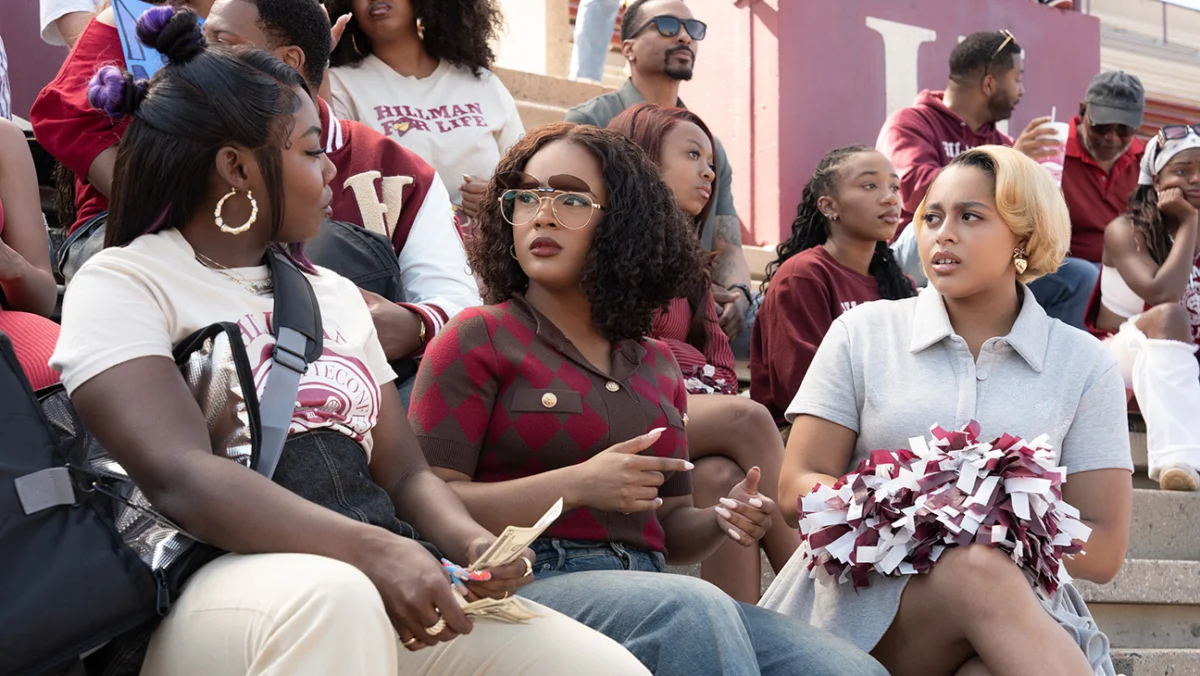
The narrative centers on college freshman Deborah, pronounced Deh-BOH-rah (Maleah Joi Moon), the youngest daughter of original protagonists Whitley (Jasmine Guy) and Dwayne (Kadeem Hardison). Whitley is now depicted as a cosmetics mogul, while Dwayne serves as the school provost. Deborah, often portrayed as the impulsive and well-meaning "black sheep" of her accomplished family, frequently finds herself in humorous predicaments. Moon’s performance has been widely praised for its radiant and endearing quality, anchoring the new ensemble.
Deborah’s journey is often intertwined with Shaquille (Cornell Young IV), a childhood friend and serious NFL prospect, who is also a freshman at Hillman. Shaquille is the son of Ron (Darryl M. Bell), another beloved character from the original series. These intergenerational connections form the core of the show’s updated universe, which aims to balance historical continuity with fresh perspectives. Recurring characters from the original series also appear, such as Cree Summer’s Freddie, who now serves as a professor at Hillman.
Bridging Generational Divides
The series’ initial reliance on familiar faces and storylines, while providing comfort for existing fans, presented a potential barrier for new audiences, particularly Gen Z viewers who may not be acquainted with the original series. Critics observed that early episodes occasionally lingered on middle-aged guest stars reminiscing about past events, potentially alienating younger viewers seeking narratives focused on the new generation. This dynamic highlighted the inherent challenge of extending a beloved brand across multiple decades and target demographics.
The show begins to truly flourish around its fourth episode, which shifts focus more definitively to the younger characters. This installment, a lighthearted exploration of "cuffing season," allows the new ensemble to shine, leaning into the sweet and often tumultuous romantic entanglements that characterize college life. The blossoming chemistry between characters like Kojo (Chibuiken Uche), an extroverted Ghanaian-Nigerian fashion major, and Rashida (Alijah Kai), an ambitious criminal justice major, exemplifies the show’s ability to generate compelling, youthful drama.
Addressing Contemporary Issues
By the fifth episode, A Different World fully embraces its potential, delving into more substantial themes with heightened dramatic impact. Set during a finals week interrupted by a bomb scare, this episode demonstrates the series’ willingness to confront real-world anxieties, mirroring the original show’s tradition of addressing serious social issues. Freddie’s character seizes the opportunity to emphasize the historical vulnerability of HBCUs in America, underscoring their enduring significance and the threats they often face.
This critical juncture allowed the show to explore the coexistence of significant crises with mundane collegiate concerns. Deborah’s prim-and-proper friend, Hazel (Kennedi Reece), for instance, prays for safety during the bomb scare while also hoping for divine intervention in her dorm beauty pageant aspirations. Similarly, Amir (Jordan Aaron Hall) uses the lockdown to confront a romantic interest who had previously ghosted him. This juxtaposition of the profound and the trivial lends the series a relatable authenticity, capturing the multifaceted nature of the college experience.
Critical Reception and Cultural Impact
The Netflix college comedy garnered significant attention for its attempt to revive a culturally important series. While initial reviews noted the struggle to balance legacy and innovation, the overall reception improved as the season progressed. Critics lauded the young ensemble’s charm and chemistry, along with the smart, heartfelt storytelling that emerged. The series effectively transitioned from an exercise in Xennial nostalgia to a fresh, yet timeless, portrait of youth.
The show’s limited episode count—just 10 half-hour installments—became a frequent point of discussion. Many viewers and critics expressed a desire for a longer season, similar to the original’s 20+ episode format, arguing that additional episodes would have allowed for deeper character development, more intricate plotlines, and a slower burn for its burgeoning romances. This observation, however, often served as a testament to the show’s engaging quality, indicating that its brevity was its primary drawback.
The Enduring Legacy of Hillman College
Ultimately, A Different World successfully weaves its reverence for the old guard into a larger narrative about the enduring legacy of Hillman College. The institution is depicted as a crucible where past generations shaped the world that now nurtures current students, who in turn will influence future generations. This thematic depth grounds the lighthearted college comedy in a profound commentary on generational continuity and the ongoing struggle for progress.
Despite episodes primarily filled with typical college antics—romance, parties, and dorm life infractions—the series effortlessly carries its heavier themes. It balances significant emotional weight with bursts of humor and moments of simple joy, maintaining an accessible and engaging tone. Deborah’s ecstatic declaration after a crisis, "We are studying, we are partying, and we are living our best young gifted Black talented lives right here in our space," encapsulates the show’s spirit.
The new A Different World distinguishes itself by embracing its own unique path, demonstrating that while the methods may differ from those of its predecessors, the core spirit of discovery, community, and aspiration at Hillman College remains vibrantly alive. This strategic pivot from direct imitation to independent storytelling has made the series a compelling and winning addition to the modern streaming landscape. The show’s ability to evolve and embrace its own voice ensures its potential to leave a lasting mark, much like the original series did for its era.