Comedian and viral sensation Randy Rainbow has once again turned his sharp wit and musical talents towards political satire, this time reimagining the classic Rodgers and Hammerstein musical "Oklahoma!" into a pointed critique of former President Donald Trump’s appearance and perceived mental state. The parody, released on Thursday, September 24, has quickly garnered attention for its unflinching commentary, set to the tune of the beloved show’s iconic songs.
A Musical Barrage of Barbs
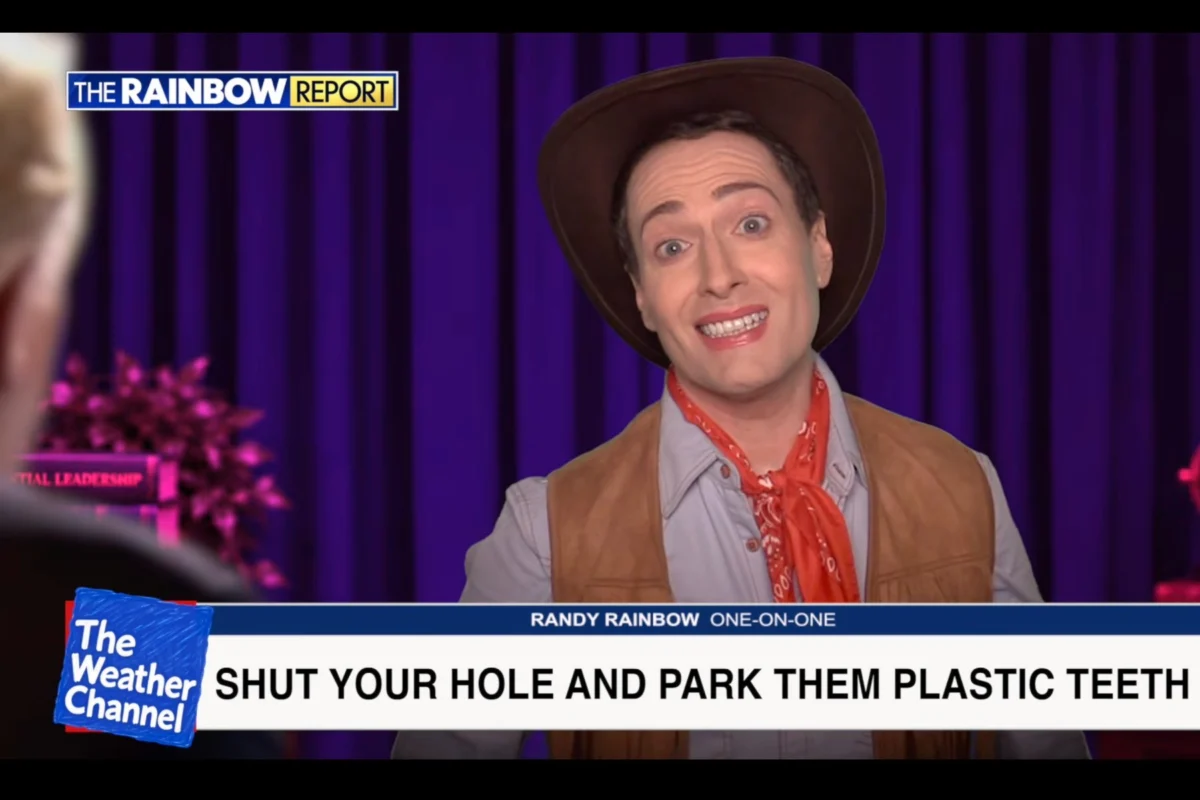
Rainbow’s latest offering, titled "Dummy With the Wig on Top," playfully twists the familiar melody of "The Surrey With the Fringe on Top" into a scathing indictment of the former president. The video opens with a fabricated interview segment, digitally manipulating footage of Trump to create an illusion of direct confrontation. In this segment, Rainbow’s character delivers a scathing assessment of the current political and economic climate, directly linking it to Trump’s leadership.
"Thanks to your incompetent leadership, eggs are now a luxury item and AI is going to kill us all before Rihanna drops a new album!" the comedian declares in the opening, a line that has resonated with many online users who share similar anxieties about global issues and the perceived lack of progress on significant cultural milestones. This opening sets a darkly humorous and critical tone that pervades the entire piece.
The parody then transitions to Rainbow himself, clad in stereotypical cowboy attire, fully embracing the "Oklahoma!" aesthetic. He launches into the song, delivering lyrics that directly target Trump’s physical appearance and cognitive faculties. Lines such as "They ignore his corpse-like appearance / Scrambled brains and slurred incoherence" aim to highlight perceived physical decline and mental disarray.
Rainbow doesn’t stop at personal appearance; the lyrics also delve into political accusations and criticisms leveled against Trump. He sings, "He buys votes and rugs both on clearance as his polls kerplop!" This line alludes to accusations of vote manipulation and the perception of Trump’s policies as being driven by superficial gains rather than substantive governance. The use of "kerplop" adds a childish, dismissive tone, further belittling the subject.
Deeper Cuts: Racism, Wars, and Policy Critiques
The parody’s lyrical content extends beyond superficial observations to touch upon more serious allegations and controversies associated with Donald Trump’s presidency. Rainbow tackles accusations of racism with the line, "His eyes are yeller, his supremacy’s white." This pointed jab directly references the persistent criticisms of Trump’s rhetoric and policies being racially charged, a theme that has been a recurring element of public discourse surrounding his political career.
Furthermore, the song references the complex geopolitical landscape and Trump’s foreign policy decisions. The lyric "Can’t keep up with wars he’s a-startin’" alludes to the numerous international conflicts and tensions that characterized his time in office. This suggests a narrative of impulsiveness and a lack of strategic foresight in foreign affairs, a common critique from political opponents and international observers alike.
The song’s creators have historically engaged with the political landscape through the lens of musical theater, drawing parallels between dramatic narratives and contemporary political figures. This approach allows for a unique form of social commentary, embedding complex criticisms within a familiar and often lighthearted artistic framework.
A History of Political Satire
Randy Rainbow has cultivated a significant following through his consistent output of political parodies, many of which have focused on Donald Trump. This latest "Oklahoma!"-inspired video is not an isolated incident but rather a continuation of a well-established pattern of satirical engagement. His previous works have targeted various aspects of Trump’s presidency, employing different musical styles and historical references.
For instance, a prior parody, released just months before the "Oklahoma!" rendition, spoofed the style of Cole Porter in a song titled "He’s De-Mented." This piece also focused on perceived cognitive issues, with lyrics like "It’s clear that Grandpa’s off his pills" and "He can hear that bipartisan fear / They’re united left and right: He’s in decline / Time to resign." This demonstrates a consistent thematic focus on Trump’s alleged mental fitness and the growing sentiment for his removal from public life.
These parodies often go viral, reaching a broad audience and contributing to the online discourse surrounding political figures. Rainbow’s ability to blend current events with classic musical theater tropes has made him a notable voice in digital satire, providing a platform for both humor and pointed social critique. His work often reflects and amplifies public sentiment, offering a cathartic release for viewers who feel similarly about the political climate.
The Broader Context of Political Parody in the Digital Age
The rise of political parody in the digital age, exemplified by Randy Rainbow’s work, reflects a significant shift in how political commentary and public discourse are conducted. Social media platforms and video-sharing sites have become crucial arenas for the dissemination of satirical content, allowing artists to reach global audiences with unprecedented speed and reach.
This form of satire serves multiple functions. Firstly, it offers a humorous and accessible way for the public to process complex political events and figures. By simplifying and exaggerating certain traits, parodies can make political issues more digestible and relatable. Secondly, it acts as a form of public accountability, holding politicians to account through ridicule and criticism. The laughter generated by a successful parody can be as powerful as a formal critique, undermining a subject’s authority and credibility.
However, political parody also exists within a landscape of increasing polarization. While many viewers find Rainbow’s work to be a welcome form of commentary, others may view it as overly partisan or unfair. The effectiveness and reception of such content are often dependent on the audience’s existing political leanings. The ability of these parodies to influence public opinion is a subject of ongoing debate, but their role in shaping cultural conversations is undeniable.
The use of classic musical theater in contemporary political parody also taps into a rich tradition of artistic commentary. From the political cartoons of the past to the satirical sketches of television, artists have long used their craft to engage with the socio-political landscape. Randy Rainbow’s approach, with its focus on song-and-dance numbers and elaborate costumes, harks back to earlier forms of musical entertainment, recontextualizing them for a modern, digitally-native audience.
The Impact and Reach of Viral Satire
The viral nature of Randy Rainbow’s videos means that his critiques reach millions of people, potentially influencing perceptions and contributing to broader public sentiment. While it is difficult to quantify the direct impact of a single parody on voting behavior or policy, these videos undoubtedly play a role in shaping the cultural narrative surrounding political figures. They become part of the collective consciousness, reinforcing existing opinions and, for some, introducing new perspectives.
The engagement with "Oklahoma!" is particularly interesting. The musical itself, a celebration of American pioneering spirit and the transition from territory to statehood, offers a stark contrast to the often-turbulent and contentious political landscape that Rainbow critiques. By juxtaposing the optimistic themes of the musical with sharp criticisms of contemporary politics, he creates a powerful ironic effect.
The mention of "2026 election" in the original context suggests a forward-looking or perhaps speculative element to the parody, hinting at anxieties about future political outcomes and the long-term consequences of current leadership. This adds another layer of depth to the satire, extending its relevance beyond immediate political events.
As of the latest reporting, the White House has not issued a formal comment regarding Randy Rainbow’s latest parody. This is not uncommon, as political figures and their administrations often choose to ignore satirical critiques rather than dignify them with a response, which could inadvertently amplify their reach. However, the silence itself can be interpreted as a tacit acknowledgment of the parody’s existence and its potential to resonate with the public.
Randy Rainbow’s ongoing work underscores the evolving nature of political commentary in the 21st century. His ability to blend humor, musical talent, and sharp political observation has solidified his position as a prominent voice in digital satire, offering a unique and often biting perspective on the American political scene. His parodies continue to spark conversation, entertain, and provide a critical lens through which to view public figures and contemporary events.