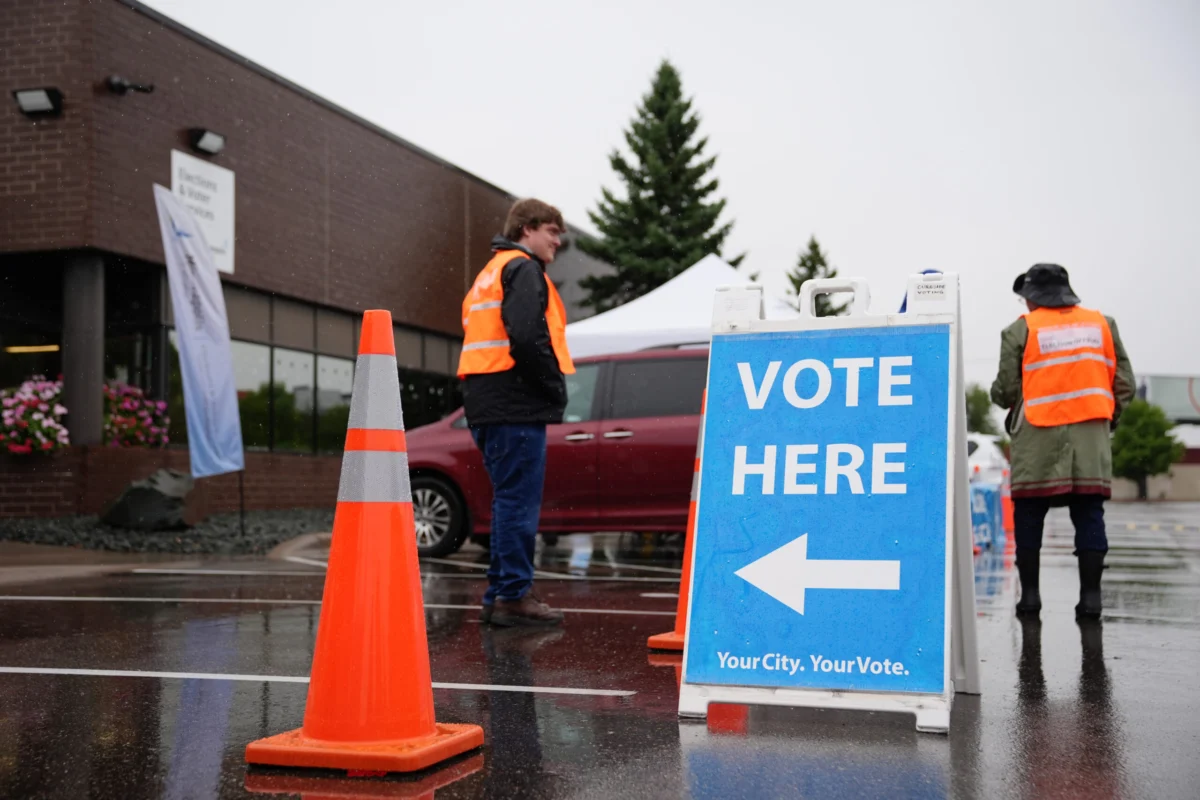
The United States Supreme Court has granted the Trump administration a temporary reprieve, allowing the Department of Homeland Security to utilize a contentious voter verification system in the lead-up to critical midterm elections. The emergency order, issued Friday, permits the use of the Systematic Alien Verification for Entitlements (SAVE) program to cross-reference state voter rolls, a move that has ignited fierce debate among voting rights advocates and election integrity proponents.
Controversial SAVE System Faces Scrutiny Ahead of Midterms
The SAVE system, significantly revamped under the Trump administration in 2025, is designed to help states confirm the eligibility of registered voters by cross-referencing citizenship information. However, voting rights organizations have raised alarms, warning that the system’s potential for inaccuracies could lead to the wrongful disenfranchisement of eligible citizens. They argue that the SAVE database may not always reflect the most current immigration or citizenship status, leading to erroneous flags.
These concerns are amplified by documented instances of the system misidentifying citizens. In one notable case in Travis County, Texas, election officials discovered that a significant portion—up to 25 percent—of individuals flagged by SAVE as non-citizens were, in fact, U.S. citizens. This highlights the potential for outdated or flawed data to trigger the removal of legitimate voters from the rolls.
Legal Battle Over Voter Rolls Intensifies
The Supreme Court’s decision comes as a temporary measure, not a final judgment on the merits of the SAVE system’s use in voter verification. The administration sought and received this emergency authorization, which allows the Department of Homeland Security to proceed with its verification efforts while the court considers the broader legal challenges. This means the administration can deploy the system, but the ultimate legality of its widespread use remains undecided.
Existing federal law generally prohibits states from systematically purging voter rolls within 90 days of an election. This existing safeguard may limit the immediate impact of the SAVE system’s deployment in the current election cycle. However, the court’s willingness to grant the administration this provisional access underscores the ongoing legal tug-of-war over election administration and voter access.
Dissenting Voices Highlight Potential Harms
The Supreme Court’s majority, comprising six conservative justices, issued the order allowing the SAVE system’s use. In contrast, the three liberal justices on the bench registered a strong dissenting opinion. They articulated profound concerns that the modified SAVE system could inflict substantial harm on lawful voters, potentially leading to their unjust exclusion from the electoral process.
The dissenting justices emphasized the documented negative consequences of the system, suggesting that the majority had overlooked or downplayed the real-world impact on citizens’ voting rights. Their dissent signals a deep division within the court regarding the balance between election integrity measures and the fundamental right to vote.
Watchdog Groups Sound Alarm on Voter Purges
The decision has drawn sharp criticism from watchdog groups dedicated to safeguarding voting rights. Citizens for Ethics, a prominent watchdog organization, stated that the ruling places millions of Americans at risk of being targeted by an "unreliable voter purge system" just weeks before the midterm elections. They argue that the SAVE system, in its current iteration, is not robust enough to be used for such a critical function without risking significant collateral damage to legitimate voters.
These groups contend that the Trump administration’s focus on election administration, particularly through measures like the SAVE system, appears to be a strategic effort to influence the upcoming midterm elections. The midterms are widely seen as a crucial referendum on the president’s agenda and could significantly alter the balance of power in Congress.
Broader Context: Trump’s Claims of Election Fraud
President Trump has consistently voiced concerns about the integrity of U.S. elections, frequently making unsubstantiated claims of widespread fraud. He has repeatedly asserted, without providing credible evidence, that the 2020 presidential election, which he lost to Democrat Joe Biden, was "stolen." This persistent narrative has fueled efforts to implement stricter voter verification measures.
Despite these claims, extensive evidence and numerous investigations have indicated that instances of voter fraud, including non-citizens casting ballots, are exceedingly rare in the United States. Election security experts generally agree that the U.S. election system is robust, with multiple layers of security designed to prevent widespread fraud.
States’ Role in Election Administration
Under the U.S. Constitution, states are primarily responsible for administering elections. This decentralized system means that states have considerable latitude in how they conduct voter registration, ballot access, and vote counting. While federal law sets certain baseline requirements, states are not mandated to use federal systems like SAVE for voter verification.
However, several Republican-led state governments have voluntarily chosen to incorporate the SAVE database into their election processes. This decision to adopt the system, even without a federal mandate, has been a point of contention, as critics argue it nationalizes a potentially flawed verification method.
Impact on the Midterm Elections: November 3rd
The immediate impact of Friday’s Supreme Court order on the November 3rd midterm elections remains uncertain. The elections will determine control of both the U.S. House of Representatives and the Senate. If the administration’s use of the SAVE system leads to the erroneous purging of voters, it could potentially influence close races in several states.
The timeline of the court’s proceedings is crucial. If a final ruling on the SAVE system’s legality is not reached before the elections, the temporary authorization could allow for its use, even if its accuracy is contested. The 90-day rule protecting voter rolls before an election offers a significant buffer, but challenges could still arise in jurisdictions that have opted into the SAVE system.
Historical Precedents and Ongoing Legal Battles
This is not the first time the Trump administration has faced legal challenges regarding election procedures. In September, the Supreme Court rejected a separate bid from the administration seeking to impose restrictions on mail-in ballot procedures. This earlier decision signaled the court’s cautious approach to measures that could potentially limit voter access, particularly in the context of widespread concerns about election integrity and the COVID-19 pandemic.
The legal battles surrounding voter verification systems and election administration are likely to continue beyond the upcoming midterms. The Supreme Court’s ultimate decision on the SAVE system will have lasting implications for how states manage voter rolls and the balance between ensuring election integrity and protecting the fundamental right to vote for all eligible citizens. The ongoing debate highlights the deep partisan divides on these critical issues and the enduring role of the judiciary in shaping the democratic process.