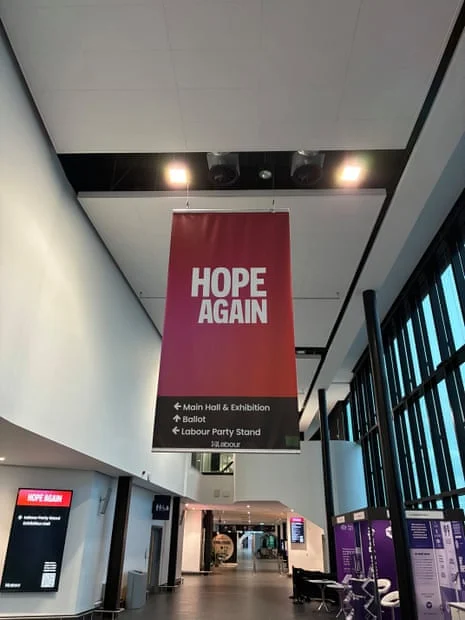
Prime Minister Andy Burnham signaled a major shift in British domestic policy Sunday, announcing his intention to overhaul the social care system in England by introducing new taxes to pay for free social care, a move he argues is necessary to alleviate the "huge" dementia costs currently bankrupting families. Speaking at the start of the Labour Party conference in Liverpool, Burnham described the current system as a financial minefield that forces the elderly to liquidate their assets, including family homes, to pay for basic late-life needs. He rejected claims that such a system would be prohibitively expensive, asserting that the British public is already bearing a massive, albeit disorganized, financial burden under the status quo.
The Prime Minister’s proposal seeks to align social care with the foundational principles of the National Health Service (NHS), making it free at the point of delivery. During a high-profile interview with the BBC, Burnham stated that the current disparity between healthcare and social care is unsustainable and "unfair," comparing the English system to American-style healthcare where the most vulnerable risk losing everything. He emphasized that the financial "wipeout" faced by families dealing with Alzheimer’s and other age-related conditions constitutes a "dementia tax" that already exists, regardless of whether the government officially labels it as such.
Addressing the Financial Reality of Free Social Care in England
The debate over the cost of universal social care has long been a point of contention in British politics. Recent estimates from the Health Foundation suggest that a system offering adult social care free at the point of delivery could cost the Treasury upwards of £18 billion ($24 billion) annually. Burnham, however, disputed this figure, suggesting the actual net cost to the taxpayer would be significantly lower when accounting for the preventative benefits of the reform. He argued that the current lack of social care creates a "bottleneck" in the NHS, where thousands of medically fit patients remain in hospital beds because there is no support available for them at home.

To fund this ambitious expansion, Burnham confirmed that he is exploring new revenue streams, refusing to rule out a tax on estates or a specialized levy on wealth. While he did not provide specific tax rates, he indicated that the government would seek a "fair" way to spread the cost across the population. This approach marks a return to a policy direction Burnham first championed in 2009, which was labeled a "death tax" by political opponents at the time. Burnham told reporters that "nothing is off the table," though he stressed that any final plan would be developed through a review led by Baroness Louise Casey and would be subject to cross-party negotiations.
Grasping the Nettle: A Personal and Political Mission
The Prime Minister’s determination to reform the sector appears to be driven by both personal experience and a desire to resolve a decades-old policy failure. Burnham spoke movingly about the death of his father, who suffered from Alzheimer’s, noting that the struggle to navigate the care system has reinforced his commitment to "grasp the nettle." He criticized previous administrations for what he termed "political cowardice," arguing that the fear of being "unpopular with some" has led to a threadbare system that relies on "poverty pay" for care workers and the exhaustion of family savings.
Burnham’s strategy involves building a long-term consensus rather than rushing through legislation. He announced that he intends to develop a comprehensive plan over the coming years and put it directly to the voters during the 2029 general election. By seeking a specific mandate for social care taxes, the Prime Minister hopes to insulate the policy from the "scaremongering" and "point-scoring" that have derailed previous reform efforts. He acknowledged that the plan would be viewed by some as a "hostage to fortune," but insisted that the risk is necessary to prevent the eventual collapse of the NHS.
Broader Economic Impacts and Preventative Spending
The push for free social care in England is part of a wider government strategy focused on "preventative spending." Burnham argued that investing in social care, rough sleeping initiatives, and cheaper public transportation would ultimately save the state money by reducing the strain on emergency services and the criminal justice system. He countered suggestions that his government was prioritizing social spending over economic growth, citing his previous record as the Mayor of Greater Manchester, which he claimed was the fastest-growing economy in the country during his tenure.
The administration’s focus on the "preventative" model is intended to address the precarious state of public finances. Chancellor John Healey has emphasized the need for "prudence," particularly as the global economy faces headwinds from the ongoing conflict in the Middle East. Burnham maintained that his social care plan would be "fiscally responsible," with a precise funding mechanism to be detailed in the party’s upcoming manifesto. He suggested that by keeping people in their homes longer, the government could significantly reduce the high costs associated with long-term hospital stays and emergency interventions.
Housing and Employment: A Multi-Pronged Approach
While social care dominated the opening of the conference, the Labour government also rolled out a series of policy initiatives aimed at housing and youth employment. Among these is "Your First Home," a revived version of the "help-to-buy" equity loan scheme. The program is specifically targeted at first-time buyers who do not have access to the "bank of mum and dad." Under the proposal, eligible buyers with a 2.5% deposit could receive a 20% equity loan to purchase new-build homes, with the scheme partially funded by contributions from property developers.
In addition to housing, the government announced an expansion of the "jobs guarantee" program. Starting in April 2027, young people on health benefits will be offered guaranteed employment just three months after their work capability assessment. The state will cover 100% of wage costs for up to 25 hours a week for six months, providing a bridge into the workforce for those with disabilities or chronic health conditions. This initiative is designed to tackle long-term unemployment and reduce the national welfare bill by fostering economic independence among younger demographics.
Strengthening Local Authority Powers
The government is also moving to empower local councils to address the housing shortage by taking control of vacant properties. Ministers announced plans to strengthen Empty Dwelling Management Orders (EDMOs), reducing the time a property must be vacant before a council can intervene from two years to six months. This policy shift is intended to prevent urban blight and bring thousands of homes back into the rental market. By simplifying the evidential requirements for local authorities, the government aims to allow officers to act more decisively against landlords who leave properties in disrepair.
These measures reflect a broader effort to revitalize local governance and provide councils with the tools needed to manage their communities effectively. The Prime Minister noted that these changes are part of a wider "devolution white paper" intended to shift power away from Westminster. However, some critics have raised concerns about the potential costs for local authorities who must manage these properties, leading the government to explore further protections for municipal budgets.
Navigating Political Challenges and Public Trust
Despite the flurry of announcements, Burnham faced scrutiny over his refusal to take a definitive stance on the construction of a third runway at Heathrow Airport. When questioned, the Prime Minister dodged the issue, stating that it was "principally a matter for London and London MPs" and that he needed to listen to the results of ongoing consultations. This non-committal stance highlighted the delicate balancing act Burnham must perform as he attempts to maintain a broad political coalition while pushing for radical changes in other sectors.
As the Labour conference continues in Liverpool, the focus will remain on whether Burnham can successfully sell his vision for free social care in England to a public wary of tax increases. The Prime Minister’s gamble relies on the belief that voters will choose the "honesty" of a structured tax over the "unfairness" of the current private-pay model. With Baroness Casey’s review and cross-party talks on the horizon, the coming months will determine if this administration can finally resolve what has been described as the most difficult problem in British domestic politics.