Tulkarem, Occupied West Bank – Hakim Mar’i lies on a single bed in a dilapidated apartment, his disfigured leg elevated, a stark symbol of his precarious existence. His family endures near darkness after sunset, unable to afford electricity, their windows covered with old blankets to block the chill. This is the latest in a series of temporary shelters for Mar’i and his family, a life dictated by displacement and the constant threat of further upheaval.
The apartment’s bleakness is a stone’s throw from the desolate remnants of the Tulkarem refugee camp – mounds of rubble and twisted metal marking the site of what was once a community. For Mar’i and thousands of other Palestinians, the camp, initially envisioned as a temporary haven, had become a multi-generational home. Now, even the physical structures that bound families together for decades have been obliterated.
Hakim Mar’i, once a laborer in Israel, sustained a debilitating leg injury in 2019. The wound, now severely infected, has rendered him unable to work. His plight worsened significantly when Israeli soldiers allegedly beat him during his family’s forced removal from the Tulkarem camp. Without access to medical treatment, compounded by untreated diabetes, his condition deteriorates daily. "This joint here is completely gone," he stated, gesturing to his swollen, blackened leg. His family urges him to seek treatment abroad, but the financial burden is insurmountable. "The medicine – by God, the medicine, I haven’t been able to get," he laments. "My wife and kids tell me: get out, travel. Go to America, Turkey – so I can get the medical treatment I need… I’m a sick man."
His mother, Salwa, sitting near him, recounts the painful history of their dispossession. Their family home in the Tulkarem camp, a four-story structure built painstakingly floor by floor, was razed by the Israeli military to make way for a road. This home represented generations of resilience, dating back to their initial displacement in 1948 from al-Khudayra, now Hadera, in present-day Israel. "We really put a lot into that house," she said, tears welling up as she recalled the destruction. "Seeing it destroyed was really painful for us – all of us."
The emptying of the Tulkarem camp, along with the Jenin and Nur Shams refugee camps, in a sweeping Israeli military operation over 20 months ago, has displaced tens of thousands of Palestinians. These individuals represent families already displaced for three generations. Their return is currently barred by constantly renewed orders designating the areas as closed military zones. Since January 2025 alone, Hakim Mar’i’s family has been forced to relocate four times, beginning in a converted youth center before settling into their current cramped apartment with their four young children, all under the age of 15.
Mounting debts and the inability to pay rent have created an untenable situation. Hakim owes local shopkeepers for essential food supplies purchased on credit. Some evenings, his children are forced to eat at neighbors’ homes. "I have children. I have food. I have drink," he said, his voice heavy with despair. "My hands are empty. Nobody is with me. Nobody is standing beside me."

The Scale of Displaced Palestinians
The Mar’i family is among an estimated 33,000 Palestinians forcibly removed from the Jenin, Nur Shams, and Tulkarem camps in early 2025. This represents the largest single instance of forced displacement in the occupied West Bank since Israel’s occupation began in 1967, according to the United Nations agency for Palestinian refugees (UNRWA). Satellite imagery analyzed by UNOSAT reveals extensive destruction, with 20 percent of all buildings across the three camps obliterated and an additional 28 percent damaged.
"The level of destruction we are seeing is severe and unprecedented," stated Roland Friedrich, director of West Bank affairs for UNRWA. He further reported that 85 percent of those displaced now lack regular income, having lost their jobs when the camps were evacuated. The shift from rent-free living within the camps to paying for housing and utilities represents an unfamiliar and significant financial burden for over 80 percent of the residents.
The designation of the camps as closed military zones, renewed every two months, offers no clear timeline for residents’ potential return. Friedrich condemned these actions as "forced displacement," emphasizing the UN’s clear stance that "People have to be allowed to return. The camps must be rebuilt." Unlike the aftermath of the second Intifada in the early 2000s, when the Jenin camp was rebuilt, there is a pervasive fear among displaced families and UNRWA staff that no such plan exists this time.
The Israeli military cited "operational security" as the reason for the evacuations, aiming to root out fighters. However, Friedrich expressed concern that the military operations might serve a broader agenda to "change the geographical expression of the Palestinian refugee issue."
Funding Shortages Hamper Aid Efforts
After more than 20 months, ongoing funding shortages have severely impacted UNRWA’s ability to meet the vast needs of the displaced population. While the agency has adapted by shifting some operations to maintain essential services like schools and basic health clinics, dwindling funds have forced a "targeted approach," leaving thousands without critical support.
Friedrich highlighted a disturbing rise in gender-based violence, linked to the economic strain on families, and increased rates of depression and anxiety among displaced children, as observed by UNRWA’s psychosocial teams. "We’re already at the brink now," he declared, underscoring the dire humanitarian situation.
Beyond the Camp Walls: New Realities for Displaced Families
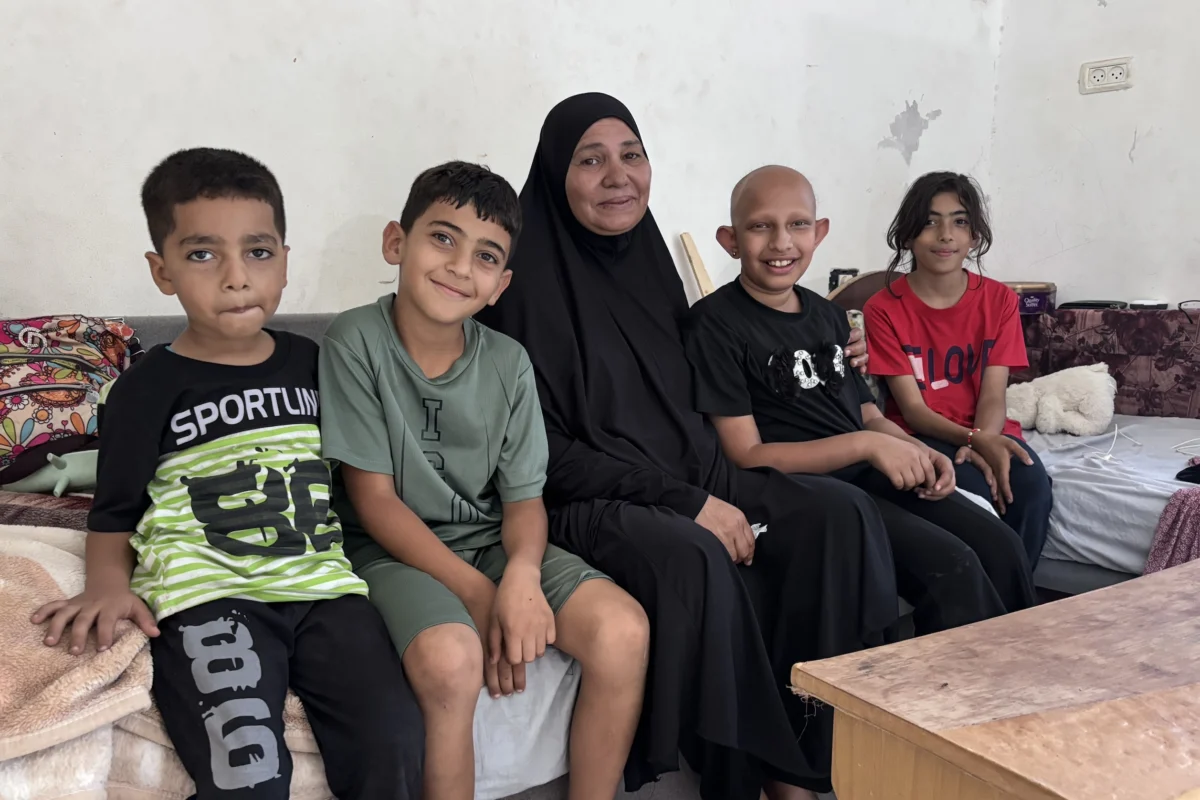
While Hakim Mar’i’s plight unfolds in the shadow of the destroyed camp, the family of Khadija Zbeidat faces their own imminent eviction on the outskirts of Tulkarem. Residing in the Dhinnaba neighborhood, where sparse housing is interspersed with greenhouses, they cannot afford accommodations closer to the city center. Khadija, a widow, shares a cramped, spartan room with nine family members, mostly children. The room, barely large enough for a single person to cook in, also houses a small bathroom and a worn couch.

This space was provided rent-free by a relative after the family spent four months crammed into her daughter’s home with nine other individuals. "It got really cramped, the pressure on each other," Zbeidat recalled. "And we became a burden too." The Zbeidat family was displaced in January 2025 from the Haret al-Nadi section of the Tulkarem camp, a significant portion of which has been destroyed.
"The camp was excellent," Khadija said, reminiscing about their life before. "I swear, I wish they’d take us back. Everything was close to us, dear – the closeness, that sense of belonging and the warmth, the company and the neighbours." Her most cherished memories involve the communal preparation of food for Eid, such as stuffed grape leaves and maamoul cookies. This year, that tradition was absent. "Nothing. No cookies," she stated mournfully. "Nobody even had it in them to do anything any more. Everyone went their own way – scattered."
Like many others, the Zbeidats were not permitted to take their belongings during their hurried displacement. While some residents have been allowed limited access to retrieve possessions, much of their property remains lost. Khadija’s daughter-in-law once risked her life, returning to the camp ruins to retrieve a doll her granddaughter Sandy couldn’t stop crying over.
Displaced families in Tulkarem are concentrated in the poorest areas near the camp, like the Mar’is, or in cheaper peripheral neighborhoods, like the Zbeidats. This proximity allows them to remain close to the health and schooling services still provided by UNRWA. However, even basic necessities like grocery shopping are a challenge for Khadija, who lacks a car and must travel 2 kilometers (1.2 miles).
At night, the family gathers outside, seeking respite from the stifling heat of their poorly ventilated room, their gaze often drawn to Israeli military drones passing overhead. "What to do? We’re used to seeing them, to having them around, to them raiding houses," Khadija said, a sense of weary resignation in her voice. "It doesn’t matter any more." The pervasive military raids that once defined life in the camps now follow the displaced wherever they flee. "We don’t feel safe," Khadija admitted. "Nor the kids. It’s dangerous. When they want to go out somewhere, my heart stays busy until they come back."
The Fraying Safety Net and Impending Evictions
For months following their displacement, landlords, relatives, and shopkeepers absorbed the initial shock, allowing families to stay without rent or purchase food on credit. However, as the emergency extends to nearly two years, this informal safety net is deteriorating. The economic strain is particularly acute in Tulkarem, where many families previously relied on work permits in Israel. These permits were revoked following the Hamas-led attacks in southern Israel and the subsequent commencement of Israel’s military operations in Gaza in October 2023.
The property owner where Khadija’s family is currently residing has instructed his sister to inform them that they must leave, believing their stay has become too protracted. "They think it’s been too long," Khadija explained. "They want the land, to benefit from the land and the room. But where can we get money, where to pay from? The rent is very high, and we can’t afford it. We don’t know what to do if she comes again and kicks us out."

Hakim’s family also faces imminent eviction. Like others, they received a one-time rental subsidy of 3,000 shekels (approximately $985) and a separate 1,700-shekel ($560) multipurpose cash payment from UNRWA for short-term assistance. "Every minute, I am waiting for the landlord to kick us out," he stated.
Khadija’s family continues to rely on credit from shopkeepers who, while aware of their circumstances, are nearing the end of their patience. Hakim echoed this sentiment, noting the dwindling goodwill. "You tell them: ‘Give me a day, two days. Be patient with me.’ They won’t bear it."
The prospect of returning to their ancestral lands in 1948 feels increasingly distant for Khadija. Her hope now lies in a return to the camp, but she fears her children may inherit an even more precarious existence. "Only God knows what tomorrow will bring us," she concluded, her voice a testament to the profound uncertainty facing generations of displaced Palestinians.
If you or someone you know is at risk of suicide, resources are available to provide support.