Explosions were reportedly heard in the Strait of Hormuz hours after Iran presented a diplomatic proposal aimed at reopening the vital waterway, a proposal swiftly rejected by U.S. President Donald Trump, according to Iranian media reports. The incidents, if confirmed, signal a dangerous escalation in the ongoing maritime disputes that have plagued the strategic chokepoint, raising fresh concerns for global oil supply and regional stability.
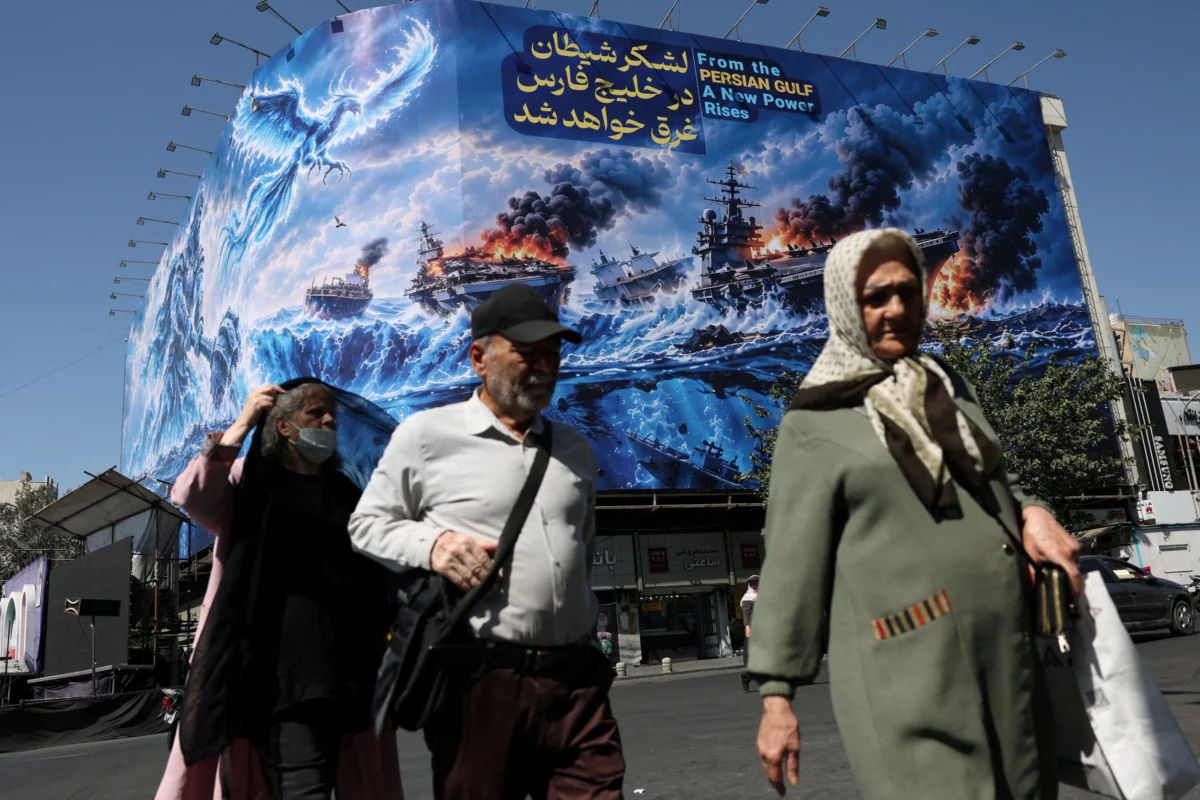
Reports from southern Iran’s Qeshm Island indicated that multiple anti-ship missiles and drones may have been launched at vessels transiting the Strait of Hormuz, a move seemingly intended to underscore Iran’s control over the strategic passage. While Iranian authorities have not officially confirmed these specific attacks, the incidents follow a pattern of increased maritime aggressions in the region. Just last week, an Indian cargo ship was attacked off the coast of Oman, resulting in the death of a sailor, highlighting the perilous conditions for international shipping.
Iran’s Assertions and U.S. Counterclaims on Strait of Hormuz Control
The Islamic Revolutionary Guard Corps (IRGC) has consistently maintained that the Strait of Hormuz is accessible only to vessels that coordinate their passage with Iranian authorities. This stance was further emphasized by the IRGC’s release of video footage purporting to show a second U.S. underwater drone seized this month, suggesting a continued cat-and-mouse game between Iranian forces and American military assets in the Persian Gulf.
Tehran has outlined a clear directive for shipping companies: transit through the Strait of Hormuz requires adherence to temporary routes approved by Iranian authorities and the payment of associated fees. However, Iran has firmly linked the full reopening of the strait to the cessation of the U.S. naval blockade on Iranian ports, a move that has severely curtailed Iranian crude exports. The Iranian Persian Gulf Strait Authority has also stated its intention to blacklist any shipping charterer company that directs crews to use unauthorized routes, signaling a hardening of its position.
The authority also presented what it described as an apology from an unnamed shipowner, who reportedly blamed commercial pressures from their charterer for attempting to navigate unauthorized passages within the strait. This narrative suggests a complex web of commercial interests and geopolitical pressures influencing maritime traffic.
Conversely, Washington maintains that its naval forces are successfully escorting oil tankers through the strait via alternative routes. U.S. Energy Secretary Chris Wright stated on Sunday that the "running average" of crude oil in transit through the region remains robust, with nearly 13 million barrels per day moving through. An operational update from U.S. Central Command on September 19 claimed that its forces had facilitated the movement of over one billion barrels of crude oil out of the Gulf over approximately two months, underscoring the U.S. military’s assertion of its role in maintaining energy flow.
The U.S. military also reported that its forces have rerouted 122 commercial vessels as part of enforcing the naval blockade on Iran’s ports, effectively halting all Iranian crude exports. This ongoing blockade has been a significant point of contention, with Tehran accusing Washington of disseminating false information regarding Strait of Hormuz traffic to project an image of control over the vital waterway. Shipping activity has experienced considerable disruption since the commencement of hostilities between the U.S. and Iran on February 28.

Geopolitical Dynamics and the Wider Impact of Strait of Hormuz Tensions
The ongoing confrontations in the Strait of Hormuz are not merely a bilateral issue between Iran and the United States but have far-reaching implications for the global economy and regional security. Andreas Krieg, an associate professor at King’s College London, suggests that Iran’s strategy of maritime attacks aims to disseminate the economic costs of the conflict beyond its immediate borders. While Iran has undoubtedly suffered significant economic setbacks due to war damages, the U.S. naval blockade, and sanctions, Krieg cautions against assuming that these pressures will lead to submission.
"The next Iranian move is therefore likely to be an attempt to increase the pain experienced by the Gulf rather than simply absorb further American pressure," Krieg commented. He elaborated that this could manifest as more aggressive vessel interdictions in Hormuz, attacks on energy infrastructure, increased pressure from Houthi forces around Bab al-Mandeb, and actions by Iranian-aligned groups against alternative Saudi export routes. The interconnectedness of these pressure points, affecting Hormuz, the Red Sea, and Saudi infrastructure, is becoming increasingly evident.
Iran’s Diplomatic Overture and U.S. Rejection
The recent diplomatic overtures from Iran, presented at the United Nations General Assembly, painted a picture of defiance alongside a conditional proposal to reopen the Strait of Hormuz. Iran stipulated seven conditions for the waterway’s reopening within a week. These demands included the lifting of the blockade on Iran, the release of frozen Iranian assets, and an end to attacks on all fronts, including Israel’s actions in Lebanon. Essentially, Tehran sought a return to the terms of a memorandum of understanding that existed between the U.S. and Israel prior to the current escalation.
Iran also specified that any agreement to reopen the strait must be a bilateral arrangement finalized with Oman, the sole nation sharing territorial waters in the Strait of Hormuz. However, U.S. President Donald Trump publicly rejected this proposal, stating his opposition to the terms laid out by Iran. Despite the rejection, Iran’s Foreign Minister Abbas Araghchi indicated on Sunday that Tehran remained steadfast on its conditions and would await an official response through mediating nations such as Pakistan, Qatar, and Oman.
Warnings and Predictions of Further Escalation
Abolfazl Shekarchi, the chief spokesman for the Iranian armed forces, issued a stern warning, asserting that any further U.S. intervention in the Strait of Hormuz would be met with a strong rebuke. He stated, "The Americans have no way out other than withdrawing from the West Asia region. The sooner they leave, the fewer losses they will incur and the region will certainly become safe after that." This rhetoric underscores Iran’s determination to assert its regional influence and challenge the U.S. military presence.
Iranian army spokesman Mohammad Akraminia further suggested that the deteriorating situation for the U.S. might prompt it to initiate another "military aggression" against Iran. This sentiment reflects a perception within Iran that the U.S. is cornered and may resort to aggressive actions.
Krieg’s analysis suggests that as the U.S. continues its strategy of isolating Iran through sanctions, Tehran, lacking equivalent financial countermeasures against Washington, will increasingly rely on coercive tactics in the Strait of Hormuz. He anticipates a continuation of "controlled attrition rather than an immediate return to the massive air campaign of the opening months."
"Over the coming weeks, I would expect further attacks or attempted attacks on tankers, U.S.-enabled shipping and regional infrastructure, followed by limited U.S. strikes against IRGC maritime assets, coastal missile positions, drones or vessels involved in those operations," Krieg predicted. "That tit-for-tat cycle has already re-emerged around Hormuz." This cyclical pattern of escalation and retaliation points to a protracted period of instability in one of the world’s most critical maritime arteries. The economic consequences of such ongoing disruptions are substantial, affecting global energy markets and the stability of international trade. The military buildup and diplomatic stalemate in the Strait of Hormuz continue to cast a long shadow over regional security.