Treasurer Jim Chalmers launched an extensive media blitz across Australian television and radio networks Tuesday morning, defending the Albanese government’s economic stewardship just hours before the Reserve Bank of Australia (RBA) is expected to deliver its fourth interest rate hike of the year. The Treasurer’s defense of the government’s fiscal policy comes as the central bank prepares to meet at 2:30 p.m. to decide whether to raise the cash rate from 4.35% to 4.6% in a bid to curb persistent inflationary pressures.
Chalmers emphasized that despite the current cost-of-living crisis, the government’s tax receipts as a percentage of gross domestic product (GDP) remain lower than those recorded during the Howard-Costello era. This historical comparison serves as a strategic rebuttal to opposition claims of high-taxing Labor policies, as the Treasurer seeks to frame the current economic hardship as a result of global volatility rather than domestic mismanagement.

Chalmers Defends Economic Record Ahead of RBA Rate Decision
The looming RBA decision has placed the federal government under intense scrutiny, with market analysts widely predicting a 25-basis-point increase. Such a move would push typical home loan interest rates toward 6.5%, further straining household budgets already reeling from high energy and grocery prices. Chalmers acknowledged the "difficult global circumstances" but maintained that Australia continues to outperform many of its international peers.
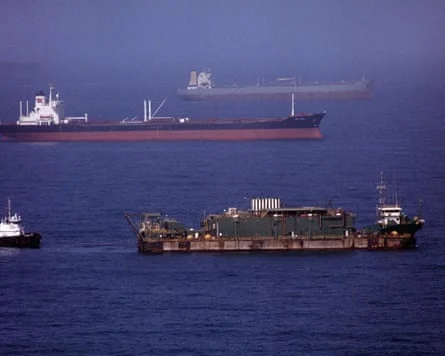
Central to the Treasurer’s argument is the influence of external factors on the domestic economy. He specifically cited the conflict in the Middle East, describing the regional instability involving Iran as an "absolute disaster" for Australian families. The conflict has driven up global oil prices, which Chalmers identified as a primary driver of the "inflationary challenges" that the RBA is currently attempting to mitigate through tighter monetary policy.
The RBA operates under a "dual mandate" that requires the board to balance price stability with the maintenance of full employment. When questioned on whether the government would accept higher unemployment as a necessary trade-off for lower inflation, Chalmers was resolute. He stated that the administration is "not for higher unemployment," arguing that recent economic data proves it is possible to moderate inflation while keeping the labor market steady.
Political Shifts and the Resignation of Larissa Waters
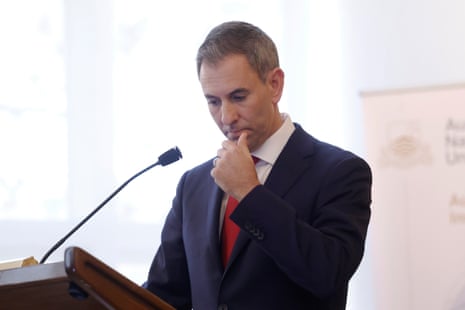
While economic concerns dominate the national conversation, a significant leadership vacuum has opened within the Australian Greens. Larissa Waters, the long-serving Greens leader in the Senate, announced her intention to step down from the leadership role due to worsening health. Waters revealed that she has been managing a kidney disease that has recently reached a point where she can no longer fulfill the demanding duties of party leadership.
Waters has been a prominent figure in Australian politics for over a decade, known for her advocacy on climate action and gender equality. Her departure triggers an internal leadership contest within the Greens at a time when the party holds the balance of power in the Senate. Political observers are closely watching potential successors, as the change in leadership could influence the party’s negotiation strategy with the Albanese government on key pieces of legislation.
The resignation adds a layer of political uncertainty to a week already fraught with economic tension. The Greens have been vocal critics of the RBA’s aggressive rate-hiking cycle, often calling for the government to use fiscal levers more aggressively to support low-income earners rather than relying solely on monetary contraction.

Deaths of NSW Men Under Investigation in Gurranang
In a developing criminal matter, New South Wales (NSW) police have launched a double homicide investigation following the discovery of two bodies at a rural property in the state’s north. The investigation began on September 13 when officers discovered a 79-year-old man deceased at a home on Summerland Way in Gurranang, near Grafton.
The case took a more macabre turn on Monday afternoon when detectives returning to the scene as part of their ongoing inquiries discovered a second body. This second victim is believed to be a man in his 50s. NSW Police have established a secondary crime scene at the property and are treating both deaths as suspicious.
Forensic teams are currently scouring the Gurranang property for evidence, and investigators are looking into the relationship between the two men. Authorities have not yet released information regarding a possible motive or whether they are seeking specific suspects. The local community in the Grafton area remains on high alert as the investigation enters its second week.
National Police Remembrance Day and the Mourning of Mia Lay
The suspicious deaths in northern NSW coincide with National Police Remembrance Day, a solemn occasion where the nation honors officers who have lost their lives in the line of duty. This year’s commemorations in Sydney are marked by the recent death of Constable Mia Lay, a 20-year-old officer who was killed in a vehicle collision in Redfern last week.
Constable Lay had been with the NSW Police Force for only 16 months when her patrol vehicle struck a tree, resulting in her "instant" death. Her passing has sent shockwaves through the force, highlighting the inherent risks faced by young officers. Also being honored is Sergeant Mark Bransgrove, a 38-year veteran of the service who passed away in July after three decades of specialized work in the Forensic Services Group.
NSW Premier Chris Minns and Police Commissioner Mal Lanyon attended the main service at Sydney’s Domain, joined by hundreds of officers and grieving family members. Premier Minns expressed "incredible gratitude" for the service of the state’s police, noting that officers start every shift with the knowledge that they may be required to put themselves in harm’s way to ensure public safety.
International Search Efforts for Missing Australians
The Department of Foreign Affairs and Trade (DFAT) is currently managing two high-profile missing person cases involving Australian citizens abroad. In Cambodia, the family of 50-year-old Tran Hiep, an Australian-Vietnamese democracy activist, is pleading for federal intervention. Hiep was reported missing on September 18 after failing to board a flight from Phnom Penh to Bangkok.
Hiep’s wife, Chloe Dang, has called on the Albanese government to apply diplomatic pressure on Cambodian authorities to conduct a thorough investigation. Hiep, who founded the Australian Alliance to Combat Human Trafficking, was in the region to meet with human rights defenders. His disappearance has raised fears of political targeting, given his vocal opposition to the Vietnamese government and his activism within the Vietnamese diaspora.
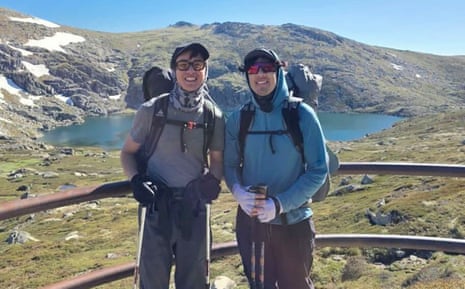
Simultaneously, a desperate search continues in Peru for 30-year-old Melbourne hiker Jordan Yap. Yap vanished while attempting a challenging 10-day trek; he was last expected to check into a hostel in Lima on September 23. His family has resorted to hiring private rescue teams to search the rugged Peruvian terrain after local efforts failed to yield results. A GoFundMe campaign has raised significant funds to keep these private search units operational in the coming days.

Biodiversity and Public Safety Concerns
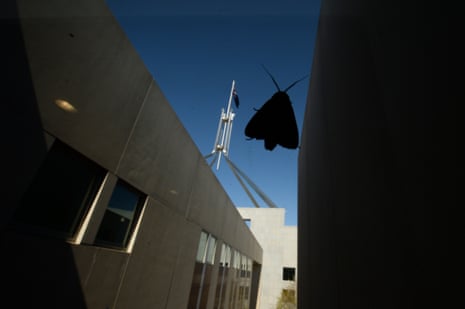
In a rare positive development for local biodiversity, Bogong moths have been sighted at Parliament House in Canberra for the first time in several years. The arrival of the moths, which are currently listed as an endangered species by the International Union for the Conservation of Nature (IUCN), suggests a potential resurgence for the insect. Historically, the moths migrated in the millions to the Australian Alps, but their numbers crashed due to drought and light pollution.
While the return of the moths is welcomed by ecologists, public safety officials are focused on a more grim set of statistics. A report from Royal Life Saving Australia revealed that 30 people died by drowning in the 2025-2026 period, the highest number in nearly a decade. The report highlighted that 83% of the victims were men, and nearly one-third of the deaths were related to boating accidents.
Chief Executive Justin Scarr warned that "unfamiliar environments" and driving through floodwaters remain the leading causes of preventable drownings. The spike in fatalities has prompted calls for renewed water safety education, particularly targeting older Australians and those born overseas who may not be familiar with local rip currents and river conditions.

As the afternoon RBA decision approaches, the confluence of economic anxiety, political leadership changes, and ongoing criminal investigations underscores a period of significant transition for Australia. The government’s ability to manage these domestic pressures while navigating a volatile international landscape remains the central challenge for the Albanese administration heading into the final quarter of the year.