A significant surge in online hate speech targeting South Asian communities in the United States has been documented, with a recent comprehensive study revealing a dramatic increase in anti-Indian, anti-Bangladeshi, and anti-Pakistani rhetoric across social media platforms. This alarming trend is intricately linked to a confluence of factors, including the former U.S. President Donald Trump’s immigration policies and rhetoric, prevailing economic anxieties, and the increasing visibility of the South Asian diaspora within American society.
The extensive investigation, titled "The Rising Tide of Anti-South Asian Hate in the United States," was conducted by the Center for the Study of Organized Hate (CSOH). Published recently, the report meticulously tracked online discourse, focusing on the social media platform X, formerly known as Twitter. It found that the monthly volume of hate speech directed at South Asians in the U.S. on X escalated by a staggering 240 percent between January 2024 and June 2026. This dramatic increase saw the number of hateful posts climb from 12,904 in January 2024 to 43,843 by June 2026, indicating a rapid escalation of hostile online sentiment.
Over the period examined, researchers identified a staggering number of hateful posts, exceeding 542,000, specifically targeting individuals of South Asian descent residing in the U.S. The study’s analysis revealed a particularly concentrated period of increased hate speech, with five of the six highest-volume months occurring in the latter half of the observed timeframe, from January 2025 to June 2026. This concentration suggests a dynamic and potentially escalating online environment for targeted harassment.
To ensure a rigorous and objective analysis, the researchers adhered to the United Nations’ established definition of hate speech. Their methodology involved a systematic tracking of recurring anti-South Asian slurs and prevalent narratives disseminated online. Each post was carefully reviewed to distinguish genuine hate speech from legitimate criticism that did not meet the UN’s threshold for harmful content. This meticulous approach aimed to capture the true extent of the problem without overstating its presence.
The findings from the content analysis paint a disturbing picture of the nature of this online vitriol. Nearly half of the hate posts on X accused South Asians of invading the U.S., perpetuating the false narrative that they were stealing American jobs or posing a demographic threat to the nation’s identity. Furthermore, the derogatory slur "pajeet" and its variations appeared in a significant portion of hateful posts, accounting for 30 percent of such content on X and a substantial 45 percent on more fringe online platforms, underscoring the prevalence of deeply offensive language.
Another particularly concerning trend identified was the depiction of South Asians as inherently unclean or unhygienic. This narrative saw a dramatic increase of 171 percent on X, making it the fastest-growing theme among all hate speech categories analyzed. This portrayal taps into age-old racist stereotypes, contributing to a dehumanizing and prejudiced perception of the targeted communities.
A critical observation from the study is the tendency of online hate speech to homogenize diverse South Asian communities. Individuals from India, Pakistan, and Bangladesh were frequently conflated, blurring distinct national and cultural identities. Similarly, religious groups such as Hindus, Muslims, Sikhs, and Christians were often treated as a monolithic bloc, erasing the rich tapestry of faiths and practices within the South Asian diaspora. This erasure facilitates a broader, more generalized form of animosity.
Historical Context and Contemporary Triggers
While racial prejudice against individuals of Indian, Bangladeshi, and Pakistani descent has a documented history in the United States, the current surge in online hate speech is attributed by researchers to a complex interplay of deeply entrenched prejudices and more recent political and economic pressures. This confluence of factors has created a fertile ground for the amplification of animosity.
The report highlights the H-1B visa program, which facilitates the employment of skilled foreign workers by U.S. companies, as a significant flashpoint for anti-South Asian sentiment. Given that individuals of Indian origin constitute over 70 percent of H-1B visa holders, the program has become a focal point for resentments and criticisms. Researchers have identified a direct correlation between spikes in anti-South Asian hate speech and contentious political debates surrounding the H-1B program.
A notable example cited is the imposition of a $100,000 payment requirement on certain new H-1B petitions by the Trump administration in September 2025. The report argues that such policy decisions, while ostensibly economic, carry a powerful symbolic weight. They serve to reinforce the hostility of certain segments of the electorate toward South Asian immigrants and workers, validating and amplifying pre-existing prejudices.
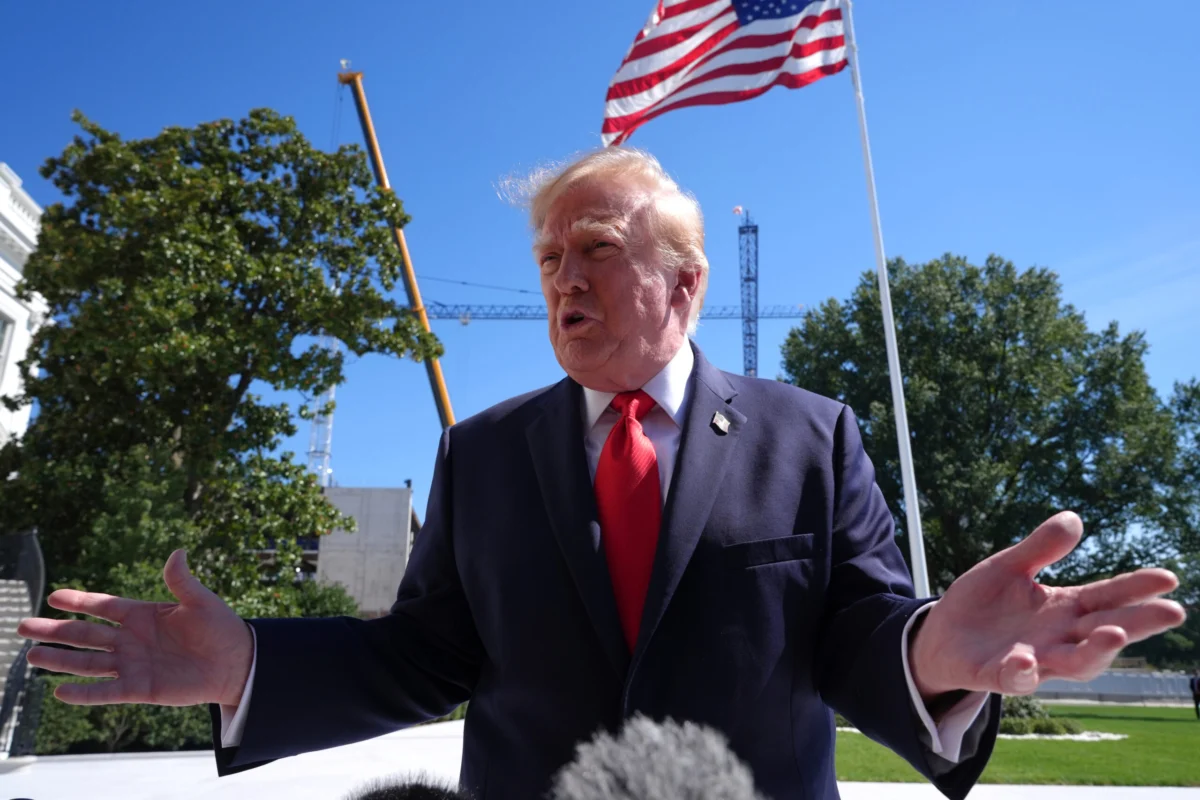
The administration’s rhetoric also played a significant role in fanning the flames of online animosity. The report points to a speech delivered by then-President Trump at an AI summit in July 2025, where he openly criticized U.S. technology companies for outsourcing jobs to India. Following this speech, researchers observed a sharp and immediate increase in anti-South Asian rhetoric across online platforms, demonstrating a direct link between political discourse and the proliferation of hate speech.
More recent examples illustrate the continuation of this pattern. A now-deleted post from the Department of Homeland Security in September 2026, titled "Transformers: Age of Deportations," featured a caricature of a Sikh man identified as "Mr. Singh" with the demeaning message "get off our roads." This incident, which occurred just days after the Department of Education posted "Make College Football Great Again" in response to a complaint by a Texas Republican about the presence of South Asians at a University of Texas football game, further exemplifies how government entities, even inadvertently, can contribute to an environment of hostility. Such actions reinforce the perception of South Asians as unwelcome outsiders who can never truly integrate into the fabric of American society.
The Shifting Narrative: From "Model Minority" to Scapegoat
The economic success and upward mobility of some South Asians have, paradoxically, become a weapon used against the community, fueling resentment and economic anxiety among segments of the American population. Researchers noted that individuals once stereotyped as a "model minority" are now increasingly portrayed as "opportunists and cheats." This shift in narrative positions South Asians broadly as scapegoats for wider frustrations regarding job security and the overall state of the economy.
This transformation in perception is occurring at a time when South Asians are achieving greater visibility and influence in various spheres of American public life. Prominent figures such as former Vice President Kamala Harris, New York Mayor Zohran Mamdani, and influential political figures like Usha Vance, wife of Vice President JD Vance, and presidential candidate Vivek Ramaswamy, represent a growing presence across the political spectrum. The report meticulously documents instances of racist attacks directed at individuals from both major parties, highlighting how electoral victories, such as Mamdani’s primary and mayoral wins, have frequently triggered spikes in anti-South Asian and Islamophobic abuse.
Researchers posit that these trends are deeply intertwined with anxieties about a perceived loss of status among the majority population. These anxieties, in turn, can feed into more extreme conspiracy theories, such as the "Great Replacement Theory," which falsely posits that the white population in Western countries is being systematically replaced through orchestrated demographic shifts. This conspiratorial thinking provides a framework for understanding and justifying hostility towards minority groups.
Social Media as an Amplifier and Enabler
The pervasive influence of social media platforms has played a crucial role in transforming these narratives into targeted harassment campaigns. Researchers found instances where X accounts engaged in doxxing—the public exposure of private personal information—of South Asians accused of job theft or visa fraud. Furthermore, influencers have been documented confronting individuals at their homes and workplaces, subsequently posting these encounters online for wider dissemination.
One particularly concerning example cited in the report involves right-wing influencer Sara Gonzalez. She posted a video to her audience of over half a million followers, wherein she allegedly harassed a South Asian individual she accused of exploiting the H-1B program. Such public shaming and harassment by prominent online figures can incite further hostility and normalize discriminatory behavior.
The advent of generative artificial intelligence (AI) has further exacerbated the ease with which hateful content can be produced. AI tools are now capable of generating realistic and pervasive depictions of South Asians as "filthy and unclean, sexually predatory, culturally backward, or a demographic threat." This technological advancement allows for the rapid creation and dissemination of sophisticated propaganda, making the fight against online hate even more challenging.
The Interconnectedness of Online and Offline Hate
While the report primarily focuses on the digital realm, the researchers emphasize that online hate speech does not exist in isolation from its offline manifestations. The report cites several disturbing incidents that underscore this connection. In July, an Indian Muslim mall employee in Utah was repeatedly stabbed in an attack that federal prosecutors later charged as a hate crime. Just a month later, in September, a Sikh truck driver was brutally stabbed 17 times at a Wyoming truck stop.
These violent acts serve as stark reminders that online narratives and sentiments can translate into real-world violence and prejudice. The researchers’ conclusion is clear: "Online and offline hate can reinforce one another," as narratives, stereotypes, and demonizing tropes fluidly migrate between digital platforms, political discourse, media coverage, and the fabric of everyday life. This constant reinforcement creates a dangerous feedback loop, perpetuating and intensifying animosity towards targeted communities. The findings of this report serve as a critical call to action for greater awareness, robust countermeasures, and a concerted effort to combat the rising tide of anti-South Asian hate in the United States.