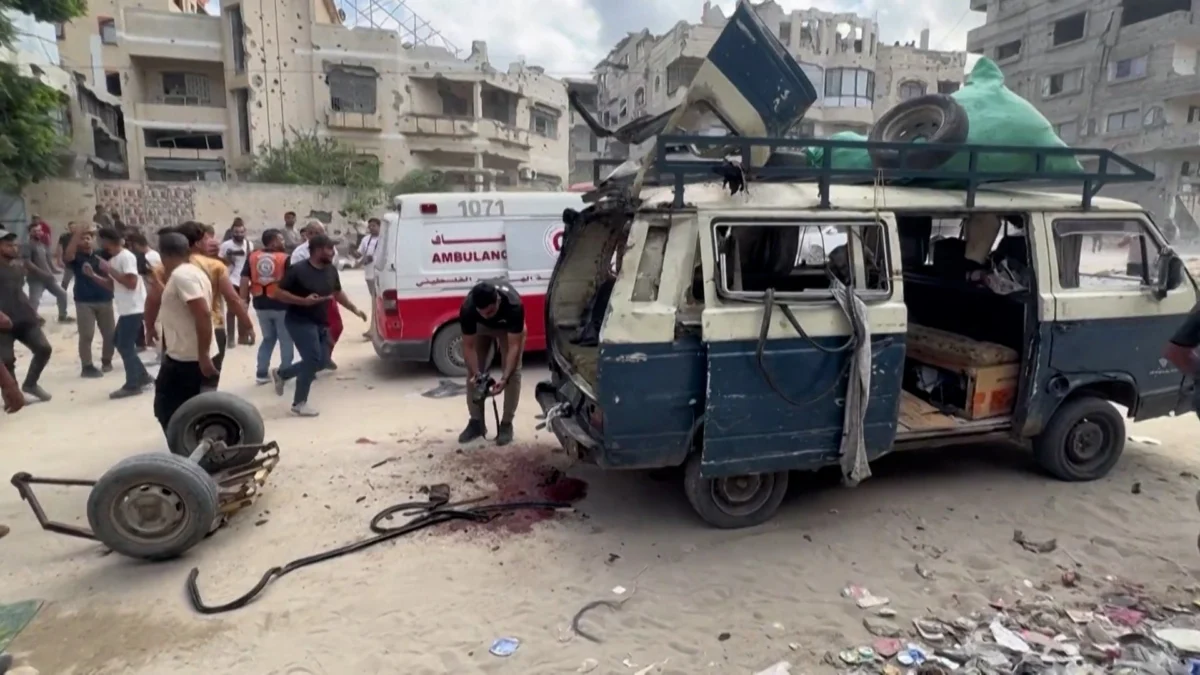
At least eight Palestinian civilians were killed and numerous others injured in a series of Israeli attacks across the Gaza Strip on Wednesday, with a particularly deadly strike targeting a minibus in Gaza City’s Tel al-Hawa area. Palestinian medical officials confirmed that this single incident resulted in six fatalities and 15 wounded, underscoring the escalating toll of the ongoing conflict on civilian populations.
The heightened violence comes amid a period of intense military operations and heightened tensions in the region. The attacks, which reportedly struck residential areas, have drawn international condemnation and renewed calls for de-escalation. This latest round of casualties adds to a growing list of civilian deaths and injuries that have characterized the protracted Israeli-Palestinian conflict, raising urgent questions about the protection of non-combatants.
Escalating Violence in Gaza
Wednesday’s fatalities represent a grim continuation of a pattern of civilian harm in Gaza. The densely populated enclave, home to over two million Palestinians, has been a focal point of conflict for decades, with recurring cycles of violence inflicting widespread destruction and loss of life. The targeting of civilian infrastructure, including residential areas and public transportation, has become a tragically familiar aspect of these confrontations.
Medical sources in Gaza have been overwhelmed with casualties, struggling to provide adequate care amidst damaged healthcare facilities and a critical shortage of medical supplies. The psychological impact on the population, particularly children, is also a significant concern, with many experiencing recurring trauma from the constant threat of violence.
Gaza City Strike: A Deadly Incident
The strike on the minibus in the Tel al-Hawa area of Gaza City was a particularly brutal event. Witnesses described the scene as chaotic, with emergency responders rushing to the aid of victims amidst the wreckage. The minibus, a vital form of public transportation for many Gazans, was reportedly traveling through a busy district when the attack occurred.
Palestinian health authorities identified some of the deceased, including several young men, and are working to confirm the identities of all victims. The injured were transported to local hospitals, where medical staff are working tirelessly to save lives and treat severe injuries, including shrapnel wounds and burns. The scale of the injuries suggests a powerful explosive device was used in the attack.
Broader Context of Israeli Attacks
The attacks on Wednesday are not isolated incidents but are part of a wider military campaign conducted by Israeli forces in response to ongoing rocket fire from Gaza and perceived security threats. Israeli officials have repeatedly stated their commitment to protecting their citizens from attacks emanating from the Palestinian territories.
However, critics argue that the scale and nature of Israeli military operations often result in disproportionate harm to Palestinian civilians and infrastructure. International humanitarian law, including the Geneva Conventions, mandates the protection of civilians and civilian objects during armed conflict. Allegations of violations of these laws are frequently raised by human rights organizations and international bodies.
International Law and Civilian Protection
The principle of distinction, a cornerstone of international humanitarian law, requires parties to an armed conflict to distinguish between combatants and civilians, and between military objectives and civilian objects. Attacks must be directed solely against military objectives. The principle of proportionality also prohibits attacks that may be expected to cause incidental loss of civilian life, injury to civilians, damage to civilian objects, or a combination thereof, which would be excessive in relation to the concrete and direct military advantage anticipated.
Human rights advocates and international bodies have consistently called for thorough and independent investigations into alleged violations of international law by all parties involved in the conflict. Such investigations are crucial for accountability and to ensure that future conduct adheres to established legal frameworks.
The Humanitarian Situation in Gaza
The Gaza Strip has been under a severe blockade for over a decade, imposed by Israel and Egypt. This blockade has crippled the territory’s economy, restricted the movement of people and goods, and led to widespread poverty and unemployment. The ongoing conflict exacerbates an already dire humanitarian situation, further straining essential services like healthcare, water, and sanitation.
The recurring destruction of infrastructure, including homes, schools, and hospitals, makes rebuilding efforts exceedingly difficult. The international community has provided significant aid, but the continuous cycle of destruction and rebuilding places an immense burden on both the Palestinian population and aid organizations.
Reactions and International Response
The latest fatalities have elicited swift condemnation from various international quarters. The United Nations, through its various agencies and officials, has repeatedly voiced deep concern over the rising civilian casualties and urged all parties to exercise maximum restraint. Calls for an immediate ceasefire have intensified, with diplomats working to broker a de-escalation of hostilities.
Regional powers have also reacted, with many condemning the attacks and urging for a peaceful resolution. The United States, a key ally of Israel, has expressed its concern over civilian casualties while also reiterating its support for Israel’s right to self-defense. However, the increasing human cost of the conflict is placing pressure on governments worldwide to take more decisive action.
Long-Term Implications and Peace Prospects
The persistent cycle of violence has devastating long-term implications for the prospects of a lasting peace. Each incident of civilian death and destruction deepens mistrust and resentment, making reconciliation even more challenging. The economic and social fabric of Gaza is continuously eroded, hindering any possibility of sustainable development.
Analysts suggest that without a fundamental shift in the political dynamics and a renewed commitment to a diplomatic process, the region is likely to remain trapped in this cycle of conflict. The international community’s role in facilitating meaningful negotiations and ensuring accountability for violations of international law is seen as critical.
Impact on Civilian Life
For the residents of Gaza, daily life is a constant negotiation with fear and uncertainty. The sound of explosions, the threat of displacement, and the loss of loved ones are recurring realities. Children are particularly vulnerable, with widespread reports of trauma, anxiety, and developmental issues stemming from prolonged exposure to violence.
The attacks also disrupt essential services. Power outages are frequent, water shortages are endemic, and access to healthcare is severely limited. The destruction of roads and communication networks further isolates communities and hampers emergency response efforts. The psychological toll of living under such conditions is immense, affecting mental health and overall well-being.
Future Trajectories and Calls for Action
As the international community grapples with the latest outbreak of violence, the focus remains on preventing further loss of life and finding a path towards a sustainable peace. Diplomatic efforts are ongoing, with various actors attempting to mediate a ceasefire and re-engage parties in dialogue.
Human rights organizations continue to document incidents and advocate for adherence to international law. Their reports serve as crucial evidence in holding perpetrators accountable and in shaping international policy. The ultimate goal remains the protection of civilian lives and the establishment of a future where peace and security prevail for all in the region. The tragic events of Wednesday serve as a stark reminder of the urgent need for such a future.