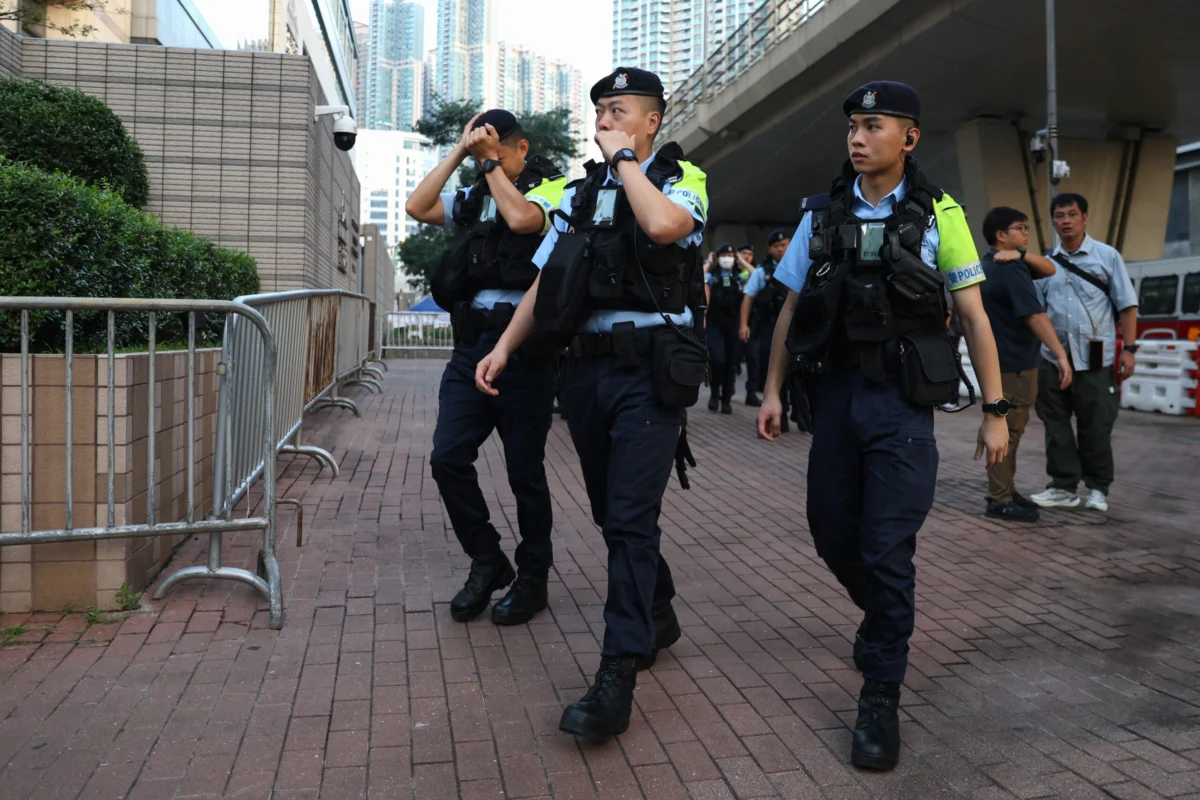
Hong Kong police have arrested an independent journalist on suspicion of inciting sedition through the alleged spread of disinformation, a move that has ignited fresh concerns among international press freedom advocates about the shrinking space for independent media in the city. Tang Ho-wing, the founder of the online news outlet Boom News, was taken into custody on Wednesday morning.
The arrest is linked to Boom News’s coverage of an event on August 31 that marked the seventh anniversary of a controversial clash between anti-government protesters and police at Prince Edward MTR station. During that 2019 incident, protesters and some witnesses alleged that police brutality led to fatalities, claims that authorities have consistently denied.
Boom News, which boasts a significant following of over 66,000 on Instagram, had published a video featuring a woman’s account of the 2019 events at Prince Edward station. Police stated on Wednesday that rumors of deaths during the 2019 clash were unfounded, reinforcing their long-held stance.
The detention of Tang Ho-wing underscores the intensifying restrictions faced by journalists in Hong Kong. These limitations have been significantly amplified since Beijing imposed its sweeping National Security Law in 2020, further solidified by a local sedition ordinance enacted in 2024. This legislative environment has created a palpable chilling effect on media operations and freedom of expression.
Crackdown on Dissent and Media Freedom
The recent arrest is part of a broader crackdown that has targeted individuals perceived as challenging Beijing’s authority in Hong Kong. Authorities confirmed they apprehended two individuals on Wednesday on suspicion of committing seditious acts under the recently enacted Safeguarding National Security Ordinance, also known as Article 23. While the suspects were not officially named by the police, local reports identified the second individual as activist Lee Ying-chi.
According to the authorities, the arrests stemmed from a gathering held on August 31 outside a subway station. Participants at this event reportedly carried flowers, chanted slogans that are now considered banned, and allegedly disseminated disinformation. The official narrative suggests these actions were intended to incite hatred against the government and the police force, thus constituting a seditious offense.
Prior to Wednesday’s detentions, six other individuals had been arrested in connection with the same August 31 incident. These individuals were later released on bail, indicating that investigations are ongoing and potentially expanding. The sedition charge, particularly under the new ordinance, carries severe penalties, signaling the government’s intent to prosecute acts deemed to undermine national security and public order.
The Legacy of the Prince Edward Station Incident
The Prince Edward station incident itself remains a highly sensitive and emotionally charged event in Hong Kong’s recent history. On August 31, 2019, during widespread anti-government protests that gripped the city, police entered the Prince Edward MTR station and forcibly dispersed demonstrators. Videos and eyewitness accounts from the scene fueled allegations of excessive force and that individuals may have been killed or seriously injured, with some claiming bodies were removed from the station.
The Hong Kong government and the police have consistently refuted these claims, asserting that no deaths occurred during the operation and that the force used was necessary to restore order. However, for many protesters and their supporters, the event became a symbol of police brutality and government opacity, fueling deep distrust and resentment. The commemoration of its anniversary has therefore become a focal point for expressions of dissent and remembrance.
Boom News’s decision to cover the anniversary event and feature personal testimonies directly engages with this contested narrative. By giving a platform to accounts that contradict the official version of events, the outlet, intentionally or not, touched upon a deeply sensitive issue that authorities have sought to control and reframe. The arrest of its founder suggests that the government views such narratives as not merely reporting but as active incitement.
Beijing’s Tightening Grip on Hong Kong
The arrests are a stark illustration of the erosion of press freedom and civil liberties in Hong Kong following the imposition of the National Security Law by Beijing in June 2020. This law, enacted in response to the large-scale pro-democracy protests of 2019, criminalized acts of secession, subversion, terrorism, and collusion with foreign forces. It has since been used to silence dissent, dismantle opposition parties, and prosecute numerous activists, politicians, and journalists.
The subsequent enactment of the Safeguarding National Security Ordinance in March 2024, commonly referred to as Article 23, further expanded the government’s powers. This local legislation, which mirrors and in some aspects goes beyond the Beijing-imposed law, criminalizes a wider range of offenses, including sedition, espionage, and external interference. Critics argue that it is deliberately broad and vague, allowing for the prosecution of virtually any speech or action deemed critical of the government.
The case of Boom News and Tang Ho-wing is particularly concerning as it targets an independent media outlet that has operated in a space previously considered more open. The focus on "spreading disinformation" and "incitement" directly targets the core functions of journalism – reporting on events, gathering information, and disseminating news. When these functions are criminalized, it signals a fundamental shift in the information landscape.
The Chilling Effect on Journalism
The implications of Tang Ho-wing’s arrest extend far beyond this single case, contributing to a climate of fear and self-censorship within Hong Kong’s dwindling independent media sector. Journalists are now acutely aware that reporting on sensitive topics, particularly those related to past protests or government actions, carries significant personal risk. This can lead to a reluctance to investigate critical stories or to challenge official narratives, ultimately impoverishing public discourse.
The fate of other media organizations and journalists in Hong Kong provides a grim precedent. The most prominent example is the shutdown of the pro-democracy newspaper Apple Daily and the subsequent conviction and lengthy prison sentence of its founder, Jimmy Lai. Lai was sentenced to 20 years in prison in February 2024 on charges including sedition and conspiracy to collude with foreign forces. Several of his former colleagues also received substantial jail terms.
The arrest of Tang Ho-wing, therefore, serves as another potent reminder of the perilous environment for independent journalism in Hong Kong. It suggests that even online platforms with a significant following are not immune to the state’s scrutiny and the application of national security laws.
International Reactions and Concerns
News of Tang Ho-wing’s arrest has been met with swift condemnation from international press freedom organizations. Groups such as Reporters Without Borders (RSF) and the Committee to Protect Journalists (CPJ) have voiced deep alarm, calling for his immediate release and reiterating their concerns about the ongoing deterioration of press freedom in Hong Kong.
These organizations have consistently highlighted Hong Kong’s declining ranking in global press freedom indexes as evidence of the systematic suppression of independent media. They argue that the city, once a vibrant hub for journalism in Asia, is rapidly transforming into a territory where reporting is heavily constrained by political considerations and the threat of state prosecution.
The United States and other Western governments have also expressed concern over Hong Kong’s trajectory, often citing the erosion of freedoms and autonomy guaranteed under the "one country, two systems" framework. However, diplomatic pressure has so far failed to halt the trend of increasing authoritarianism.
Broader Implications for Hong Kong Society
The arrest of a journalist on sedition charges has profound implications for the broader society in Hong Kong. It signals a narrowing of the space for open discussion and the free exchange of ideas. When reporting is perceived as a threat by the authorities, it can discourage citizens from engaging in public discourse or expressing dissenting opinions, out of fear of reprisal.
This crackdown on media and dissent can also impact Hong Kong’s international standing and its reputation as a global financial center. A robust and independent media is often seen as a sign of a healthy and transparent society, crucial for attracting foreign investment and talent. The current trajectory risks undermining these perceptions.
The legal ramifications for Tang Ho-wing and potentially others involved in the August 31 commemoration are significant. Sedition charges, especially under the new ordinance, carry penalties that can include imprisonment for up to seven years for a first offense, with enhanced penalties for repeat offenders or if the act is deemed to have caused significant harm.
The Path Forward and Ongoing Scrutiny
The arrest of Tang Ho-wing is likely to intensify scrutiny of Hong Kong’s national security apparatus and its application to freedom of expression. It will undoubtedly fuel further debate about the true extent of press freedom and the rule of law in the city.
For independent journalists and media outlets operating in Hong Kong, the immediate future involves navigating an increasingly perilous legal and political landscape. The incident serves as a stark reminder of the risks involved in reporting on sensitive issues and the need for extreme caution.
As investigations continue and legal proceedings unfold, the case of Tang Ho-wing will be closely watched by press freedom advocates, international bodies, and observers of Hong Kong’s political evolution. The outcome will offer further insights into the government’s commitment to upholding fundamental rights and the long-term viability of independent journalism in the city.