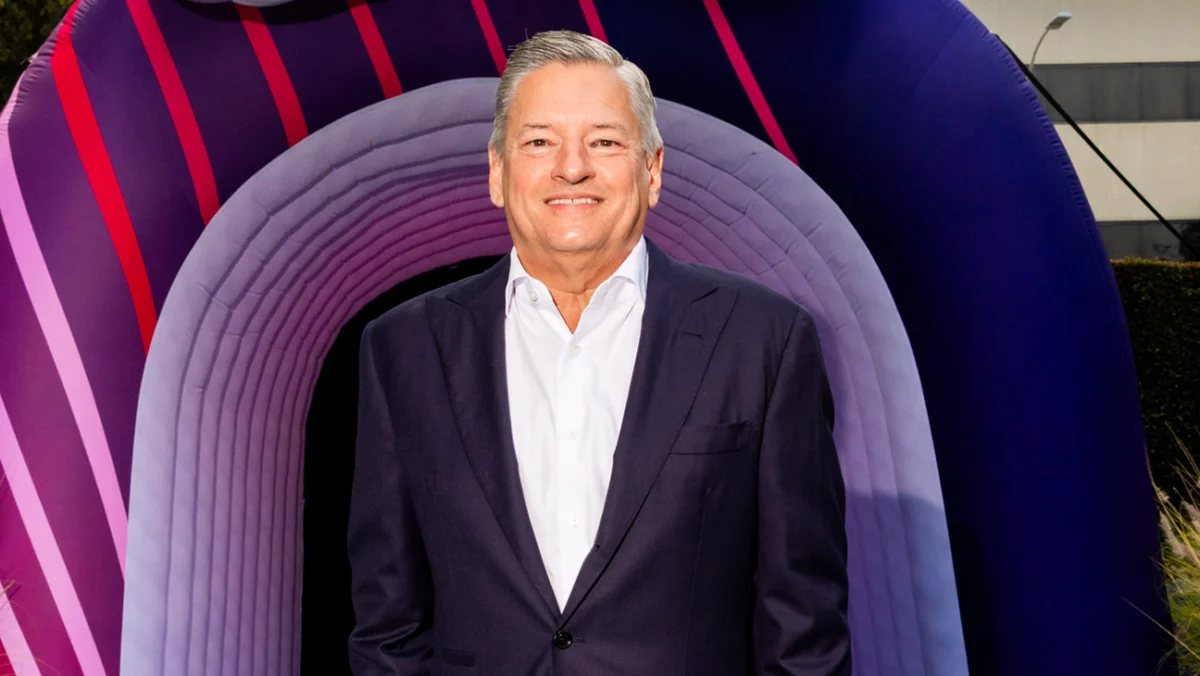
Netflix co-CEO Ted Sarandos publicly acknowledged on Wednesday that the streaming giant is experiencing a deceleration in its growth trajectory, revealing a modest 2 percent increase in viewership during the first half of 2026. Speaking at Bloomberg’s 2026 Screentime event, Sarandos conveyed a candid assessment of the company’s current performance, stating, "Overall, we’re not growing as fast as I want us to, and we’re working on making that move faster." This admission comes amidst an increasingly competitive and consolidating global streaming market, prompting questions about Netflix’s strategic adaptations and future outlook.
The Shifting Tides of Streaming Growth
Netflix, once the undisputed leader in the burgeoning streaming industry, has navigated a landscape dramatically altered by market saturation, intense competition from a host of new entrants, and the normalization of viewing habits post-pandemic. For years, the company enjoyed explosive subscriber growth, fueled by its pioneering model and a vast library of original content. However, as 2026 unfolds, the era of easy gains appears to be receding, replaced by a fierce battle for consumer attention and retention. Sarandos’s acknowledgment of slowed growth underscores a broader industry trend where every percentage point of viewership and subscriber acquisition is hard-won. Despite the frank assessment, he later tempered his remarks, asserting, "The business is great and growing fine," an attempt to balance transparency with maintaining investor confidence in Netflix’s long-term health.
The Strategic Bet on Live Programming
In an effort to revitalize engagement and address its growth challenges, Netflix has made a notable, albeit cautious, foray into live programming. This strategic pivot includes securing rights for high-profile events, such as a selection of NFL games. Sarandos detailed the current investment: approximately 5 percent of Netflix’s substantial $20 billion annual content budget is allocated to live programming. Curiously, this investment currently generates only about 1 percent of total viewership, suggesting a less-than-eye-popping return on investment (ROI) in terms of direct viewing hours.
However, Sarandos highlighted the multifaceted value of live content beyond immediate viewership figures. He explained that live events are exceptionally effective at driving "a lot of sign-ups" and significantly contribute to reducing subscriber churn. The immediacy and shared experience of live broadcasts, particularly sports, create a sense of urgency and community that pre-recorded content often cannot replicate. This "fear of missing out" (FOMO) factor is a powerful incentive for new subscribers and a strong deterrent against cancellations. Furthermore, live programming is highly attractive to advertisers, offering premium slots for real-time engagement with a captive audience, a crucial element for Netflix’s expanding ad-supported tiers. This nuanced view suggests that while the direct viewership ROI might appear low, the strategic benefits for subscriber acquisition, retention, and advertising revenue make live content a valuable, albeit costly, component of Netflix’s evolving content strategy.
Navigating the Mega-Merger Landscape
The streaming industry is currently undergoing a significant consolidation phase, exemplified by the colossal $111 billion combination of Paramount Global, Skydance Media, and Warner Bros. Discovery. This mega-merger, recently given judicial approval, presents a formidable new competitor in the marketplace, potentially reshaping the competitive dynamics Netflix has long dominated. Sarandos was directly questioned about whether he regretted Netflix’s brief, winning bid for Warner Bros. (excluding the Discovery assets) that ultimately fell through. His succinct response, "Nahhh," followed by a more detailed explanation, revealed Netflix’s calculated approach to acquisitions.
Sarandos elaborated that Netflix had indeed secured an agreement for Warner Bros. at one point, believing they had "priced it right" for their scale. He asserted, "That was the top price point where I thought we could return value to our shareholders with that asset. Any more than that, I thought we’d be taking it into negative territory — even with our scale." This indicates a disciplined financial strategy, prioritizing shareholder value over aggressive, potentially over-leveraged, expansion. The deal for Warner Bros. was eventually outmaneuvered by David Ellison of Skydance Media, backed by the immense financial resources of his billionaire father, Oracle founder Larry Ellison. The formation of such a massive entity, combining vast content libraries, production capabilities, and distribution networks, raises questions about its potential impact on market share, content licensing, and consumer choice.
The "Math May Not Math" on Consolidation
Despite the looming presence of this new, gargantuan competitor, Sarandos expressed a degree of skepticism about the immediate and straightforward impact of such mergers on market dynamics. He articulated his uncertainty about the true synergy and competitive threat, stating, "It looks on paper — so far it’s one and one. So I don’t know if one and one is two, or one and one is one and a half, or one and one is three." This "math may not math" perspective suggests that while the combined assets look impressive on paper, integrating disparate corporate cultures, content strategies, and technological platforms into a cohesive and efficient operation is a complex challenge. History is replete with examples of mergers that failed to deliver their promised synergies, often leading to operational inefficiencies, talent drain, and customer confusion. Sarandos’s comments reflect a wait-and-see approach, indicating that Netflix remains confident in its own differentiated strategy rather than being immediately intimidated by sheer scale.
The YouTube Challenge: Professional Content vs. UGC
In a notable shift from its long-held focus, Netflix appears to be increasingly eyeing YouTube as a competitive battleground, albeit with a distinct approach. Sarandos famously declared in 2012, as Netflix’s chief content officer, that the company was "racing to become Warner Bros.’ HBO before HBO became Netflix." Today, the target has evolved. However, Sarandos clarified that Netflix’s recent deals with YouTube creators do not signal a significant departure from its core philosophy.
He firmly stated, "We’re definitely… not in the UGC [user-generated content] business. We’re in the professionally produced content business." This distinction is critical. Netflix is not looking to host amateur videos or broad user-generated content in the vein of YouTube. Instead, it is selectively engaging with creators on other platforms who are already producing content nearing professional quality. Sarandos explained, "I think there’s a bunch of people on platforms that are doing pretty close to professional programming already, and if we can better monetize that programming for them, then we can make a deal with them. But we’re definitely not trying to bring over the whole population of creators." The incentive for these creators to partner with Netflix lies in the platform’s ability to offer better monetization opportunities due to its multiple revenue streams—subscriptions (both ad-free and ad-supported) in contrast to YouTube’s near-exclusive reliance on advertiser funding. This strategy allows Netflix to tap into a new pool of talent and content that resonates with younger audiences without diluting its brand commitment to high-quality, professionally produced programming.
A Firm Stance Against Free Tiers
Despite playing more actively in the creator space, Sarandos unequivocally ruled out the introduction of a free, ad-supported tier (FAST) for Netflix in the foreseeable future. Many competitors have adopted FAST models or offer free content to attract wider audiences and serve as a funnel for paid subscriptions. However, Sarandos believes that such a move would risk "cannibalizing the core product," referring to the potential devaluing of Netflix’s established subscription offerings.
This position underscores Netflix’s commitment to maintaining a premium perception and protecting its existing subscriber base, which pays for either an ad-supported or ad-free experience. The company’s strategy focuses on enhancing the value proposition of its paid tiers through diverse content, including live events and curated professional programming, rather than diluting it with a completely free option. This stance highlights a fundamental difference in strategic philosophy within the fragmented streaming market, where some players prioritize reach through free access while others, like Netflix, remain steadfast in their belief in the sustained value of a paid, curated experience.
Adapting to a Mature Digital Entertainment Market
Ted Sarandos’s recent statements paint a picture of Netflix adapting to a rapidly maturing and intensely competitive digital entertainment market. While acknowledging slower growth, the company is strategically deploying resources into areas like live programming and selectively engaging with high-quality creators, all while maintaining its core identity as a provider of professionally produced content. The refusal to pursue a free tier, coupled with a disciplined approach to mergers and acquisitions, signals a cautious yet determined strategy to navigate the evolving landscape. Netflix’s challenge moving forward will be to innovate sufficiently to reignite its growth trajectory while preserving the brand value and financial discipline that have defined its success. The ongoing battle for eyeballs and subscriptions in the global streaming arena remains fierce, and Netflix’s ability to evolve without compromising its foundational principles will be critical to its continued leadership.