Nairobi, Kenya – With less than nine months remaining until the highly anticipated 2027 Africa Cup of Nations (AFCON) commences, Kenya, Uganda, and Tanzania are immersed in the most critical phase of their preparations, focusing on the finalization and rigorous testing of stadiums, training facilities, and essential supporting infrastructure. The continental football spectacle, scheduled to run from June 19 to July 17, 2027, marks a historic moment as it will be the first AFCON jointly hosted by three nations. This event also signifies the return of Africa’s premier national team tournament to East Africa after a hiatus since Ethiopia last hosted in 1976.
A recent eight-day inspection by a Confederation of African Football (CAF) delegation underscored the urgency of the ongoing work. The delegation, comprising officials from various departments including competitions, safety and security, transport, media, television, and logistics, meticulously assessed facilities across all three host countries. Their evaluation encompassed not only the primary stadiums but also crucial elements like training grounds, accommodation facilities, airport capabilities, and overall logistical readiness.
Kenya: New Stadium Anchors Ambitious Hosting Plans
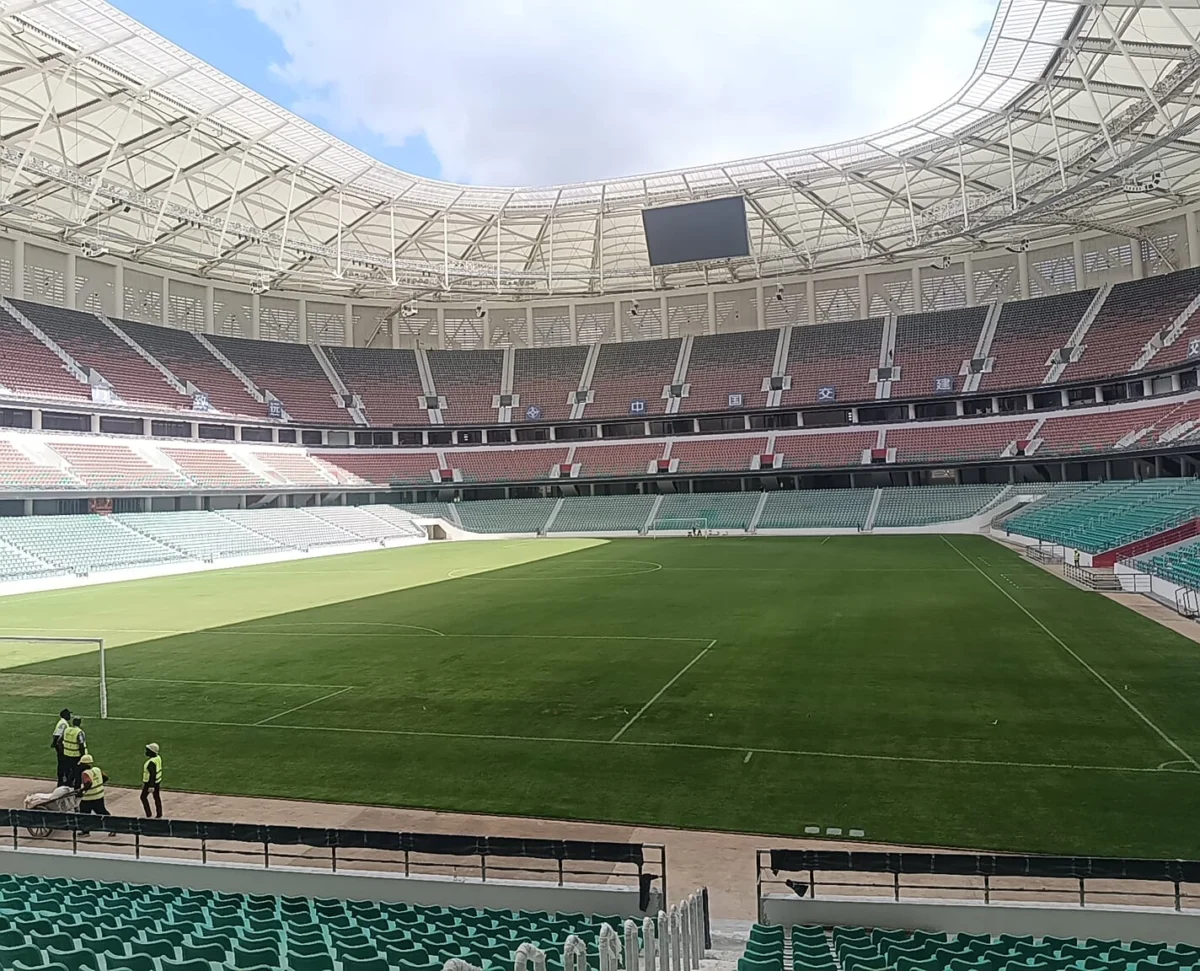
In Kenya, the spotlight is firmly fixed on the newly constructed Talanta Sports International Stadium in Nairobi. This 60,000-seat arena is slated to be the nation’s centerpiece venue for the 2027 AFCON. CAF President Patrice Motsepe expressed his satisfaction with the progress observed at Talanta during a recent visit, though work continues on other vital venues, including the well-established Kasarani Stadium.
Kenya’s preparations extend far beyond its flagship stadium. The CAF inspection scrutinized a comprehensive array of facilities, including essential training grounds, hotel infrastructure, and airport upgrades designed to support the seamless operation of the tournament in Nairobi. Nicholus Musonye, chairman of Kenya’s AFCON 2027 Local Organizing Committee, conveyed confidence to Al Jazeera, assuring that the country, alongside its East African partners, is committed to delivering a successful tournament.
"I want to assure Africa, and I want to assure the world, that Kenya, Uganda, Tanzania, we are ready to host AFCON," Musonye stated. He detailed that significant progress is being made on Kasarani Stadium’s pitch, with completion anticipated by the end of October and the venue expected to be ready for official handover in December.

Despite these assurances, lingering concerns persist regarding the readiness of ancillary facilities crucial for hosting visiting teams and their support staff. Kelvin Kimaru, a Kenyan football enthusiast, voiced apprehension about the state of training grounds, noting that "We are not yet ready because the training grounds for the coming teams are not yet ready." This sentiment was echoed by Moses Kamalik, an executive member of the Boxing Federation of Kenya, who highlighted the need for further work on other venues such as Nyayo Stadium and Kipchoge Keino Stadium in Eldoret. The overarching challenge for Kenya lies in establishing a robust network of match venues, adequate training facilities, and integrated supporting infrastructure capable of functioning harmoniously to accommodate the influx of teams and fans.
Tanzania: Infrastructure Development Beyond Stadiums
Tanzania is also navigating the final crucial stages of its preparations, with a holistic approach that encompasses stadiums, training facilities, and the vital transport infrastructure connecting them. Neema Msitha, CEO of Tanzania’s AFCON 2027 Local Organizing Committee, reported that the country’s stadiums are, on average, over 80 percent complete and are projected to be ready for CAF’s final inspection and handover by January 2027.
"All these stadiums are almost ready. If you grade them on average, all of them are almost above 80 percent," Msitha commented. Alongside the main stadia, training facilities are being actively developed, with five sites earmarked for preparation in each host location. These training venues are reportedly around 75 percent complete.
The Tanzanian government has exerted considerable pressure to accelerate construction timelines. In August, Prime Minister Mwigulu Nchemba issued a directive for expedited work on AFCON training grounds, emphasizing the necessity of timely completion and adherence to CAF standards. This directive followed an inspection of the Farasi and Leaders Club training grounds in Dar-es-Salaam. Road infrastructure improvements critical for tournament logistics have also been prioritized. In June, Works Minister Abdallah Ulega mandated round-the-clock operations for contractors working on roads linked to tournament venues in Arusha, ensuring deadlines and international quality benchmarks are met.
Msitha further highlighted ongoing efforts to enhance transportation networks, citing the roles of national carrier Air Tanzania and ferry services connecting Dar-es-Salaam and Zanzibar in facilitating movement for teams, officials, and supporters. The CAF delegation’s September inspection included a thorough review of the Benjamin Mkapa Stadium in Dar-es-Salaam and other key Tanzanian facilities, as the governing body continues its comprehensive assessment of readiness across all three host nations.
Uganda: Racing Against the Clock for 2027 AFCON
Uganda is similarly engaged in a concerted effort to meet year-end completion targets for its AFCON infrastructure. Patrick Ogwel, a CAF infrastructure monitoring officer, confirmed that all infrastructure development is expected to be finalized by December 31, 2026. Hoima City Stadium has already been completed and commissioned, while the Akii-Bua Olympic Stadium in Lira is scheduled for completion and commissioning by the end of the year.

Uganda’s Local Organizing Committee has designated Akii-Bua, Hoima City Stadium, and the Mandela National Stadium as its primary venues for the 2027 AFCON. The country anticipates that 10 out of its 12 identified training facilities will be ready by the close of 2026, with the remaining two planned for completion in January 2027.
The deadlines, however, are accompanied by considerable pressure. On September 24, Uganda’s State Minister for Sports, Peter Ogwang, directed the Uganda People’s Defence Forces to expedite work on several AFCON training facilities, expressing concerns about the pace of construction at sites including Pece Stadium in Gulu, and facilities in Lira and Gulu University. Following its September assessment, the CAF delegation provided a briefing to President Yoweri Museveni, highlighting various challenges encountered during the inspection, particularly concerning facilities located outside the capital, Kampala.
From Construction Sites to Operational Readiness
The forthcoming months will serve as a critical test of the three host nations’ ability to transition from the construction phase to fully operational tournament management. The demands of hosting AFCON extend far beyond completed stadiums; they encompass a complex ecosystem of facilities and services capable of supporting 24 national teams and tens of thousands of fans. This includes robust broadcasting capabilities, comprehensive media services, stringent security protocols, efficient transportation networks, high-quality hospitality, and flawless match-day operations.
The successful joint hosting of the 2024 African Nations Championship (CHAN) by Kenya, Uganda, and Tanzania provided valuable experience and fostered collaborative efforts among the three nations for a major continental tournament. CAF has also actively involved representatives from the host countries’ local organizing committees as observers at the recent AFCON tournament in Morocco, offering further insights into operational best practices.
However, AFCON represents a significantly larger undertaking, with a longer duration and a greater number of participating teams. The coming months will be pivotal in determining whether the ongoing construction and development projects can be finalized, rigorously verified, and seamlessly integrated into operational readiness before the arrival of teams and supporters.
For football fans across East Africa, the 2027 AFCON transcends a mere sporting event; it represents a profound opportunity to witness Africa’s most prestigious national team competition on home soil. Gilbert Okeya, a Kenyan football fan and a registered referee with the Football Kenya Federation, articulated the widespread enthusiasm, stating, "We are happy because we are going to host, and we are going to have an opportunity to have live matches for AFCON in our country." This sentiment underscores the deep cultural and social significance of the tournament for the region, promising a vibrant and unforgettable experience for millions. The success of the 2027 AFCON will not only be measured by the quality of the pitches and the modernity of the stadiums but also by the warmth of the welcome and the efficiency of the operations that showcase East Africa’s capacity to host world-class sporting events.