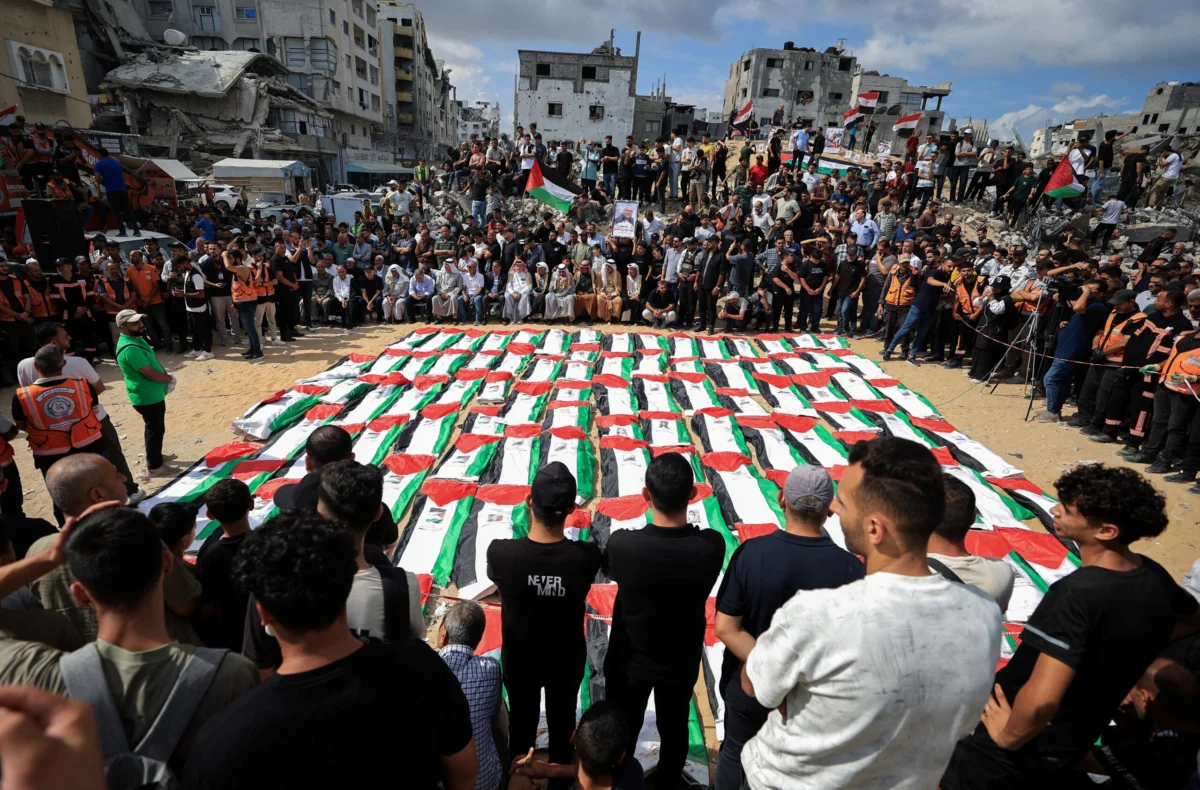
The violence gripping the Palestinian territories has claimed two more lives in separate incidents, as an Israeli drone strike killed a Palestinian man and injured others in southern Gaza on Thursday, while Israeli settlers fatally shot another Palestinian man near Ramallah in the occupied West Bank. These deaths underscore the ongoing cycle of bloodshed and the mounting humanitarian toll in the region since the fragile ceasefire began in October 2025.
Gaza’s Mounting Toll and Humanitarian Crisis
In Gaza, the body of 42-year-old Tamer al-Hamayda was recovered along with three wounded individuals following an Israeli drone strike that targeted a tent sheltering displaced Palestinians in the al-Mawasi area, west of Khan Younis. The strike on Thursday adds to the already devastating impact of the conflict on the civilian population of the Gaza Strip.
Earlier in the week, another Palestinian succumbed to wounds sustained in a separate Israeli drone strike on Tuesday. That attack targeted a gathering of Palestinians in the Jabalia refugee camp in northern Gaza. Medical personnel at the Nasser Medical Complex confirmed the fatality, highlighting the persistent danger faced by civilians, particularly those displaced by the conflict.
Beyond direct strikes, Israeli forces also conducted a significant demolition operation targeting buildings east of Gaza City’s al-Tuffah neighborhood. This action further exacerbates the destruction of infrastructure and contributes to the widespread displacement of the population.
The Gaza Health Ministry reported eight new deaths and 26 injuries in the 24 hours preceding Thursday’s incidents. Since the ceasefire took effect in October 2025, the ministry has documented a staggering 1,439 fatalities and 5,052 injuries. An additional 834 bodies have been recovered from the rubble, a grim testament to the scale of destruction. These figures represent a fraction of the overall casualties since October 2023, when Israel’s extensive military operations in Gaza began, resulting in at least 74,040 Palestinian deaths and 175,168 injuries, according to the ministry.
Escalating Settler Violence in the Occupied West Bank
Simultaneously, the occupied West Bank witnessed a brutal act of settler violence. Israeli settlers opened fire on a group of Palestinians in the village of Yasuf, north of Ramallah, on Thursday, killing 51-year-old Mashhour Yassin and wounding another individual. The Palestinian Health Ministry confirmed Yassin’s death.
The Palestinian Ministry of Foreign Affairs condemned the attack, describing it as a "crime that reflects clear coordination between the settlers and occupation forces." The ministry stated that Israeli forces detained an ambulance responding to the injured, seizing its keys and discarding them, an act they characterized as further evidence of complicity.
The ministry asserted that this killing is part of a "serious and continuous escalation in organised settler crimes." They accused Israel of enabling settler "terrorism against our people in the service of settlement, annexation, forced displacement and ethnic cleansing plans." This rhetoric points to a broader strategy of territorial expansion and demographic change in the West Bank.
Yasuf Mayor Jumaa Abdel Fattah recounted to AFP news agency that dozens of armed Israeli settlers, wielding sticks and firearms, descended upon the village, which is situated between four established Israeli settlements. Yassin, he explained, was killed as he stood at his doorstep attempting to defend his home from the attackers. His nephew was also injured in the assault.
Abdel Fattah identified the settlers as originating from Havat Anton, an illegal Israeli settlement established in July of the previous year, which has a documented history of attacking Yasuf residents. The presence of such settlements, considered illegal under international law, is a constant source of tension and conflict.
The Pervasive Threat of Settler Pogroms
Palestinians in the occupied West Bank have reported a significant increase in settler-led attacks, often described as pogroms, in recent months. These incidents are not isolated acts but are increasingly viewed as part of a systematic campaign of intimidation and violence.
More than 500,000 Israelis reside in settlements across the West Bank, territories that have been under Israeli occupation since 1967. The international community largely considers these settlements illegal under international law, viewing them as an impediment to a two-state solution and a source of ongoing friction.
Data from the United Nations indicates that since October 2023, at least 1,112 Palestinians in the occupied West Bank have been killed by either Israeli forces or settlers. Of this grim toll, at least 37 Palestinians have been confirmed as victims of settler violence. These statistics paint a stark picture of the pervasive threat faced by Palestinians living under occupation.
Broader Implications and International Scrutiny
The dual incidents of lethal violence in Gaza and the West Bank arrive at a critical juncture for regional stability and international diplomacy. The escalating casualties and the unchecked nature of settler violence raise profound questions about the efficacy of existing ceasefire mechanisms and the commitment to upholding international law.
The reported coordination between settlers and Israeli forces in the West Bank incident, if substantiated, suggests a deepening integration of settler agendas into state security operations. This raises concerns about accountability and the potential for impunity for acts of violence against Palestinians. The international community has repeatedly called for an end to settlement expansion and settler violence, yet these calls have largely gone unheeded, leading to a persistent cycle of conflict.
In Gaza, the ongoing humanitarian crisis, exacerbated by ongoing military operations and the destruction of infrastructure, continues to be a major concern. The sheer number of casualties, including a significant proportion of women and children, underscores the devastating human cost of the conflict. The recovery of bodies from rubble months after initial strikes highlights the long-term impact and the difficulty of even achieving closure for grieving families.
The recurring nature of these incidents demands a more robust international response. Analysts argue that a sustained commitment to diplomacy, coupled with accountability mechanisms for violations of international law, is essential to breaking the cycle of violence. Without a fundamental shift in policy and enforcement, the grim reality of escalating casualties in both Gaza and the West Bank is likely to persist. The events of Thursday serve as a stark reminder of the urgent need for de-escalation and a renewed focus on achieving a just and lasting peace.