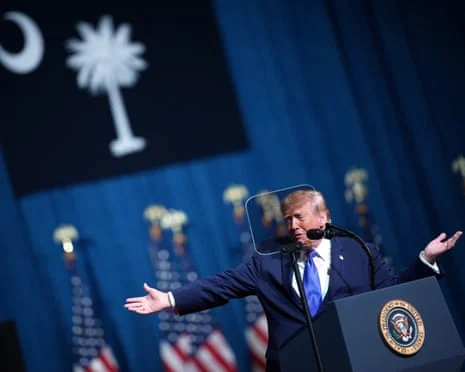
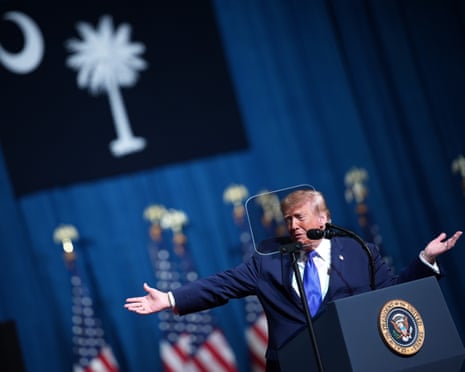
Speaking to a capacity crowd at a campaign rally in Rock Hill, South Carolina, Donald Trump on Thursday demanded that Democratic candidate Mary Peltola face criminal charges and be disqualified from the Alaska Senate race. The president’s remarks represent a significant escalation in the Republican effort to frame the upcoming midterm elections as compromised by systemic irregularities, specifically focusing on a controversial recruitment tactic in the nation’s northernmost state.
"This is voter fraud at the highest level," Trump told the audience, referring to allegations that the Peltola campaign orchestrated a scheme to confuse voters by recruiting a man named Dan J. Sullivan to run against the Republican incumbent, Senator Dan S. Sullivan. The president asserted that both Peltola and the namesake candidate "should be removed from the ballot and prosecuted," adding that he viewed the strategy as a "criminal act."
The Allegations Against Mary Peltola and the Alaska Campaign Investigation
The controversy centers on what Republican officials describe as a "ballot-stacking" scheme intended to siphon votes from the incumbent senator. For months, Trump and high-ranking Republicans have accused the Peltola campaign of purposefully seeking out individuals with the same name as her opponent to generate confusion at the ballot box. While the Peltola campaign initially denied any direct involvement in encouraging Dan J. Sullivan—a retiree with minimal political experience—to enter the race, a recent investigation by the New York Times cited internal documents and text messages suggesting that campaign officials and the Democratic Senatorial Campaign Committee (DSCC) were active in the recruitment effort.

Alaska Governor Mike Dunleavy has since ordered a formal inquiry into the matter, seeking to determine if the campaign’s actions warrant criminal charges or civil penalties. In a statement posted to social media, Dunleavy argued that "deliberately tricking voters into casting their ballots for someone else strikes at the integrity of our elections." He emphasized that any organization found to have violated state law must be held accountable for undermining the democratic process.
The legal standing of such tactics remains a subject of intense debate. While "ballot-stacking" or recruiting namesake candidates is widely viewed as a deceptive political maneuver, it is not explicitly prohibited under federal law. Nevertheless, the Trump administration and the Department of Justice have filed a pre-emptive lawsuit to block the certification of the Alaska Senate results should the incumbent lose, citing the potential for mass voter confusion.
JD Vance Backs Prosecution Calls Amid Regional Campaigns
Vice President JD Vance echoed the president’s rhetoric on Thursday while traveling to a campaign event in Texas. Speaking to reporters on the tarmac before boarding Air Force Two, Vance characterized Peltola’s actions as an attempt to "steal a Senate seat from the voters of Alaska."
When asked if he supported the president’s call for a criminal prosecution, Vance was slightly more measured but remained firm in his condemnation. "I think that we should certainly look into whether she committed election fraud," Vance said. "Whether it’s criminal or not, she certainly has committed a great moral failing. It’s disgraceful."

Vance’s trip to Texas is part of a broader administration effort to shore up support for Republican candidates who are facing unexpectedly tight races. He is scheduled to appear alongside Ken Paxton, the scandal-plagued former Texas attorney general who is currently trailing in the polls. The race marks the first time in decades that Republicans are at serious risk of losing a Senate seat in the reliably red state.
Tensions Erupt Between Trump and the Press Corps
The president’s return from South Carolina was marked by a sharp exchange with the media. Upon his arrival back in Washington, Trump lashed out at a Reuters reporter who questioned why he had canceled a planned Saturday appearance in Salina, Kansas. The rally was intended to support Senator Roger Marshall, who is facing a surprise challenge from Democrat Adam Hamilton.
After the reporter inquired about the president’s health and suggested that the cancellation might be due to travel fatigue, Trump reacted with visible indignation. "Oh, you’re sick to ask that question," Trump responded. "You are a sick guy. Reuters is terrible."
The president continued to mock the journalist while addressing other members of the press, calling him a "dope" and commenting on his physical appearance. Trump clarified that he opted for a remote "tele-rally" for Marshall because the senator is "doing very well" and no longer requires an in-person appearance. Despite the Kansas cancellation, Trump confirmed that scheduled stops in Florida and Iowa through the weekend would proceed as planned.
Federal Pressure on California Election Officials
As Trump again calls for prosecution of Mary Peltola as turmoil grows over Alaska campaign investigation, his administration is simultaneously opening a new legal front in California. The New York Times reported on Thursday that the administration has issued federal grand jury subpoenas to local election officials in the state.
The subpoenas are part of a criminal investigation aimed at substantiating White House claims that thousands of non-citizens are present on California’s voter rolls. This move is seen by critics as a pre-emptive attempt to cast doubt on the midterm results in a state run by Democrats. The Department of Justice recently delivered a USB drive to officials in Los Angeles and Sacramento containing the names of 20,000 individuals it claims are non-citizens; however, local officials have reported preliminary findings that the list is highly inaccurate.
On Wednesday evening, U.S. District Judge David Carter rebuffed a Justice Department request to force California to segregate and withhold the counting of these ballots. Carter wrote that the federal government’s attempt to "coerce a state and local government to abandon their own Constitutional elections procedures" was unprecedented in American history, affirming that "California and its people are sovereign, too."
Foreign Policy Shifts and Pentagon Shake-ups
Beyond the domestic campaign trail, the administration is navigating a volatile international landscape. JD Vance recently sent a personal letter to Mohsen Rezaei, the secretary of Iran’s Supreme National Security Council, offering to restart diplomatic talks. The letter, mediated by Qatari officials, reportedly requires Tehran to make upfront commitments regarding its nuclear program in exchange for the lifting of U.S. sanctions and the reopening of the Strait of Hormuz.
The diplomatic outreach comes at a time of significant transition within the U.S. military. Defense Secretary Pete Hegseth recently fired the Pentagon’s top military planner, Army Lt. Gen. Brett Sylvia. The removal is the latest in a series of leadership changes since the administration launched military operations in Iran in February. Reports suggest the White House is considering escalated military action following the midterm elections, making the timing of the planning staff shake-up particularly notable.
Midterm Polling and the National Political Landscape
A new CNN poll released on Thursday indicates that Democrats are currently leading in several key Senate races that were previously considered competitive for Republicans. In Texas, James Talarico leads Ken Paxton 49% to 43%. In Michigan, Abdul El-Sayed holds a 49% to 42% lead over Mike Rogers.
However, the polling remains tight in other critical battlegrounds. In South Carolina, a New York Times/Siena poll shows a dead heat between Republican incumbent Darline Graham and Democratic challenger Annie Andrews, with both candidates tied at 48%. Graham, who was appointed to the seat following the death of her brother, Lindsey Graham, has faced criticism for her lack of experience, particularly regarding national security.
In New Mexico, former Interior Secretary Deb Haaland is poised to make history. Polls show her with a comfortable lead, putting her on track to become the first Native American woman to serve as a U.S. governor. Haaland has stated that the hectic nature of the campaign has left her little time to reflect on the historic nature of her candidacy, noting that her team is focused on being "everywhere all at once" in the final stretch.

Closing Developments and Broader Implications
The final week of the midterm campaign has also seen the revival of older controversies. Reports emerged on Thursday that an Obama-era investigation into Representative Ilhan Omar found some evidence regarding a 2009 marriage that critics allege was a sham to help a relative obtain a green card. Omar has denied the claims, calling them a "desperate political smear." The Trump administration is reportedly revisiting the case as part of a wider look into her family’s immigration history.
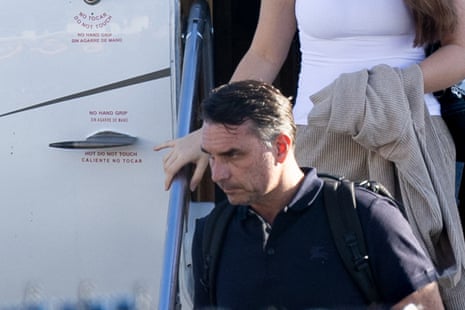
Furthermore, new reporting indicates that the Trump administration actively aided the flight of Flávio Bolsonaro from Brazil to the United States. Following his defeat in the Brazilian presidential election, Flávio Bolsonaro—son of the imprisoned former president Jair Bolsonaro—clandestinely traveled to Miami on a private jet arranged by a White House official. He has since declared himself the true winner of the Brazilian election from his new residence in Florida.
As the nation heads toward Tuesday’s vote, the convergence of domestic investigations, international tensions, and aggressive campaign rhetoric has created an atmosphere of heightened uncertainty. The administration’s focus on the Alaska Senate race and the ongoing legal battles over voter rolls in California suggest that the fight over the midterm results may extend well beyond the casting of the final ballot.