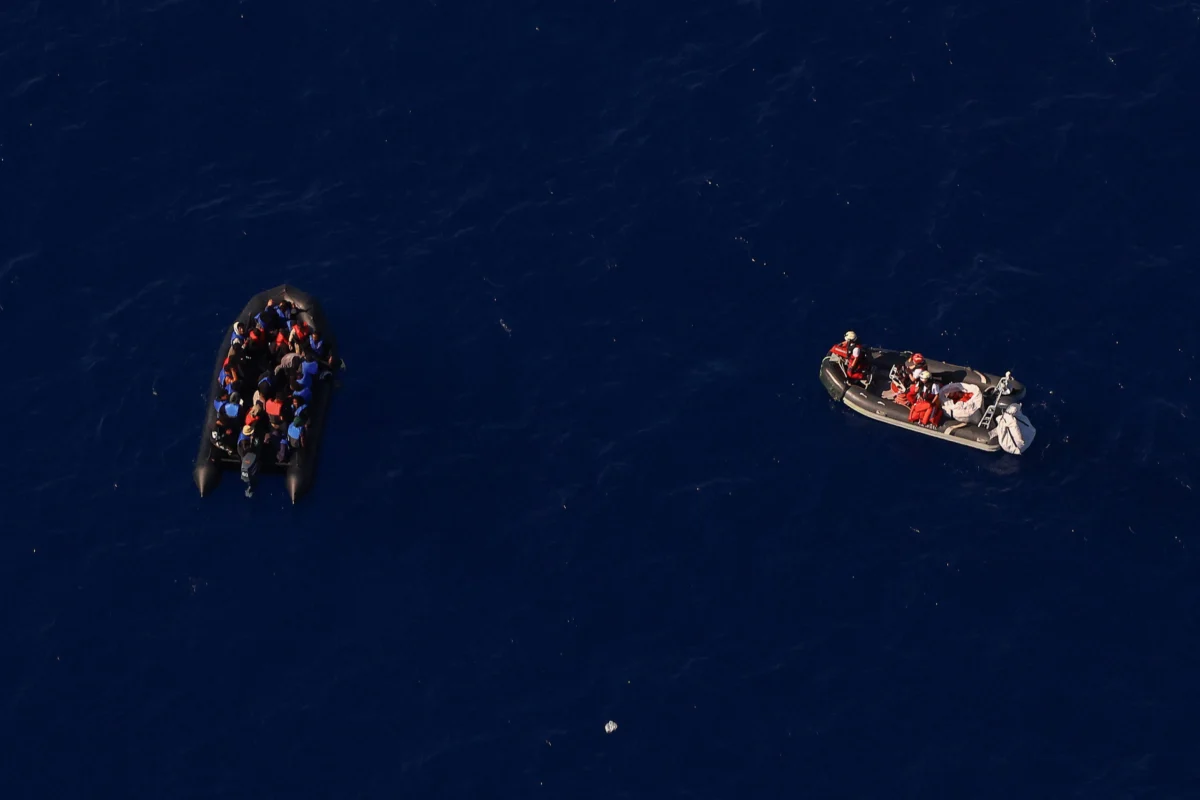
Dutch authorities have rescued 38 individuals found adrift in a deflated rubber boat off the country’s southwestern coast, marking a rare and concerning interception for the Netherlands. The discovery, made by the Dutch coast guard, has prompted an immediate investigation into the origins and intentions of those on board, as well as the circumstances that led them to Dutch waters. The incident is particularly unusual, as such crossings are more commonly associated with routes targeting the United Kingdom.
Unprecedented Discovery in Dutch Waters
The dramatic rescue unfolded Saturday when the coast guard spotted the distressed vessel approximately 20 nautical miles off the coast of Zeeland province. The rubber boat, reportedly without a motor and in a precarious state, was found with all 38 occupants aboard. None of the individuals were wearing life vests, highlighting the perilous nature of their journey. The military police, who have taken charge of the investigation, confirmed that initial assessments suggest two individuals on board are suspected smugglers, while the remaining 36 are considered migrants.
The nationalities of those rescued have added another layer of complexity to the unfolding situation. Officials have indicated that 36 of the migrants are believed to be from Afghanistan. The two individuals suspected of being smugglers are reportedly from Sudan. These two men have been arrested on suspicion of facilitating illegal immigration and are currently in custody. The Dutch authorities are working to establish the exact identities and backgrounds of all individuals involved.
Establishing the Journey’s Origin and Destination
A significant challenge for investigators is the unknown origin and intended destination of the rubber boat. Military police spokesperson Doron Wallin stated, "We don’t know where they came from – France, the Netherlands or Belgium – and we don’t know where the boat was heading." This ambiguity complicates efforts to trace the smuggling network and understand the broader patterns of irregular migration. The absence of a motor on the boat suggests it may have been towed for a portion of its journey or relied on currents.
The discovery of a vessel of this nature in Dutch territorial waters is highly atypical. Historically, the Netherlands has not been a primary destination or transit point for small boat crossings of this kind. Most interceptions of migrants arriving by sea in small boats have occurred in the waters between France and the United Kingdom, a route that has seen a significant surge in activity in recent years.
Shifting Migration Patterns and European Challenges
The incident raises questions about potential shifts in migrant routes and the increasing ingenuity of smuggling operations. While the primary focus of European migration discussions has long been on the Mediterranean and the English Channel, this event suggests that new, less conventional pathways are being explored. The vulnerability of individuals undertaking such journeys, often in overcrowded and unseaworthy vessels, remains a stark reality.
The European Union has been grappling with coordinated responses to irregular migration for years, with varying degrees of success. The challenges include establishing effective border controls, processing asylum claims, and dismantling criminal smuggling networks. This latest incident underscores the persistent demand for irregular migration routes and the adaptability of those who facilitate them.
The Role of Zeeland Province
Zeeland province, located in the southwesternmost part of the Netherlands, borders Belgium and has a coastline on the North Sea. Its geography, with extensive waterways and a connection to major shipping routes, could potentially make it a point of interest for clandestine arrivals. However, the limited number of similar incidents suggests that this may have been an opportunistic or diversionary tactic by smugglers.
The Dutch authorities are expected to launch a formal investigation into the case on Sunday. This will likely involve detailed interviews with all rescued individuals, forensic analysis of the boat, and intelligence gathering to identify potential accomplices or organizers. The investigation will aim to determine whether this was an isolated incident or part of a larger, emerging trend.
Suspected Smugglers and Legal Ramifications
The arrest of the two Sudanese men on suspicion of people smuggling is a crucial development. Under Dutch and European law, individuals convicted of facilitating illegal immigration face significant prison sentences and hefty fines. The investigation will seek to build a case against them, potentially involving evidence of communication with migrants, financial transactions, or involvement in the acquisition and operation of the boat.
The status of the 36 Afghan nationals is also under consideration. As asylum seekers, they will likely undergo initial screening and be provided with basic necessities. Their asylum claims will be processed according to Dutch and EU regulations, a process that can be lengthy and complex. The circumstances of their journey, including any coercion or exploitation by smugglers, will be a key factor in their individual cases.
A Rare Occurrence in Dutch Coastal Patrols
Doron Wallin’s comment, "These are things you usually see in France and Belgium. We rarely see it here in the Netherlands before today," emphasizes the unusual nature of this rescue. Dutch coastal patrols are primarily focused on maritime safety, environmental protection, and combating illegal fishing or drug smuggling. While border security is a component, large-scale interceptions of migrant boats in their waters are not a regular occurrence.
The rarity of such events in the Netherlands means that the logistical and humanitarian response mechanisms may not be as finely tuned as in countries that regularly deal with such arrivals. However, the swift action of the coast guard and military police demonstrates a commitment to addressing the situation effectively.
Broader Implications for European Migration Policy
This incident, though singular in its current context, could have broader implications for European migration policy. It suggests that smugglers are continuously seeking new routes to circumvent existing border controls and enforcement measures. This necessitates a dynamic and adaptive approach to migration management, involving intelligence sharing between member states and a focus on disrupting smuggling networks at their source and along their routes.
The increasing reliance on small boats, often in dangerous conditions, also highlights the desperation of individuals fleeing conflict, persecution, or economic hardship. It underscores the ongoing need for safe and legal pathways for migration and asylum, as well as efforts to address the root causes of displacement in countries of origin.
Public Reaction and Political Response
While the immediate focus is on the humanitarian aspect of the rescue and the ongoing investigation, such incidents inevitably spark public debate and political responses. In the Netherlands, the arrival of migrants, even in these circumstances, is likely to reignite discussions about immigration policy, border security, and the capacity of the country to absorb new arrivals.
Politicians may call for increased surveillance of Dutch waters, stronger international cooperation to combat smuggling, and a review of asylum procedures. The incident could also fuel debates about the effectiveness of current EU policies on migration and border management. The government will be under pressure to provide clear answers and demonstrate a robust response to this unexpected challenge.
The Path Forward for Rescued Individuals
The 38 individuals rescued face an uncertain future. The two suspected smugglers will remain in custody pending their trial. The 36 Afghan nationals will likely be housed in reception centers while their asylum claims are processed. This process involves interviews, background checks, and an assessment of their eligibility for protection under international and national law.
The Dutch authorities will be working in coordination with international organizations, such as the International Organization for Migration (IOM), to provide support and assistance to the rescued individuals. This includes ensuring their basic needs are met, providing legal counsel, and facilitating communication with their families if desired. The long-term outcome for each individual will depend on the outcome of their asylum claims and their integration prospects within Dutch society.
An Emerging Challenge for Dutch Border Security
The rescue of 38 people adrift in a rubber boat off the Dutch coast serves as a potent reminder of the persistent and evolving challenges of irregular migration in Europe. While this particular event is an anomaly in Dutch waters, it underscores the need for vigilance and adaptability in border security and migration management. The investigation into this incident is expected to provide valuable insights into the methods of smuggling operations and the potential for future attempts to utilize similar routes. The Netherlands, like other European nations, must continue to balance humanitarian concerns with the imperative of maintaining secure borders and dismantling criminal enterprises that exploit vulnerable individuals.