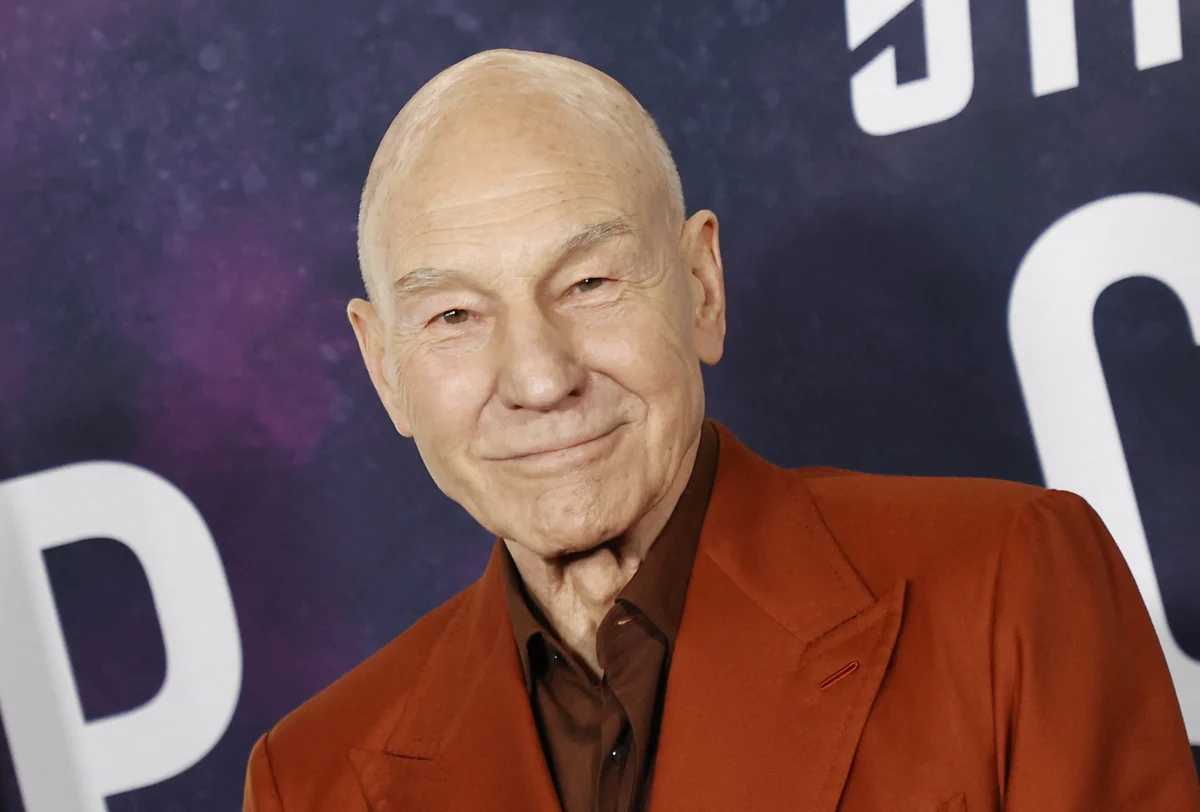
Patrick Stewart, the iconic British actor celebrated globally for his commanding portrayal of Captain Jean-Luc Picard in "Star Trek: The Next Generation" and his powerful performance as Professor Charles Xavier in the "X-Men" film franchise, has passed away at the age of 86. His death was confirmed by his spokesperson, Kelly Bush Novak, who stated Stewart died Wednesday in Los Angeles following a "brief and poignant journey" with Alzheimer’s disease and Lewy body dementia.
Stewart’s illustrious career spanned over six decades, earning him widespread critical acclaim and a devoted international following. While his roles in science fiction and superhero cinema brought him household name status, the core of his artistic identity was forged on the stage, where he delivered masterful interpretations of Shakespearean classics and contemporary dramatic works. His theatrical prowess was a constant throughout his career, showcasing a depth and versatility that informed his every performance.
A Legacy of Stage and Screen
Born on July 13, 1940, in Mirfield, West Yorkshire, England, Patrick Stewart emerged from a working-class background to achieve global superstardom. His early life was shaped by the stark realities of post-war Britain and significant personal challenges. Growing up in a household without basic amenities, Stewart found an early escape and passion in amateur dramatics. At the age of 12, he joined a local drama group, a formative experience that ignited a lifelong love for acting.
By his teenage years, Stewart had developed an extraordinary dedication to William Shakespeare, memorizing entire plays for the sheer joy of the language and the craft. This autodidactic passion was later recognized with a scholarship to the prestigious Bristol Old Vic Theatre School, a pivotal moment that launched his professional acting journey. Stewart’s early career was marked by his striking presence and vocal gravitas, even as he navigated personal struggles, including the early onset of alopecia, which left him bald by the age of 19, a characteristic that would later become an iconic part of his screen persona.

His formative years were also shadowed by domestic violence, a painful experience he openly addressed later in his life. Stewart’s father, a former regimental sergeant major, subjected his mother to repeated abuse. This deeply personal trauma profoundly shaped Stewart’s worldview and his later advocacy. He became a vocal patron of Refuge, a leading UK charity dedicated to supporting survivors of domestic abuse, using his platform to raise awareness and funds for those affected by similar hardships. Stewart’s reflections on his father’s violence often highlighted his belief that "Violence is always a choice a man makes and he alone is responsible for it," a testament to his enduring commitment to challenging abusive behaviors.
From Shakespearean Heights to Galactic Command
Stewart’s theatrical career reached its zenith during his 14-year tenure with the Royal Shakespeare Company. Within this esteemed institution, he embodied a vast array of iconic characters, including Mark Antony, Henry IV, Shylock, and Oberon, solidifying his reputation as one of Britain’s foremost classical actors. He often recounted his dedication to the company, telling the Associated Press, "People who were not in the company would say to me, ‘Give it a break. Why don’t you go somewhere else?’ And I would say, ‘To do what?’ Telly?"
His transition to screen began with notable film roles, including his appearance in John Boorman’s 1981 epic "Excalibur." However, it was in 1987, shortly after a critically acclaimed West End and Broadway run in "Who’s Afraid of Virginia Woolf?", that an unexpected opportunity arose that would redefine his career. He was offered a role in a new science fiction television series, a project he initially regarded with skepticism.
"I found myself in Hollywood shooting a syndicated science fiction series, which I was assured would fail," Stewart famously remarked. That series, "Star Trek: The Next Generation," proved to be anything but a failure. It ran for seven highly successful seasons, airing 178 episodes and captivating audiences worldwide. As Captain Jean-Luc Picard, the thoughtful and resolute commander of the USS Enterprise-D, Stewart became a global icon. His dignified presence, eloquent delivery, and the iconic catchphrase "Make it so" became indelible elements of popular culture, resonating with millions and inspiring a generation.
Stewart’s foray into blockbuster cinema continued with his casting as Professor Charles Xavier, the telepathic founder and leader of the X-Men. He first donned the mantle of the benevolent mutant leader in Bryan Singer’s 2000 film "X-Men," a role he reprised in multiple sequels, including "X2: X-Men United," "X-Men: The Last Stand," and the critically lauded "Logan" in 2017, where his portrayal of a weary Xavier earned further accolades. His dynamic with Hugh Jackman as Wolverine became a cornerstone of the franchise, showcasing his ability to convey immense power tempered by profound humanity.

The Actor’s Artistry and Impact
Beyond his signature roles, Stewart’s theatrical commitments remained a vital part of his artistic life. He garnered some of the finest reviews of his career for his 2007 stage portrayal of Macbeth, a performance that earned him his sole Tony Award nomination. The Times of London lauded his interpretation as "an enthralling creation of frailty, appetite, egotism and grim humour." This role exemplified his enduring commitment to Shakespeare, a passion he pursued with unwavering dedication.
In a 2008 interview with the Associated Press, Stewart reflected on his lifelong relationship with Shakespeare’s works, stating, "Nearly 50 years I’ve waited. I learned it when I was 14. I memorized all the soliloquies just because I thought they were great. And they stuck, so I didn’t have to learn those bits of the play, which is a blessing, because learning lines has now become the one curse of this job." This sentiment underscored his deep reverence for the text and his ongoing engagement with the craft of acting.
Stewart’s contributions were recognized with numerous honors. In June 2010, he was knighted by Queen Elizabeth II, becoming Sir Patrick Stewart, a testament to his significant impact on the arts. He also lent his voice and influence to humanitarian causes, serving as an ambassador for the International Rescue Committee, an organization dedicated to providing aid and assistance to people affected by conflict and disaster.
The passing of Patrick Stewart comes shortly after the death of Walter Koenig, who famously portrayed Ensign Pavel Chekov in the original "Star Trek" series. This coincidence marks a poignant moment for fans of the franchise, highlighting the passage of time and the enduring legacy of the actors who brought these beloved characters to life.
Patrick Stewart’s career was a masterclass in versatility, dedication, and profound artistry. From the intimate confines of the stage to the vast expanse of outer space and the complex world of superheroes, he captivated audiences with his intelligence, gravitas, and unwavering commitment to his craft. His performances as Captain Picard and Professor X have cemented his place in cinematic and television history, while his profound contributions to theatre and his advocacy work underscore a life dedicated to meaningful expression and social good. He leaves behind a legacy that will continue to inspire actors and audiences for generations to come.