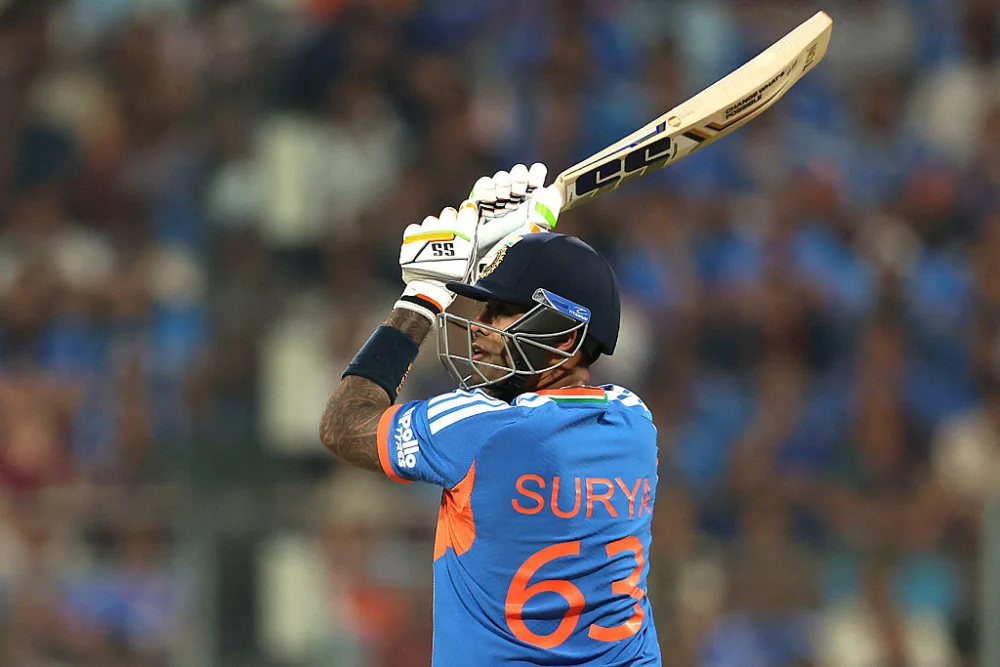
Captain Suryakumar Yadav produced a masterful unbeaten 84 to steer India back from the brink of a stunning T20 World Cup upset, guiding his team to a hard-fought 29-run victory against a spirited United States side in their opening Group A fixture on Saturday. The reigning champions, considered overwhelming favorites, found themselves in dire straits at 77-6 before Yadav’s scintillating display of aggressive batting, supported by crucial lower-order contributions, propelled them to a defendable total of 161-9. The co-hosts’ bowling attack, led by Mohammed Siraj, then held their nerve to dismiss the Americans for 132-8, securing two vital points but exposing significant vulnerabilities in their batting lineup.
India’s Top-Order Collapse Against Determined US Attack
The atmosphere at the Nassau County International Cricket Stadium was electric, with a significant contingent of Indian fans anticipating a dominant performance from their national team, the world’s top-ranked T20 side. However, the script took an unexpected and alarming turn after the United States captain, Monank Patel, won the toss and elected to bowl first. What followed was a spectacular batting collapse that left India teetering precariously, a scenario few had predicted against a team making its T20 World Cup debut.
The early departure of opener Abhishek Sharma, the current number one T20 batter globally, for a first-ball duck, signaled the beginning of India’s struggles. The procession of wickets began in earnest, with the US bowlers displaying impressive discipline and tactical acumen. The most damaging spell came from Shadley van Schalkwyk, who ripped through India’s middle order in the final Powerplay over, claiming three wickets in the space of five deliveries. This onslaught left India reeling at a dismal 46-4, with the top-order failing to provide any substantial contribution.
Suryakumar Yadav’s Captain’s Knock in the Face of Adversity
Amidst the unfolding crisis, the onus fell heavily on captain Suryakumar Yadav to salvage the innings. He found little support as Ishan Kishan (20) and Tilak Varma (25) were unable to convert their promising starts into significant scores. Shivam Dube’s dismissal for a golden duck in the same catastrophic over from van Schalkwyk further compounded India’s woes. The situation could have deteriorated even further had the US fielder, Shubham Ranjane, held onto a return catch when Yadav was on just 15.
Despite the relentless pressure and the continuous fall of wickets at the other end – with Rinku Singh, Hardik Pandya, and Axar Patel all perishing in their attempts to accelerate the scoring – Suryakumar Yadav remained resolute. He exhibited remarkable composure and aggressive intent, racing to his half-century off just 36 deliveries. His innings, a testament to his reputation as one of the most innovative and destructive T20 batsmen, was punctuated by audacious shots and calculated risks. Yadav’s brilliance culminated in a stunning 21-run onslaught in the final over bowled by Saurabh Netravalkar, single-handedly lifting India’s total to a respectable 161-9. His unbeaten 84 off 49 balls, including six fours and five sixes, was the cornerstone of India’s recovery and ultimately proved to be the decisive factor in the match.
US Bowling Prowess and India’s Bowling Response
The United States bowling attack, spearheaded by Netravalkar, delivered a performance that belied their underdog status. They exploited the early movement on the pitch and maintained pressure on the Indian batsmen throughout the innings. Netravalkar, in particular, bowled a tight line and length, troubling the Indian top order and picking up crucial wickets. The US bowlers’ disciplined approach and strategic variations caught the highly-rated Indian batting lineup off guard, showcasing their potential to compete at this elite level.
In response, the United States faced an uphill battle to chase down the challenging target. India’s bowling attack, despite missing key pacers Jasprit Bumrah (rested due to illness) and the injured Harshit Rana, showed its depth and quality. Mohammed Siraj, a last-minute replacement for the injured Rana, vindicated his inclusion with a potent display, picking up three wickets for 29 runs. Arshdeep Singh also contributed with the ball, and the Indian pace attack effectively reduced the US to 31-3 within the opening Powerplay overs, establishing early control of the game.
Partnership Offers Glimmer of Hope for US
Despite the early setbacks, the United States batting lineup demonstrated resilience. Sanjay Krishnamurthi (37) and Milind Kumar (34) forged a commendable 58-run partnership, providing a significant glimmer of hope for the co-hosts’ opponents. Their steady accumulation of runs temporarily halted India’s momentum and kept the US within striking distance of the target. This partnership highlighted the potential for a closer contest and underscored the importance of sustained batting efforts against strong opposition.
However, once this crucial partnership was broken, India regained the ascendancy. The Indian bowlers tightened the screws, and the US batting order struggled to build further momentum. While the US batsmen fought valiantly, they were unable to bridge the gap, ultimately falling short by 29 runs. The final score of 132-8 reflected a competitive performance from the United States, who can take significant pride in pushing a formidable Indian side to the limit in their World Cup debut.
Broader Implications and Tournament Context
This narrow victory for India serves as a stark reminder of the unpredictable nature of T20 cricket and the increasing competitiveness of associate nations on the world stage. The United States’ impressive performance, particularly their bowling and fielding in the initial stages, demonstrates the significant strides made in cricket development within the country. This match will undoubtedly fuel further interest in the sport in the US, a key market for the T20 World Cup.
The tournament itself has already witnessed other close contests, including Pakistan’s nervy three-wicket win over the Netherlands in another Group A match. In Group C, the West Indies secured a dominant 35-run victory against Scotland, with Romario Shepherd taking four wickets in five balls, including a hat-trick. These early results suggest that the T20 World Cup is shaping up to be a highly competitive and thrilling event, with several teams capable of causing upsets and challenging the traditional powerhouses.
Looking Ahead: India’s Batting Concerns and US Aspirations
For India, the opening match has exposed a clear area of concern: their top-order batting fragility. While Suryakumar Yadav’s brilliance salvaged the situation, relying so heavily on one player to bail the team out of such a deep hole is not a sustainable strategy for a team aiming to win the T20 World Cup. The team management will need to address these batting inconsistencies and ensure a more robust performance from all departments in their upcoming fixtures. The absence of key bowlers like Bumrah also presents a challenge, although the depth of the squad was evident in the bowling response.
Conversely, the United States has emerged from this match with enhanced credibility and a newfound belief. Their spirited performance against a cricketing giant will serve as a massive confidence booster. They have proven they can compete with the best, and their focus will now shift to building on this foundation in their remaining group matches. Their journey in the T20 World Cup, while starting with a loss, has been marked by a performance that has captured attention and respect. The team’s ability to challenge India so effectively suggests they could be a spoiler in Group A.
The co-hosts, India, will aim to regroup and iron out their batting issues as they look to assert their dominance in the tournament. The United States, on the other hand, will carry the momentum and lessons learned from this high-pressure encounter into their next matches, determined to make further inroads in their maiden T20 World Cup campaign. The early stages of the tournament have already set a tone of excitement and unpredictability, promising a captivating few weeks of T20 international cricket.