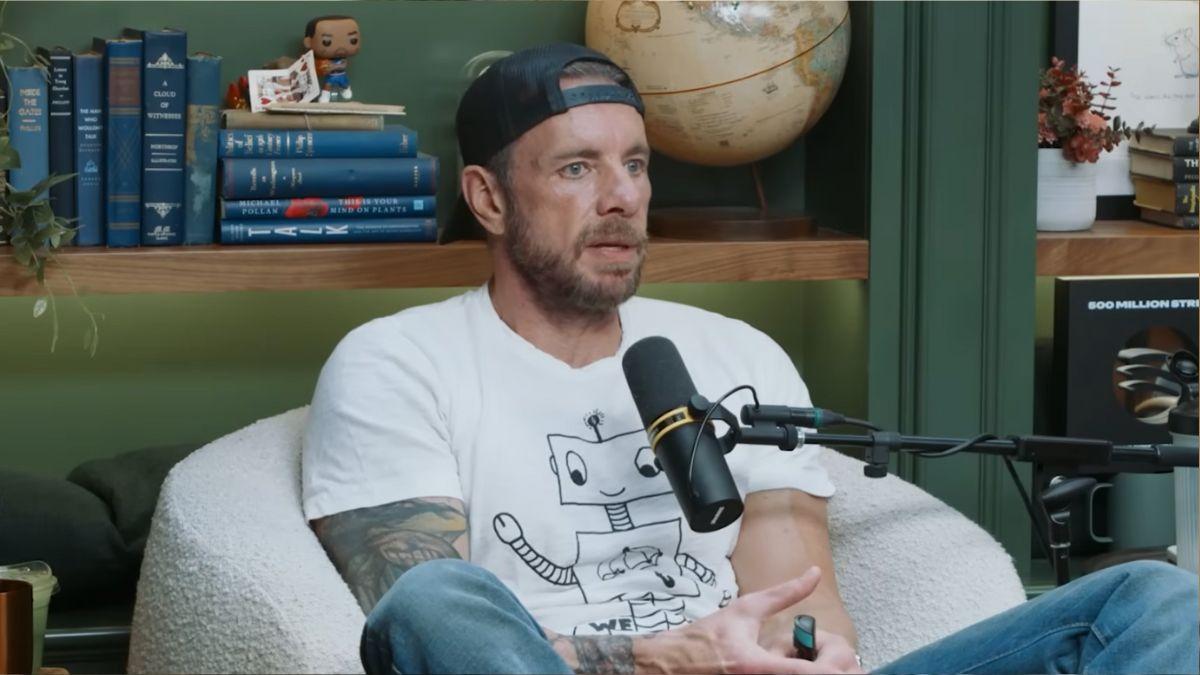
Actor and podcast host Dax Shepard recently shared a deeply personal and unsettling account of a near-fatal car accident he endured as a teenager, revealing the harrowing moments he believed were his last and the profound psychological impact that has lingered for decades. The candid revelation, made on his popular "Armchair Expert" podcast, offered listeners a rare glimpse into a traumatic event that shaped the then-high school senior’s life.
The Armchair Expert Platform

Shepard, known for his roles in "Parenthood" and "CHiPs," has cultivated a public image of radical honesty and vulnerability, often delving into his past struggles with addiction and personal growth. His podcast, "Armchair Expert," co-hosted with Monica Padman, has become a prominent platform for unvarnished conversations, attracting A-list celebrities and experts alike to discuss their lives, challenges, and perspectives. The podcast’s success lies in its intimate, conversational style, which encourages guests and hosts to share deeply personal anecdotes, fostering a strong connection with its vast audience.
During a recent episode, the discussion turned to near-death experiences, prompted by a question Shepard posed to guest Kaley Cuoco. Cuoco admitted a curiosity about such moments, expressing a desire to understand the sensations people report when facing imminent death. This query opened the door for Shepard to recount his own terrifying encounter, a story he prefaced by describing the unique and indelible feeling of knowing one is "seconds away from dying."
A Teenage Brush with Mortality
The incident occurred during Shepard’s senior year of high school. He recalled being a passenger in a friend’s Ford Probe, traveling late at night from Toledo, Ohio, to Detroit, Michigan. With plans to work early the next morning, Shepard had folded down the back seats, intending to sleep during the journey. His friend, the driver, assured him of his alertness and mentioned setting the cruise control at a high speed—85 miles per hour—for the interstate trip.
As Shepard began to drift into sleep, a sudden, jarring sound pierced the quiet of the night: the distinct crunch of gravel against the car’s undercarriage. His immediate realization was chilling: the driver had succumbed to sleep at the wheel. The Ford Probe, now uncontrolled, veered sharply off the highway, hurtling towards a dense line of pine trees bordering the Michigan interstate. In a fleeting moment of instinct, Shepard attempted to reach for the steering wheel, but the car’s trajectory was already too far gone, the situation beyond any immediate correction.
The Descent into Chaos

"I just knew it was too far gone," Shepard recounted, describing the grim realization that dawned on him. Resigning himself to the inevitable, he recalled laying back down just as the vehicle "launched in the air" and began a violent, uncontrolled roll down the highway. The sensation was one of relentless motion, a dizzying sequence of flips and impacts. As the car tumbled, Shepard’s mind raced, fixating on the surrounding pine trees. He vividly remembered the thought, "’We’re gonna hit a tree and that’s gonna be that.’"
In that precise instant, facing what he perceived as certain death, a profound and unexpected calm enveloped him. The initial surge of "complete fear" gave way to a "shockingly comforting" tranquility. Shepard speculated that this unusual peace might have been a result of chemicals flooding his brain in response to extreme stress, inducing a state of detached acceptance. This psychological phenomenon, often reported by individuals in near-death situations, highlights the complex ways the human mind and body react to existential threats.
Lasting Scars of a Harrowing Car Accident
Miraculously, the car, despite rolling approximately ten times, avoided a direct collision with any of the surrounding trees. It eventually came to rest upside down, a crumpled metal shell. Both Shepard and his friend, to their astonishment, emerged from the wreckage largely unharmed, crawling out through the shattered windows. The physical escape was nothing short of extraordinary, given the severity of the crash.
However, the psychological aftermath proved to be as unsettling as the incident itself. For several days following the accident, Shepard found himself questioning the very nature of his existence. He described feeling a profound sense of peculiarity, a disconnect from reality that led him to repeatedly ponder, "Am I dead? I know I died." This period of cognitive dissonance underscores the traumatic brain’s difficulty in processing such a close brush with mortality, blurring the lines between survival and what could have been.
The harrowing experience left an indelible mark on Shepard. He confessed that he has been utterly unable to sleep in a car ever since that night. The memory of his friend falling asleep at the wheel and the subsequent chaos instilled a permanent vigilance, making it impossible for him to relax as a passenger. "There’s no way I could sleep with someone else driving. That’s a wrap on that," he stated definitively, highlighting the lasting behavioral consequence of the trauma.

A Resonant Revelation
Shepard’s sharing of this deeply personal story resonates beyond his celebrity status. It opens a broader conversation about road safety, the dangers of drowsy driving, and the often-overlooked psychological impact of vehicular accidents, particularly on young individuals. Teen driving accidents remain a significant public health concern, and personal accounts like Shepard’s can serve as powerful reminders of the fragility of life and the unforeseen consequences of momentary lapses in judgment behind the wheel.
His revelation also contributes to the ongoing dialogue about trauma and resilience. The transition from intense fear to an unexpected calm, and the subsequent days of questioning reality, offer insights into the complex human response to life-threatening events. By openly discussing such a formative and terrifying experience, Shepard reinforces his commitment to authenticity, inviting his audience to reflect on their own brushes with mortality and the ways in which such moments can profoundly shape one’s outlook and behaviors for years to come. The enduring power of his story lies not just in the miraculous survival, but in the honest portrayal of its lasting, unseen effects.