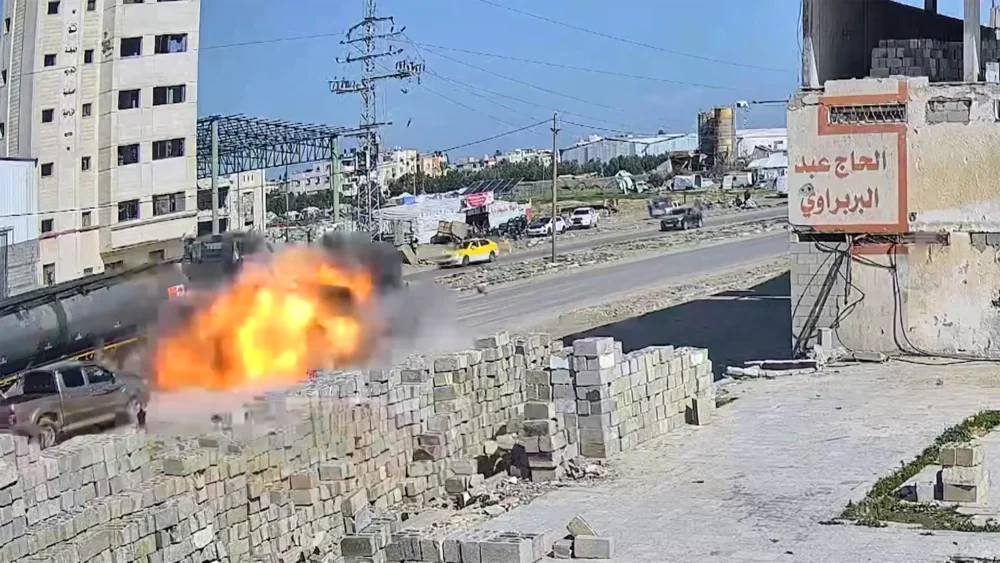
A harrowing video capturing a motorcyclist being struck by an Israeli military attack in central Gaza has surfaced, intensifying scrutiny on the ongoing military operations in the region and raising fresh concerns about civilian safety. The incident, which occurred recently, adds to a grim tally of casualties, with Israeli forces reportedly having killed nearly 600 Palestinians in Gaza since a ceasefire was agreed upon last October. The footage, widely circulated, depicts the chaotic moments of the strike and has reignited international debate over adherence to international humanitarian law amidst the protracted conflict.
Escalating Tensions and the Gaza Strip
The Israeli military’s continued operations in the Gaza Strip have been a focal point of international concern for years, marked by recurring cycles of violence and fragile truces. The densely populated Palestinian territory, governed by Hamas, has endured severe blockades and repeated military incursions, leading to a humanitarian crisis and a high civilian death toll. The recent strike on the motorcyclist underscores the persistent dangers faced by residents, even outside declared active combat zones, and raises questions about the precision and proportionality of military actions.
The Ceasefire and its Fragility
The ceasefire agreement, brokered with international mediation, aimed to de-escalate tensions and provide a period of relative calm. However, allegations of its violation have been persistent from both sides. The report of nearly 600 Palestinian fatalities since the truce’s inception, as indicated by the available data, suggests a breakdown in the cessation of hostilities or at least a significant increase in lethal incidents. Such figures paint a grim picture of the security situation on the ground and the challenges in maintaining a lasting peace.
Previous Violations and International Law
This latest incident involving the motorcyclist is not an isolated event. Throughout the history of the Israeli-Palestinian conflict, numerous reports have emerged detailing civilian casualties, including those occurring during military operations. International bodies and human rights organizations have consistently called for thorough investigations into such incidents, emphasizing the need for accountability and adherence to the principles of distinction, proportionality, and precaution enshrined in international humanitarian law. The targeting of individuals not directly engaged in hostilities, particularly in civilian areas, is a grave concern.
Examining the Video Evidence
While specific details of the strike remain under investigation, the visual evidence presented in the video offers a stark glimpse into the realities of life under constant threat in Gaza. The footage reportedly shows a person on a motorbike being directly targeted. Such imagery often serves as a powerful, albeit distressing, testament to the human cost of conflict, bypassing official narratives and directly conveying the impact on individuals. The authenticity and context of such videos are crucial for any objective assessment of events, and their rapid dissemination can significantly shape public perception and international discourse.
The Role of Unmanned Aerial Vehicles and Other Military Assets
The precise nature of the Israeli strike on the motorcyclist is not explicitly detailed in the initial information. However, in modern warfare, such attacks can involve a range of military assets, including drones, aircraft, and ground-based artillery. The use of unmanned aerial vehicles (UAVs), for instance, has become increasingly prevalent, offering persistent surveillance and strike capabilities. The deployment of such technologies, while often lauded for their precision, also raises ethical questions regarding remote warfare and the potential for misidentification or collateral damage. Understanding the specific weapon system involved would be critical to assessing the operational context.
Broader Implications for Civilian Life in Gaza
The impact of such strikes extends far beyond the immediate casualties. The constant threat of violence creates a pervasive atmosphere of fear and anxiety among the civilian population in Gaza. Daily life is profoundly affected, with movement restricted, economic activity disrupted, and access to essential services compromised. For individuals like the motorcyclist, simply navigating their environment can become a life-threatening endeavor. This contributes to the ongoing humanitarian crisis, characterized by food insecurity, limited healthcare, and psychological distress.
The Economic and Social Fabric Under Strain
The Gaza Strip already faces immense economic challenges due to the prolonged blockade imposed by Israel and Egypt. The recurring conflict further exacerbates these issues, destroying infrastructure, disrupting trade, and hindering reconstruction efforts. The targeting of individuals, regardless of their alleged involvement in hostilities, adds another layer of instability to an already fragile social and economic fabric. Businesses struggle to operate, employment opportunities are scarce, and the cycle of poverty is perpetuated, leaving a generation of Palestinians facing an uncertain future.
International Reactions and Calls for Accountability
Incidents like the strike on the motorcyclist invariably draw international condemnation and renewed calls for diplomatic intervention. United Nations officials, human rights groups, and various national governments often issue statements urging restraint, demanding investigations, and reiterating the importance of upholding international law. The pressure on Israel to justify its military actions and ensure the protection of civilians is often amplified by such events. Conversely, Israeli authorities typically assert their right to self-defense and claim that their operations are aimed at targeting militants and preventing attacks.
The United States’ Role in Regional Diplomacy
As a key ally of Israel, the United States often finds itself in a delicate diplomatic position. While supporting Israel’s security, Washington also advocates for de-escalation and the protection of Palestinian civilians. The U.S. State Department and other governmental bodies frequently engage in shuttle diplomacy, attempting to mediate between the parties and prevent further bloodshed. The effectiveness of these efforts is often debated, with critics arguing for a more assertive stance to enforce international norms and protect human rights.
The Cycle of Violence and the Path Forward
The persistent cycle of violence in the Gaza Strip, marked by retaliatory attacks and civilian casualties, has created a deeply entrenched conflict. The incident involving the motorcyclist serves as a stark reminder of the ongoing human cost. Experts and policymakers grapple with finding sustainable solutions that address the root causes of the conflict, including the ongoing occupation, the blockade of Gaza, and the legitimate security concerns of all parties involved. The path forward requires a multifaceted approach, encompassing diplomatic engagement, humanitarian aid, and a commitment to international justice.
The Importance of Independent Investigations
Ensuring accountability for alleged violations of international law is paramount. Independent and impartial investigations into incidents like the strike on the motorcyclist are crucial for establishing the facts, determining responsibility, and preventing future occurrences. Such investigations, conducted by credible international bodies or through established legal mechanisms, can help to break the cycle of impunity and reinforce the principles of international humanitarian law. Without accountability, the cycle of violence is likely to continue, perpetuating suffering and hindering the prospects for lasting peace.
The ongoing military actions in Gaza, underscored by the tragic incident of the motorcyclist being hit by an Israeli strike, continue to be a critical concern for the international community. The reported fatalities since the ceasefire agreement highlight the precariousness of the security situation and the urgent need for renewed efforts to achieve a durable and just resolution to the conflict. The human toll of these protracted hostilities demands a sustained focus on protecting civilian lives and upholding the principles of international law.