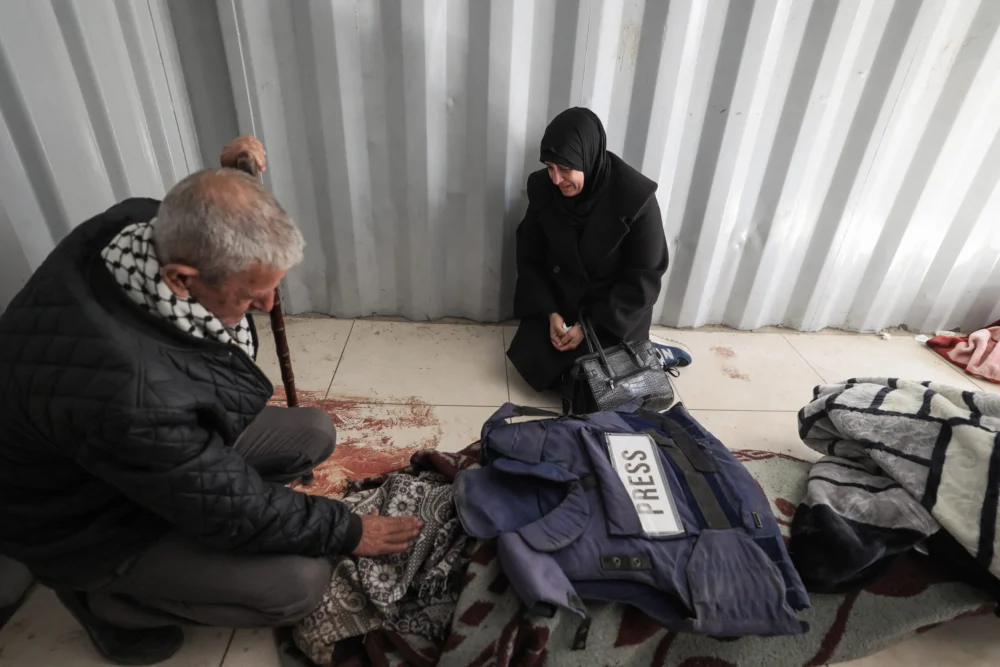
Palestinian journalist Amal Shamali, a correspondent for Qatar Radio, was killed in an Israeli air strike targeting the Nuseirat refugee camp in central Gaza, according to the Palestinian Journalists Syndicate (PJS). The PJS confirmed Shamali’s death on Monday, highlighting her dedication to her journalistic mission amidst the ongoing conflict. She had also contributed to numerous other Arab and local media outlets, continuing her work despite the intense Israeli assault on the Gaza Strip.
A Devastating Toll on Journalists in Gaza
The killing of Amal Shamali adds to a grim tally of journalists and media workers who have lost their lives in Gaza since the commencement of hostilities on October 7, 2023. The Palestinian Journalists Syndicate reports that over 270 journalists and media professionals have been killed in the territory. This period has been characterized as one of the deadliest for journalists in modern history, underscoring concerns about the deliberate targeting of Palestinian journalism.
The PJS statement emphasized that this high casualty rate reflects an effort to silence the truth and prevent documentation of alleged crimes and violations against the Palestinian population. The syndicate asserted that such attacks will not break the resolve of Palestinian journalists to fulfill their professional and humanitarian duty of reporting the truth and documenting the aggression faced by their people.
International Condemnation and Calls for Accountability
Gaza’s Government Media Office issued a strong condemnation following Shamali’s death, denouncing what it described as the systematic targeting, killing, and assassination of Palestinian journalists by Israeli forces. The office explicitly held the "Israeli occupation," the "U.S. administration," and countries such as the United Kingdom, Germany, and France responsible for these alleged "heinous and brutal crimes."
The office issued an urgent appeal to international and regional media associations, the global community, and human rights organizations to condemn these actions against Palestinian journalists and media professionals. It urged them to work towards holding Israel accountable for its ongoing alleged transgressions against journalists in Gaza.
The Gaza Conflict: A Deadly Arena for the Press
The frequency of journalist deaths in Gaza has been staggering. Data compiled by Shireen.ps, a monitoring website named after slain Al Jazeera journalist Shireen Abu Akleh, indicates that Israeli attacks have resulted in the deaths of approximately 13 journalists per month since the war began. Among the deceased are at least ten who worked for Al Jazeera, including correspondent Anas al-Sharif, who had extensively covered the conflict in northern Gaza.

The ongoing war in Gaza has been identified as the single deadliest conflict for journalists on record. Analysis from Brown University’s Costs of War project reveals that more journalists have been killed in Gaza since October 7, 2023, than in a combination of numerous major historical conflicts, including the U.S. Civil War, both World Wars, the Korean War, the Vietnam War, the wars in the former Yugoslavia, and the post-9/11 war in Afghanistan.
Palestine as the World’s Deadliest Zone for Journalists
A report released earlier this year by the International Federation of Journalists (IFJ) identified Palestine as the most dangerous place for journalists to work in 2025. The IFJ’s findings indicated that the Middle East was the most perilous region for media professionals globally, with 74 deaths recorded in the past year, constituting more than half of the 128 journalists and media workers killed worldwide.
The report further detailed that Africa followed with 18 journalist deaths, with the Asia Pacific region recording 15, the Americas 11, and Europe 10. This data underscores a global trend of increasing danger for those in the media profession, with the Middle East, particularly the Palestinian territories, emerging as a critical flashpoint.
Broader Context of the Gaza Conflict and Casualties
The current conflict erupted following Hamas-led attacks on southern Israel on October 7, 2023, which resulted in the deaths of at least 1,139 people. Israel’s subsequent military response in Gaza has led to a devastating humanitarian crisis and a high civilian death toll.
According to Gaza’s Ministry of Health, since a U.S.- and Qatar-brokered ceasefire took effect in October, 640 Palestinians have been killed and at least 1,700 wounded. The overall casualty figures since October 2023 are stark, with at least 72,123 Palestinians killed and 171,805 injured. The scale of destruction and loss of life in Gaza has drawn widespread international concern and calls for de-escalation and adherence to international humanitarian law.
The Role of Journalism Amidst Conflict
Journalists like Amal Shamali play a crucial role in documenting events and providing eyewitness accounts from conflict zones. Their work is essential for informing the global public, holding parties to the conflict accountable, and ensuring that human rights violations are brought to light. The systematic targeting of journalists is seen by many as an attempt to control the narrative and obscure the reality of the situation on the ground.
The Palestinian Journalists Syndicate has consistently advocated for the protection of journalists in conflict areas, calling for international bodies to investigate attacks against media workers and to ensure perpetrators are brought to justice. The syndicate’s persistent efforts aim to safeguard the fundamental right to press freedom and to guarantee that journalists can carry out their work without fear of reprisal.

The International Federation of Journalists’ Stance
The International Federation of Journalists (IFJ) has been a vocal critic of the rising number of journalist killings worldwide, particularly in conflict zones. The organization regularly publishes reports and advocacy statements urging governments and international organizations to take stronger measures to protect media professionals. The IFJ’s findings on Palestine being the deadliest place for journalists underscore the urgent need for increased international attention and action.
The IFJ’s work includes advocating for legal protections for journalists, supporting their safety in dangerous environments, and campaigning against impunity for those who commit violence against media workers. Their reports serve as critical evidence in highlighting the extreme risks faced by journalists and the importance of their role in a democratic society.
Historical Parallels and Current Trends
The current conflict in Gaza has produced casualty figures for journalists that surpass those seen in many significant wars throughout history. This stark comparison highlights the unprecedented nature of the violence and the specific dangers faced by media professionals operating in this environment. The historical context provided by studies like Brown University’s Costs of War project serves to emphasize the severity of the situation.
These historical comparisons are not merely academic; they serve to underscore the gravity of the current crisis and the urgent need for international intervention to protect civilian lives, including those of journalists. The ongoing situation demands a concerted effort from the international community to ensure accountability and prevent further loss of life.
The Critical Function of Documenting Atrocities
The continued reporting from Gaza, despite the immense risks, is vital for the international community’s understanding of the conflict. Journalists on the ground are often the sole conduits of information, providing firsthand accounts that can counter propaganda and misinformation. The work of individuals like Amal Shamali is instrumental in ensuring that the human cost of the conflict is not overlooked and that the narratives of those affected are heard.
The international community’s reliance on these reports means that any obstruction or silencing of journalists has direct implications for global awareness and potential diplomatic or humanitarian responses. The ongoing efforts to document the situation in Gaza, despite the extreme dangers, reflect a profound commitment to truth-telling and accountability.
Looking Ahead: The Fight for Press Freedom
The persistent killing of journalists in Gaza raises critical questions about the future of press freedom in conflict zones. The Palestinian Journalists Syndicate and other media advocacy groups continue to call for investigations into alleged deliberate targeting and for stronger international mechanisms to protect journalists. The hope is that increased international pressure and condemnation will lead to greater accountability and a safer environment for media professionals working to report on the ongoing conflict. The legacy of journalists like Amal Shamali serves as a somber reminder of the sacrifices made in the pursuit of truth.