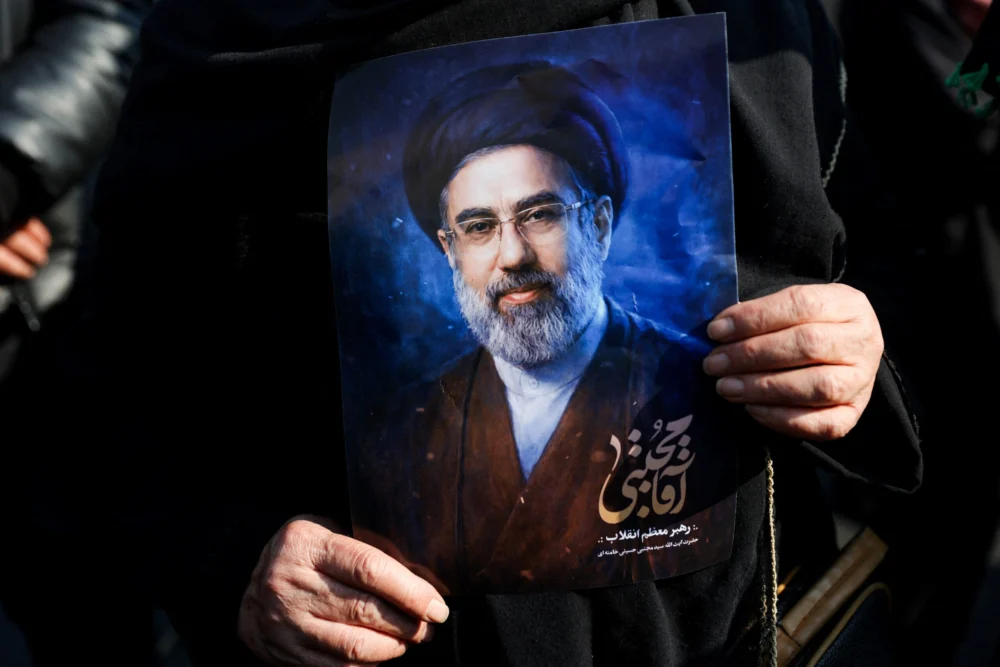
Iran’s Assembly of Experts has officially appointed Mojtaba Khamenei, the son of the late Ayatollah Ali Khamenei, as the country’s new Supreme Leader, a move that has elicited a spectrum of responses from international powers and regional actors, ranging from congratulatory messages to stark warnings amidst escalating geopolitical tensions. The selection of the 56-year-old mid-ranking religious scholar, who had not previously held formal governmental office, was finalized on Sunday, barely a week after his father’s death in what Iran described as United States-Israeli strikes. This appointment, occurring in the shadow of a significant regional conflict, signals a deliberate choice by Iran’s clerical establishment to ensure continuity of leadership and policy.
The elevation of Mojtaba Khamenei to the apex of Iranian power was not entirely unforeseen, given his close ties to the Islamic Revolutionary Guard Corps (IRGC) and his late father’s influential office. Observers widely regarded him as a hardliner, a characteristic that aligns with the prevailing political and security doctrine within the Islamic Republic. His ascent to the position of Supreme Leader, a role endowed with ultimate authority over all state affairs, comes at a deeply challenging moment for Iran, which is currently embroiled in a significant regional conflict that has destabilized the Middle East. The loss of both his father and his wife in recent strikes appears to have galvanized the Iranian leadership to make a defiant statement of resilience and unwavering resolve.
Within Iran’s political and security apparatus, Mojtaba Khamenei’s appointment has garnered immediate and unequivocal support. Leaders of the IRGC, President Masoud Pezeshkian, and Ali Larijani, the secretary of the Supreme National Security Council, have all publicly endorsed the decision, underscoring a unified front within the regime. This internal consolidation of power is seen as a critical factor in navigating the current crisis, which Iran’s leadership has characterized as the most severe faced by the Islamic Republic in its 47-year history. The appointment is interpreted as a strategic move to project an image of strength and stability, both domestically and internationally, despite the immense pressures the nation is under.
International Responses to Mojtaba Khamenei’s Leadership
The global reaction to Mojtaba Khamenei’s assumption of power has been markedly divided, reflecting the complex geopolitical landscape and the deeply entrenched alliances and rivalries in the Middle East and beyond. While some nations have extended messages of support and expressed confidence in Iran’s new leadership, others have issued strong condemnations and threats, highlighting the volatile nature of the region. The international community is closely monitoring how this change at the helm will shape Iran’s foreign policy, its nuclear program, and its role in regional conflicts.
Omani Mediation and Support for New Supreme Leader
The Sultanate of Oman, a nation that has historically played a crucial role as a mediator in regional disputes, was among the first to formally acknowledge Mojtaba Khamenei’s appointment. Sultan Haitham bin Tariq Al Said dispatched a congratulatory cable to the new Supreme Leader on Monday, according to the official Oman News Agency. Oman’s engagement stems from its strategic position as an interlocutor between Iran and Western powers, including the United States. The collapse of recent talks between Tehran and Washington, which preceded the current escalation of conflict, underscored Oman’s importance in diplomatic efforts. The Sultanate’s gesture signifies a desire to maintain channels of communication and potentially to foster de-escalation in the prevailing tense atmosphere.
Iraqi Solidarity Amidst Regional Upheaval
Iraq, a neighboring country with deep historical and sectarian ties to Iran, has also extended its support. Iraqi Prime Minister Mohammed Shia al-Sudani congratulated Mojtaba Khamenei on his appointment, expressing confidence in the new leadership’s ability to navigate the current challenges. Al-Sudani’s statement emphasized the importance of unity within Iran and its capacity to manage this "sensitive stage." Furthermore, he reaffirmed Iraq’s solidarity with Iran and its commitment to supporting steps aimed at ending the conflict and rejecting military operations against Iran’s sovereignty. This stance highlights Iraq’s delicate balancing act between its relations with Iran and its alliance with the United States, as it seeks to preserve regional stability and prevent further spillover of hostilities.
United States and Israeli Threats Against Iran’s New Leader
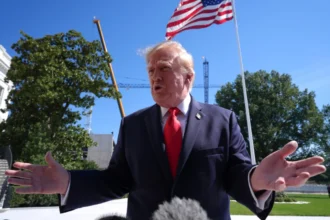
In stark contrast to the conciliatory tones from some regional players, the United States and Israel have responded with strong rhetoric and veiled threats, signaling a hardening of their positions. Former U.S. President Donald Trump, who had previously dismissed Mojtaba Khamenei as insignificant, reiterated his skepticism about the appointment. Trump, speaking to NBC News, stated, "I think they made a big mistake. I don’t know if it’s going to last. I think they made a mistake." His subsequent remarks to CBS News, where he stated he had "no message for him" and alluded to having a preferred candidate to lead Iran, underscore the adversarial relationship between the U.S. and the current Iranian regime. This suggests a continued policy of exerting pressure and potentially seeking internal political shifts within Iran.
Israel’s reaction has been even more direct and confrontational. The Israeli military has previously issued warnings against any successor to Ayatollah Ali Khamenei, and the Foreign Ministry did not shy away from strong criticism. Labeling Mojtaba Khamenei a "tyrant" akin to his father, the ministry asserted that he would perpetuate the "Iranian regime’s brutality." A post on X, featuring a graphic image of Mojtaba and Ayatollah Ali Khamenei wielding weapons, declared, "Mojtaba Khamenei. Like Father Like Son." The ministry’s statement added, "Mojtaba Khamenei’s hands are already stained with the bloodshed that defined his father’s rule. Another tyrant to continue the Iranian regime’s brutality." This aggressive posture from Israel reflects its deep-seated animosity towards Iran and its perceived threat to Israeli security, indicating a likely intensification of regional tensions.
Russian Unwavering Support for Tehran
Russia, a key strategic partner of Iran, has pledged its "unwavering support" to the Islamic Republic under its new leadership. President Vladimir Putin sent a message to Mojtaba Khamenei reaffirming Russia’s solidarity and commitment to being a "reliable partner." Putin acknowledged the challenging circumstances facing Iran, noting that the new Supreme Leader’s tenure would "undoubtedly require great courage and dedication" in the face of "armed aggression." This strong endorsement from Moscow highlights the deepening strategic alignment between Russia and Iran, particularly in opposition to perceived Western influence and in the context of ongoing global geopolitical realignments. The two nations have found common ground in their resistance to U.S. foreign policy and their shared interests in challenging the existing international order.
Chinese Stance on Iranian Sovereignty
China, another significant global player with close ties to Tehran, has adopted a more measured yet firm stance, emphasizing respect for Iran’s internal affairs. A Foreign Ministry spokesman, Guo Jiakun, stated that Iran’s decision to appoint Mojtaba Khamenei was "based on its constitution." Beijing unequivocally opposes interference in other countries’ internal affairs and stressed that Iran’s sovereignty, security, and territorial integrity must be respected. This position aligns with China’s broader foreign policy principles and its commitment to multilateralism, while also signaling its continued partnership with Iran. Despite condemning the killing of Ayatollah Ali Khamenei, China has also expressed concerns about Iranian counterstrikes in the region, indicating a nuanced approach to the escalating conflict.
Yemen’s Houthi Rebels Welcome New Leader
In Yemen, the Houthi rebel movement, a key Iranian ally in the region, has warmly welcomed the appointment of Mojtaba Khamenei. In a statement released on Telegram, the group extended congratulations to the Islamic Republic, its leadership, and its people on the selection of Sayyid Mojtaba Khamenei. The Houthis characterized his appointment as a "new victory for the Islamic Revolution" and a "resounding blow to the enemies of the Islamic Republic and the enemies of the nation." This enthusiastic endorsement underscores the ideological and strategic alignment between the Houthi movement and Iran, portraying the leadership transition as a significant development in their shared resistance against perceived adversaries.
Broader Implications of Mojtaba Khamenei’s Ascendancy
The appointment of Mojtaba Khamenei as Iran’s Supreme Leader carries profound implications for the nation’s future trajectory and its role in the international arena. His ascension, occurring at a time of intense regional conflict and heightened global scrutiny, suggests a deliberate effort by the Iranian establishment to project an image of continuity and steadfastness in the face of adversity. As a figure deeply entrenched within the clerical and security apparatus, his leadership is expected to maintain the core tenets of the Islamic Republic’s ideology and foreign policy.
Continuity and Hardline Stance
Mojtaba Khamenei’s known hardline disposition and his close connections to the IRGC suggest that Iran is unlikely to deviate significantly from its current policies. This includes its regional strategy, its nuclear program, and its confrontational stance towards the United States and Israel. The appointment can be interpreted as a signal that Iran intends to weather the current storm by reinforcing its existing power structures and ideological foundations, rather than seeking a fundamental shift in its governance or foreign relations. This continuity may be seen by allies as a sign of stability and by adversaries as an indication of an unyielding adversary.
Impact on Regional Stability
The immediate reactions from various international actors highlight the precarious state of regional stability. The stark contrast between Omani and Iraqi expressions of support and the bellicose rhetoric from Israel and the United States underscores the deep divisions and escalating tensions. Mojtaba Khamenei’s leadership will undoubtedly be tested by these external pressures. His responses to ongoing conflicts, particularly the proxy wars and geopolitical rivalries that have characterized the Middle East for decades, will be closely scrutinized. The potential for miscalculation or escalation remains high, especially given the direct threats issued by key regional and global powers.
The Future of Iran-U.S. Relations
The appointment of Mojtaba Khamenei further complicates the already strained relationship between Iran and the United States. The former U.S. President’s dismissive remarks and his implication of having an alternative leadership choice for Iran signal a continued policy of engagement through pressure. The trajectory of U.S.-Iran relations will likely depend on how the new Iranian leadership responds to ongoing sanctions, regional proxy conflicts, and the broader dynamics of the international order. A hardline approach from Tehran could lead to further isolation and confrontation, while any perceived opening, however unlikely, could offer a narrow path for de-escalation. The international community, particularly European allies, will be watching closely for any signs of diplomatic engagement or further entrenchment.
The selection of Mojtaba Khamenei as Iran’s Supreme Leader marks a significant moment in the nation’s history, signaling a commitment to continuity amid unprecedented regional turmoil. The international community’s reactions, ranging from cautious support to outright hostility, underscore the profound geopolitical implications of this leadership transition. As the region navigates a period of intense volatility, the world will be closely observing how Mojtaba Khamenei shapes Iran’s future and its impact on the global stage.