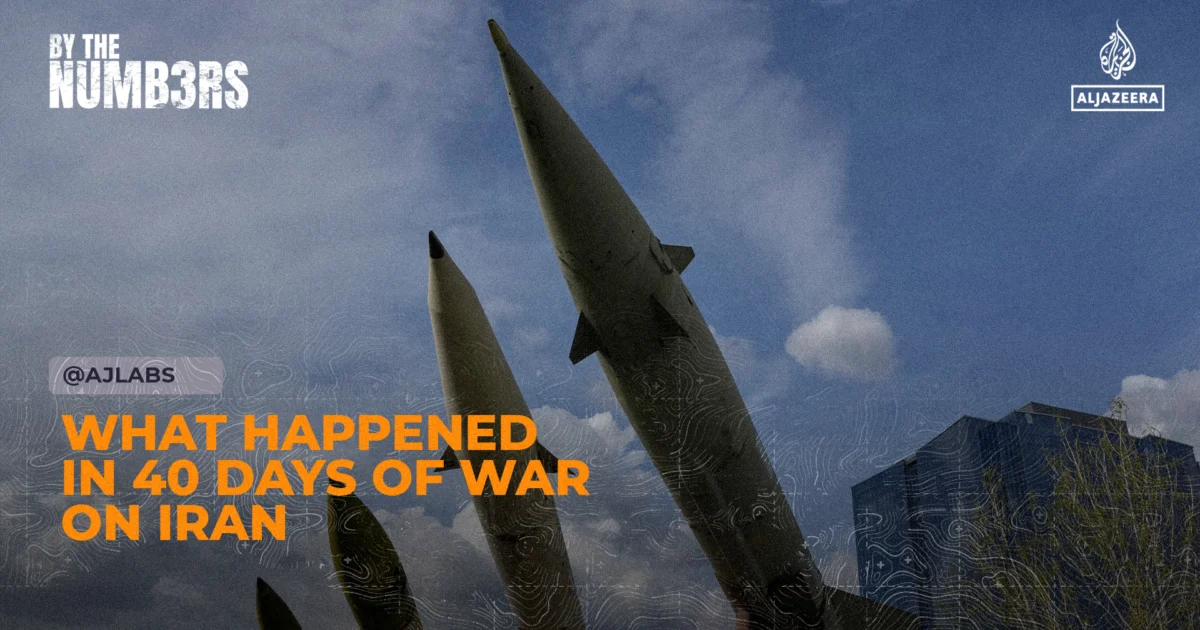
The first 40 days of the recent conflict involving Iran have been marked by a series of escalating military actions, significant diplomatic maneuvering, and a growing toll on civilian populations, reshaping regional dynamics and raising global security concerns. The initial hostilities, which erupted without clear preceding public declarations from all involved parties, quickly coalesced into a complex geopolitical crisis that has reverberated across the Middle East and beyond. This period has seen a rapid deployment of forces, strategic strikes, and a tense standoff that has tested international resolve and highlighted the fragility of peace in a volatile region.
Genesis of the Conflict and Initial Engagements
The precise origins of the 40-day war on Iran remain a subject of intense international scrutiny and competing narratives. However, the conflict’s genesis can be broadly traced to a confluence of long-standing regional rivalries, perceived security threats, and shifting geopolitical alliances. Reports indicate that a series of pre-emptive strikes and retaliatory actions characterized the opening phase, drawing in multiple state and non-state actors.
Initial engagements focused on key military infrastructure and strategic assets, leading to immediate disruptions in regional trade routes and communication networks. The rapid escalation caught many international observers by surprise, given the intricate web of diplomatic relations and economic ties that bind the involved nations. Analysts point to a breakdown in de-escalation channels as a critical factor in the swift transition from localized skirmishes to a wider confrontation.
Key Developments in the First 40 Days
The unfolding of the conflict over the first 40 days followed a discernible, albeit chaotic, pattern. The early days were dominated by aerial bombardment and missile strikes, targeting command and control centers, air defense systems, and critical logistical hubs. These actions aimed to neutralize immediate threats and establish a strategic advantage, but also resulted in significant collateral damage and civilian casualties, drawing widespread condemnation from humanitarian organizations.
As the conflict progressed, ground operations commenced in several border regions, leading to intense urban warfare and protracted battles for control of key territories. The nature of these engagements proved particularly devastating for civilian populations, forcing mass displacements and creating an urgent humanitarian crisis. Both sides employed a range of conventional and, according to unconfirmed reports, unconventional tactics, further complicating the assessment of the conflict’s trajectory and its long-term implications.
The Role of International Diplomacy
Amidst the escalating violence, a flurry of diplomatic efforts was initiated by regional and global powers attempting to broker a ceasefire and initiate peace talks. United Nations officials, along with leaders from several neutral nations, engaged in intensive shuttle diplomacy, meeting with representatives from the warring factions to explore avenues for de-escalation. However, these efforts were repeatedly hampered by deep-seated mistrust, maximalist demands, and the rapidly evolving military situation on the ground.
The international community’s response was largely divided, reflecting existing geopolitical alignments. While some nations unequivocally condemned the aggression and called for immediate withdrawal, others adopted a more nuanced stance, emphasizing the need for a comprehensive resolution to the underlying grievances. The effectiveness of these diplomatic initiatives remains a critical question, with many analysts suggesting that a sustainable peace will require addressing the root causes of the conflict, not merely its immediate symptoms.
Impact on Regional Stability and Global Security
The 40-day war on Iran has had a profound and destabilizing impact on the broader Middle East. The conflict has exacerbated existing sectarian tensions, fueled proxy conflicts, and threatened to draw in additional regional powers, raising fears of a wider conflagration. The economic consequences have been equally severe, with disruptions to oil supplies, trade routes, and investment flows creating significant ripple effects across the global economy.
Furthermore, the conflict has placed a considerable strain on international security architecture. The United Nations Security Council has convened multiple emergency sessions, but has been largely paralyzed by internal divisions, preventing a unified and decisive response. The heightened tensions have also led to increased military readiness and deployments by major global powers, underscoring the precarious state of international peace and security in the wake of this protracted conflict.
Humanitarian Crisis and Civilian Toll
The human cost of the 40-day war on Iran has been immense. Reports from international aid organizations paint a grim picture of widespread displacement, food shortages, and a collapsing healthcare system in affected areas. Civilian infrastructure, including hospitals, schools, and residential buildings, has been heavily damaged, leading to a substantial loss of life and injuries.
The scale of the humanitarian crisis has necessitated a significant international response, with numerous countries and NGOs launching emergency relief efforts. However, access to many of the hardest-hit areas remains severely restricted due to ongoing hostilities and damaged infrastructure, hindering the delivery of vital aid. The long-term psychological and social impact on civilian populations, particularly children, is expected to be profound and enduring.
Economic Repercussions and Global Markets
The economic fallout from the 40-day war on Iran has extended far beyond the immediate combat zones. Disruptions to maritime shipping lanes in critical waterways have led to significant increases in freight costs and delays, impacting global supply chains. The volatility in oil markets, a common feature of Middle Eastern conflicts, has also intensified, contributing to global inflationary pressures and economic uncertainty.
Major international corporations with operations or significant investments in the region have been forced to reassess their strategies, with many scaling back or suspending activities. The long-term economic recovery for the affected nations will likely be a protracted and challenging process, requiring substantial reconstruction efforts and a stable geopolitical environment. Investors have responded with caution, leading to a general downturn in emerging market equities and a flight to perceived safe-haven assets.
Shifting Geopolitical Alliances
The conflict has also precipitated a noticeable shift in regional and global geopolitical alliances. Existing rivalries have been amplified, while new partnerships have begun to emerge as nations reassess their strategic interests in light of the evolving security landscape. The actions and inactions of major world powers during this critical period have further underscored the complex interplay of national interests and international cooperation.
Analysts are closely observing how these recalibrated alliances will shape future diplomatic engagements and security arrangements in the Middle East. The war’s conclusion, whenever it may come, is expected to usher in a new era of regional power dynamics, with significant implications for international relations and the global balance of power. The long-term strategic implications of these shifts are still unfolding, but their impact on regional stability is already undeniable.
The Information War and Public Perception
In parallel with the kinetic warfare, an intense information war has been waged, shaping public perception and influencing international discourse surrounding the conflict. State-sponsored media, social media platforms, and independent news outlets have all played a role in disseminating narratives, often presenting conflicting accounts of events. This information environment has made it challenging for the public and policymakers alike to ascertain objective facts.
The deliberate dissemination of misinformation and propaganda has become a significant challenge, complicating efforts to build consensus and foster understanding. International bodies and fact-checking organizations have worked to counter these narratives, but the sheer volume and speed of information flow make this an uphill battle. The long-term impact of this information warfare on public trust and democratic processes remains a critical concern.
Future Trajectories and the Path Forward
As the 40-day mark of the conflict on Iran passes, the path forward remains fraught with uncertainty. The immediate priority for the international community is to secure a lasting ceasefire and facilitate unimpeded humanitarian access to affected populations. Beyond that, sustained diplomatic engagement will be crucial to address the underlying grievances that fueled the conflict and to prevent its recurrence.
The reconstruction of war-torn regions, the reintegration of displaced populations, and the long-term economic recovery will require a coordinated and sustained effort from both regional actors and the international community. The lessons learned from these 40 days of intense warfare will undoubtedly shape future security strategies, diplomatic approaches, and the global commitment to peace and stability. The ramifications of this conflict are set to resonate for years to come, demanding careful analysis and a renewed dedication to conflict resolution.