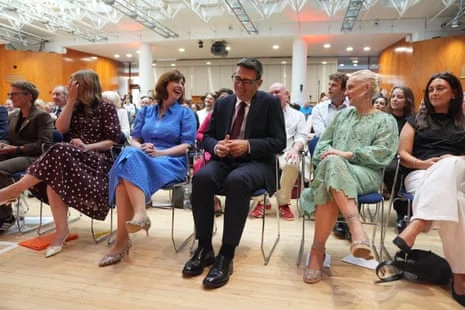
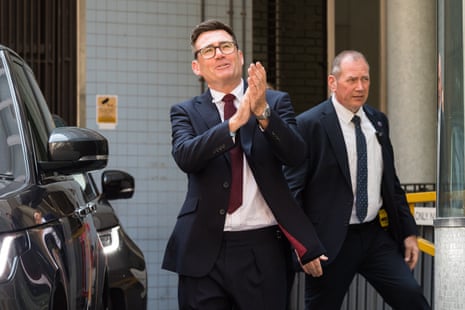
Newly confirmed Labour Party leader Andy Burnham is expected to arrive at Downing Street early next week to assume the role of Prime Minister, signaling a major shift in the British political landscape. During a high-profile appearance at a special party conference on Friday, Burnham confirmed that he will officially reveal his top-level administration at the start of the week. The announcement follows a period of intense speculation regarding the composition of his inner circle as he transitions from his long-standing role as the Mayor of Greater Manchester to the highest office in the United Kingdom.
Addressing a crowd of supporters and activists, Burnham defended his decision to delay the appointments, characterizing the move as a necessary measure to ensure an orderly transition. Critics and political observers had spent much of the week calling for clarity on key roles, particularly the Chancellorship and Home Office. However, Burnham insisted that naming a cabinet before formally taking office would be "premature" and could trigger institutional instability. "You make those decisions when you take over," Burnham stated, dismissing the urge for early announcements as a recipe for "complete chaos."

A Strategic Delay: Why Andy Burnham Will Announce Cabinet Picks on Monday
The decision for Andy Burnham to announce cabinet picks on Monday is rooted in a desire to project a sense of constitutional propriety. By waiting until he has been formally invited by the Monarch to form a government, Burnham aims to contrast his approach with the perceived factionalism and rapid-fire reshuffles of previous administrations. His team has emphasized that the weekend will be used to finalize negotiations with key stakeholders across the Labour movement, ensuring that the new cabinet reflects a broad geographic and ideological spectrum within the party.
Public and media pressure for an earlier reveal has been significant. In recent days, the "Ask Andy Anything" social media campaign and various town hall events have seen voters questioning the lack of specific personnel details. Despite this, Burnham has remained steadfast, suggesting that the "orderly way" is the only way to build a lasting government. This measured approach is seen by some as a calculated effort to lower the political temperature following a period of significant upheaval within the party.
No 10 North: A Paradigm Shift in British Governance
One of the most radical components of Burnham’s platform is the establishment of "No 10 North," a secondary seat of executive power to be based in Manchester. Burnham used his Friday speeches in London and Gravesend to clarify that this outpost is not merely a symbolic gesture for Northern voters, but a functional hub designed to decentralize the UK’s highly concentrated political power. He asserted that the new office would serve as a catalyst for devolution, allowing regions across the country to "reindustrialize" and address local crises in housing and infrastructure.
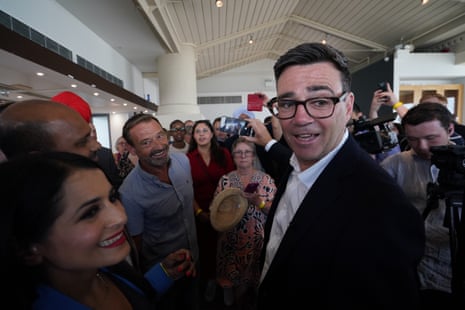
"I will drive the devolution of power from No 10 North right across this country," Burnham told activists in Kent. He sought to reassure Southern voters that a Manchester-based executive office would benefit the entire UK, arguing that the lessons learned during his tenure as Mayor of Greater Manchester—now the fastest-growing city region in the country—can be applied nationally. This "shift of gear" in governance represents a direct challenge to the "Westminster bubble" and is expected to be a cornerstone of his first 100 days in office.
Cabinet Speculation and Key Reappointments
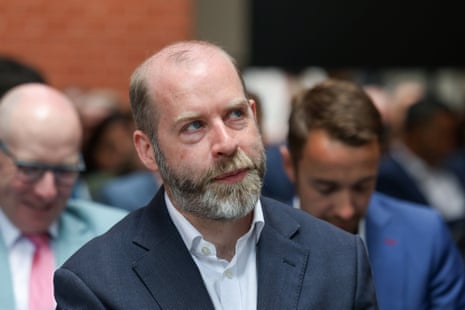
While the full list remains under wraps, reports have surfaced regarding high-profile roles. Jonathan Reynolds, currently serving as the Chief Whip, is widely expected to be reinstated as Business Secretary. Reynolds previously held the brief before being moved during a reshuffle under Keir Starmer in 2025. Sources close to the transition suggest that Reynolds is eager to return to the Department for Business and Trade, potentially with an expanded portfolio that includes business-facing energy policies currently housed under the Department of Energy and Net Zero.
The Chancellorship remains the subject of the most intense debate. Shabana Mahmood, the current chair of the National Executive Committee and a key Burnham ally, is frequently mentioned as a top contender. If appointed, Mahmood would be tasked with navigating a complex economic landscape defined by stagnant growth and a persistent cost-of-living crisis. Burnham’s commitment to a "pro-business" agenda suggests that whoever takes the Treasury will need to balance traditional Labour social priorities with the demands of the British Chambers of Commerce and global investors.
The Legacy of Keir Starmer and the Path Forward
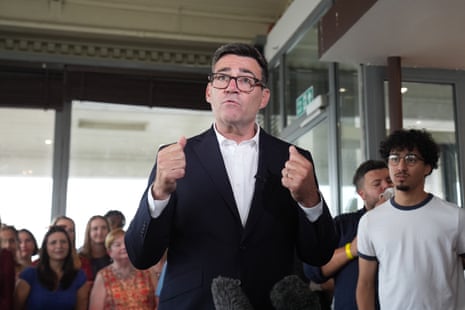
In his first official speech as leader, Burnham paid significant tribute to his predecessor, Keir Starmer. He credited Starmer with transforming the Labour Party from its "worst defeat to one of the best victories" in British history. Under Starmer’s leadership, the party achieved a landslide victory in 2024, a feat that Burnham acknowledged as the foundation upon which his own premiership will be built. He cited falling NHS waiting lists and the renationalization of the rail network as key achievements of the outgoing administration.
However, Burnham also signaled that his government would be "unashamedly Labour" and would not shy away from a more distinct ideological path. He argued that for the past 40 years, the UK has been on a "wrong turn," citing the centralization of political power and the privatization of essential services as the root causes of modern inequality. By reclaiming the phrase "take back control," Burnham is attempting to appeal to the "left-behind" communities that fueled the Brexit vote, promising that his administration will provide a policy response that addresses the decline of proud industrial towns.
Economic Strategy and the ‘Take Back Control’ Narrative
Central to Burnham’s economic vision is a rejection of the neoliberal model that he claims began in the 1980s. He told conference attendees that the surrender of control over essentials—such as housing, water, and transport—has left the public exposed to predatory costs and inflation. His proposed "new path" involves a significant rebalancing of the scales of justice and a renewed focus on public ownership. This narrative is designed to connect with ordinary people who feel that the current economic system no longer works for them.
Business leaders have reacted with cautious optimism. Shevaun Haviland, director-general of the British Chambers of Commerce, congratulated Burnham but warned that "growth must be priority number one." Haviland emphasized that firms are looking for swift action to mitigate cost pressures and cautioned against previous policy missteps, such as increases in national insurance contributions. Burnham’s challenge will be to maintain his pro-business stance while satisfying the demands of trade unions like Unison, which are calling for a national care service and enhanced workers’ rights.
Criticism from the Left and Right
Despite the momentum behind his leadership, Burnham faces skepticism from both ends of the political spectrum. Zack Polanski, leader of the Green Party, expressed concern that Burnham might simply be "Keir Starmer with a different face." Polanski urged the new leader to take a harder line on environmental issues, including an outright ban on North Sea oil and gas drilling and a full arms embargo on Israel. Friends of the Earth echoed these sentiments, warning that failing to reject major fossil fuel projects would undermine Burnham’s credibility with younger, progressive voters.
On the right, Conservative figures and some media outlets have labeled Burnham’s agenda as a threat to the economy. Former Prime Minister Liz Truss and other critics have claimed that his policies could "crash the economy" and that his plans for housing amount to an attack on property rights. Within his own party, some MPs, including Graham Stringer, have complained that Burnham has been too vague on policy details, accusing him of asking for a "blank cheque" without providing a concrete roadmap for immigration or energy.
The Social Care Mandate and Personal Connections
Burnham has indicated that social care will be one of his primary focuses, a priority informed by his personal experience. During a recent "Ask Andy Anything" session, he spoke candidly about his father’s struggle with Alzheimer’s disease, stating that he is intimately familiar with the failures of the current system. He promised to expend significant "social capital" to fix the social care crisis, an issue that has been neglected by successive governments for decades.
This focus on social care aligns with his broader "vibes" based communication strategy, which emphasizes emotional connection and empathy. While critics dismiss this as a lack of substance, Burnham’s allies, such as Liverpool City Region Mayor Steve Rotheram, argue that his ability to listen and communicate is exactly what the country needs. Rotheram noted that Burnham’s style is about being "close to the ground," often picking up ideas from everyday interactions at local pubs or shops.
Looking Toward Monday
As the weekend approaches, the political world remains focused on the upcoming transition. Andy Burnham to announce cabinet picks on Monday is the headline that will dominate the news cycle as he prepares for his first official day in Downing Street. The by-election to fill his vacancy as the Mayor of Greater Manchester is already underway, with polling suggesting a strong lead for the Labour candidate. This indicates that while Burnham moves to the national stage, his "Burnhamite" brand of politics remains popular in his home region.

Monday will represent the ultimate test for the new Prime Minister. As he unveils his top team, the public will finally see how he intends to translate his "unashamedly Labour" rhetoric into a functional government. With a mandate for change and a country eager for stability, Burnham’s first appointments will set the tone for an administration that promises to change not just who governs Britain, but how Britain is governed. The transition marks the end of the Starmer era and the beginning of a new chapter that seeks to bridge the divide between the north and south, the academic and the technical, and the government and the people.