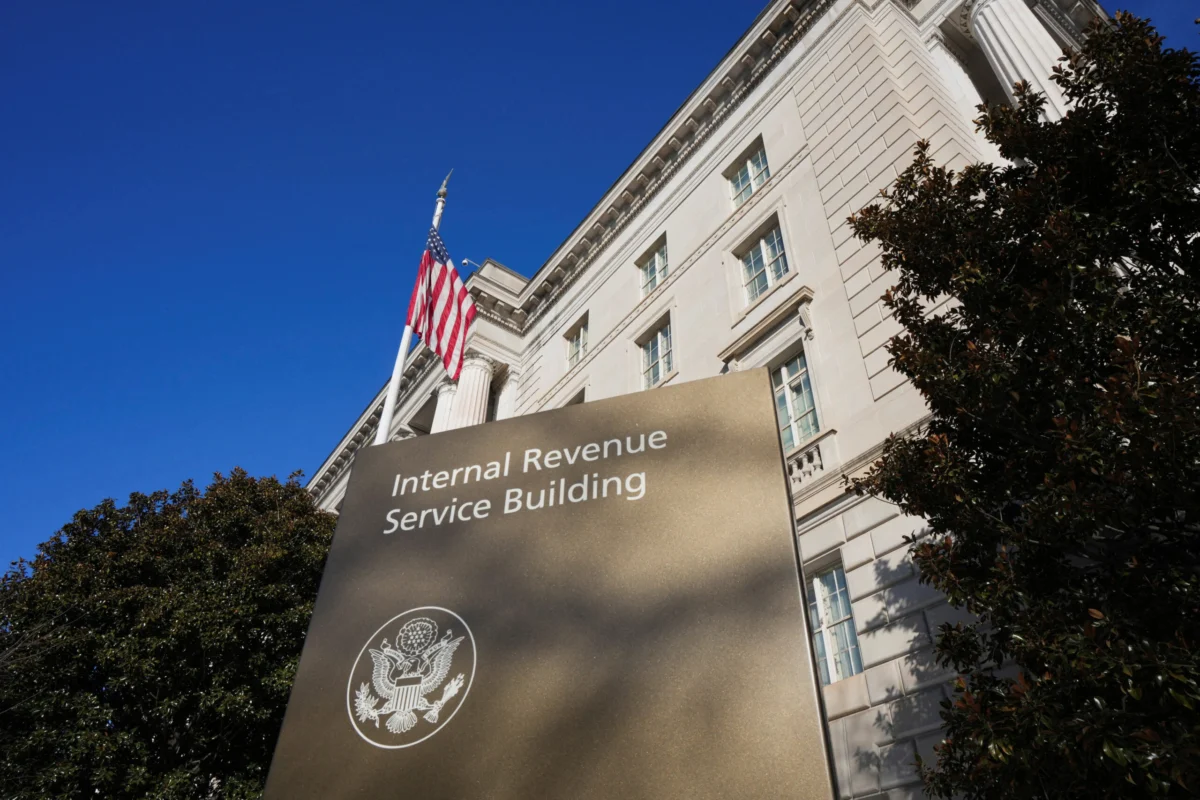
Ken Kies, the top legal official at the Internal Revenue Service (IRS), is reportedly stepping down from his position, a move that has sent ripples through Washington and intensified scrutiny of the Trump administration’s relationship with the federal tax agency. Sources close to the situation suggest that disagreements over a controversial settlement deal and alleged interference in tax audits may have precipitated Kies’s departure, marking another instance of personnel flux within the executive branch.
Kies held significant roles within the IRS and the Treasury Department, serving as acting chief counsel to the IRS and as an assistant secretary for tax policy to the U.S. Treasury. His tenure has been characterized by a period of heightened tension between the White House and the nation’s primary tax-collection authority. Reports have emerged this week indicating that Kies was effectively "forced out," a characterization attributed to anonymous individuals with knowledge of the internal dynamics.
Clashes Over Audit Interference and Legal Mandates
Central to the reported friction are allegations that Ken Kies had expressed concerns to members of the Trump administration regarding directives related to tax audits. The Internal Revenue Code strictly prohibits the President, Vice President, and their executive staff from initiating or terminating audits or investigations of specific taxpayers. This legal safeguard is designed to prevent the weaponization of tax enforcement for political retribution or personal gain, ensuring the impartiality of the IRS.
The precise nature of any White House requests that may have led to Kies’s conflict remains undisclosed. However, the existence of such laws underscores the delicate balance required to maintain public trust in the tax system. Historical precedents, such as former President Richard Nixon’s alleged attempts to direct the IRS against political adversaries, serve as stark reminders of the potential for abuse and the serious constitutional implications involved. These past events ultimately contributed to Nixon’s resignation amid impeachment proceedings.
Trump Administration’s Scrutiny and Tax-Related Legal Battles
President Donald Trump himself has faced repeated accusations of attempting to leverage the IRS for his own benefit. Following his second term inauguration, Trump publicly threatened to revoke Harvard University’s tax-exempt status, a move widely seen as retaliation for the institution’s stance on pro-Palestinian protests and its admissions policies. This action ignited a debate about the boundaries of presidential authority over tax-exempt organizations.
Adding to the complex legal landscape, Trump filed a personal lawsuit against the IRS in January of his second term. The suit alleged that the agency was responsible for the leak of his tax returns in 2017, returns that subsequently became the subject of intense media scrutiny. Trump sought a staggering $10 billion in damages, a claim that drew criticism for its potential statute of limitations issues and inherent conflict of interest, given that the IRS falls under the executive branch’s purview, as does the Department of Justice, which was tasked with representing the tax agency.
The Controversial Settlement and Judicial Rebuke
The legal entanglement involving Trump and the IRS reached a critical juncture in May with the Justice Department’s announcement of an out-of-court settlement. This proposed agreement would have granted Trump and his family immunity from IRS tax audits and established a substantial "$1.8 billion ‘anti-weaponization fund’" intended to compensate individuals who claimed to have suffered from unfair government prosecution.
However, this settlement was decisively struck down the following week by U.S. District Judge Kathleen Williams in south Florida. Judge Williams issued a scathing rebuke to the Justice Department, accusing it of "abdicating its responsibility to zealously defend the interests of the United States." She characterized the settlement as an egregious instance of "government self-dealing." In her ruling, Williams specifically referenced Section 7217 of the Internal Revenue Code, which explicitly bars executive interference in tax audits, highlighting the settlement’s incompatibility with legal mandates. "Acquiescing to any such demand is wholly incompatible with the duties of DOJ attorneys (as well as CEO Bisignano for the IRS) to enforce the law and protect the public interest," Williams stated in her written opinion.
Kies’s Reported Refusal and Broader Policy Disagreements
Media reports indicate that Ken Kies had a direct role in the aforementioned controversial IRS settlement, reportedly refusing to participate in its advancement. This refusal is seen as a significant act of defiance and a potential catalyst for his departure. Beyond this specific settlement, Kies is also reported to have differed with the Trump administration on broader tax policy issues.
These policy divergences reportedly included disagreements over high-value tax matters, such as tax incentives offered to landowners who agree to restrict development on their properties. Such incentives have been a subject of debate, with critics arguing they can create loopholes and benefit wealthy individuals without proportional public good.
The departure of Kies is not an isolated incident. In May, Brian Morrissey, the Treasury’s former general counsel, also resigned, reportedly over the same settlement deal that has now drawn such judicial condemnation. These resignations suggest a pattern of internal dissent and ethical concerns within the high echelons of the Treasury and IRS leadership concerning the administration’s approach to tax law and enforcement.
Implications for IRS Independence and Public Trust
The circumstances surrounding Ken Kies’s resignation carry significant implications for the perceived independence of the IRS and the broader public trust in the nation’s tax system. The agency’s ability to operate without undue political pressure is fundamental to its credibility and effectiveness. Any perception that tax audits or settlements are being influenced by political considerations, rather than by established legal and procedural frameworks, can erode public confidence.
The legal challenges and resignations highlight a potential pattern of attempts to influence the IRS’s operations, which could have lasting consequences. The IRS, as the primary enforcer of tax laws, plays a critical role in funding government operations and ensuring equitable treatment of taxpayers. Maintaining its integrity is paramount to fiscal stability and the rule of law.
The repeated scrutiny of the Trump administration’s interactions with the IRS and Treasury underscores the ongoing debate about the separation of powers and the potential for executive overreach. The judiciary’s role in striking down the proposed settlement demonstrates a crucial check on potential abuses, reinforcing the principle that no individual, not even the President, is above the law.
The Road Ahead for IRS Leadership and Tax Policy
Kies’s departure creates a leadership void at a critical juncture for the IRS. The agency faces ongoing challenges in modernizing its systems, enforcing complex tax laws, and navigating an increasingly intricate global financial landscape. The administration will need to appoint qualified individuals to fill these key legal and policy positions, individuals who can uphold the agency’s mandate and restore confidence in its operations.
The controversies surrounding tax audits and settlements also raise questions about the future direction of tax policy and enforcement within the United States. The legal precedents set by these events, particularly Judge Williams’s strong ruling, could influence how future tax disputes are handled and how the executive branch interacts with the IRS.
The public will be watching closely to see how the administration addresses these leadership changes and whether it reaffirms its commitment to an independent and impartial IRS. The integrity of the tax system is a cornerstone of democratic governance, and any perceived compromise can have far-reaching consequences for both the economy and the public’s faith in its institutions. The actions taken in the coming months will shape the narrative surrounding the IRS and its relationship with the executive branch for years to come.